
Category
Filter articles

Right to Protest
The right to protest is a composite: the freedom to speak, the freedom to assemble peaceably, and the ancient right to petition for redress of grievances. It is not a...

Brexit
Brexit is the withdrawal of the United Kingdom from the European Union, the most consequential constitutional change in modern British politics. In the referendum of 23 June 2016, on a...

The Second Amendment
The Second Amendment to the United States Constitution, ratified in 1791, reads: "A well regulated Militia, being necessary to the security of a free State, the right of the people...

Constitution
The conservative is a constitutionalist by disposition. The tradition that produced the English settlement of 1688, the American framers' work in 1787, and the gradual development of parliamentary government across...

Nationalism
Nationalism is the doctrine that the political community is properly bounded by the nation — a people sharing language, history, custom, and territory — and that this community has prior...

Red Tape
"Red tape" refers to bureaucratic procedures or regulations that are seen as overly complex, time-consuming, or burdensome. It is a metaphorical term derived from the practice of using red tape...
Subsidiarity
One of the foundational principles of conservatism is the principle of subsidiarity. Simply put, subsidiarity is the idea that social or political issues should be managed by the most immediate...

First Past the Post (Electoral System)
People campaigning against first-past-the-post and in favour of proportional representation, Wikipedia. First Past the Post (FPTP), also known as winner-takes-all or plurality voting, is an electoral system widely used in...

Citizenship Test
A citizenship test is an evaluative tool designed to assess an individual's knowledge of a country's history, government structure, and civic values as a requirement for acquiring citizenship. Typically administered...

State Rights
State rights, refer to the legal and political powers held by individual states within a federal system of government, such as the United States. This concept is a fundamental principle...

Foreign Policy
Foreign policy in the conservative tradition is the art of pursuing the national interest under conditions of permanent uncertainty about the intentions and capabilities of other states. The position is...
Latest articles
Right to Protest
The right to protest is a composite: the freedom to speak, the freedom to assemble peaceably, and the ancient right to petition for redress of grievances. It is not a separate liberty with its own logic but the public exercise of liberties the common law already protected in private. Conservatives defend it on that basis and draw the boundary in the same place the tradition always drew it: at the point where persuasion becomes coercion, and assembly becomes obstruction of other people's rights. The distinction matters because the two halves of the argument are routinely collapsed. A government that treats...
Brexit
Brexit is the withdrawal of the United Kingdom from the European Union, the most consequential constitutional change in modern British politics. In the referendum of 23 June 2016, on a turnout of 72 per cent, 51.9 per cent voted to leave the EU and 48.1 per cent to remain. After three and a half years of negotiation and parliamentary deadlock that brought down two prime ministers, the UK formally left the EU on 31 January 2020 and exited the single market and customs union at the end of the transition period on 31 December 2020.1 The argument over Brexit divided...
The Second Amendment
The Second Amendment to the United States Constitution, ratified in 1791, reads: "A well regulated Militia, being necessary to the security of a free State, the right of the people to keep and bear Arms, shall not be infringed." Conservatives read this as the constitutional guarantee of an individual right that exists prior to the state, descended from the English common-law tradition of armed self-defence and the bearing of arms by free subjects. For most of the twentieth century the operative meaning of the text was contested. One school held that the prefatory clause about the militia limited the right...
Constitution
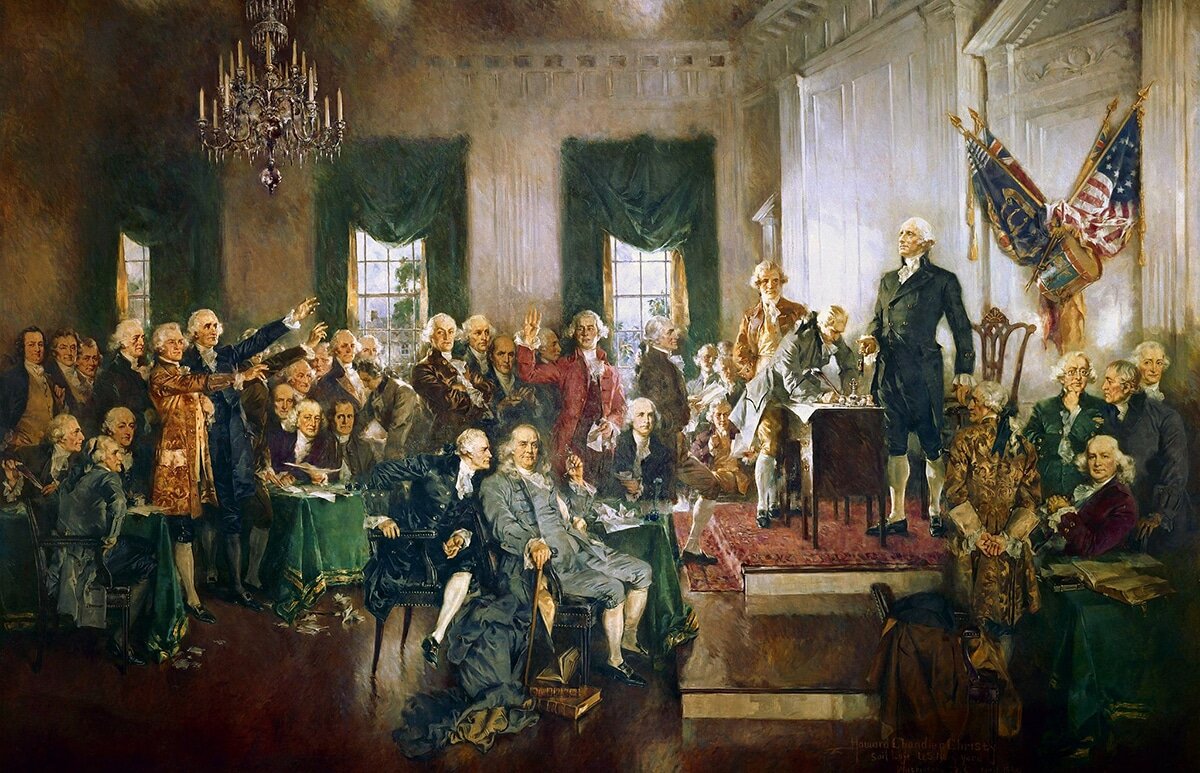
The conservative is a constitutionalist by disposition. The tradition that produced the English settlement of 1688, the American framers' work in 1787, and the gradual development of parliamentary government across the English-speaking world has placed the constitution — the fundamental framework of political authority — at the centre of its political thinking. What divides the conservative from other constitutionalist traditions is not the importance of the constitution but the account of what a constitution is, how it comes into being, and how it is sustained. The conservative account treats constitutions as historical achievements: the slow accumulation of institutional practice, legal...