
Print
Cite
Feedback
Share
The conservative case for freedom of speech is not a libertarian case for the indifference of the state to public discourse, but a case for the discipline of the state in its dealings with discourse. The tradition holds that the public exchange of arguments, evidence, and even errors is the medium through which a self-governing community comes to know itself, and that suppressing the medium degrades the community more than any individual error of speech could.
The defence is therefore neither absolute nor sentimental: it is the recognition that the alternative — the public authorities deciding what may be said — is in almost every case worse than the speech being controlled.
Key takeaways
- Freedom of speech, in the conservative tradition, is the legal and customary protection of public expression against suppression by the state — a precondition of self-government and a precondition, in particular, of the kind of moral and political deliberation through which a free society sustains itself.
- The tradition defends free speech on three converging grounds: the epistemic case (truth emerges from the contest of opinions), the dignitary case (the human person is a being whose proper functioning requires the exercise of reason in public), and the political case (no government can be held accountable by a citizenry it has silenced).
- Conservatives have diverged about the limits of free-speech doctrine, particularly on questions of obscenity, blasphemy, and the speech of public officials, but have converged in resisting the contemporary regulatory pressures from both progressive and post-liberal quarters that would narrow the doctrine’s protections.
History and context

The conservative inheritance on free speech runs through both Christian and classical channels. The Reformation-era disputes over religious toleration — exemplified by John Milton’s Areopagitica (1644), addressed against the Licensing Order of 1643 — produced the founding text of the modern free-speech tradition, in which Milton argued that “though all the windes of doctrin were let loose to play upon the earth, so Truth be in the field, we do injuriously by licencing and prohibiting to misdoubt her strength.”1
The English common-law tradition developed the doctrine through the seventeenth and eighteenth centuries. The acquittal of John Lilburne in 1649 and of the Seven Bishops in 1688 established the role of the jury in seditious-libel cases; the prosecutions of the printers of the Junius letters in 1770 and of the Dean of St Asaph in 1784 made the jury’s authority over the question of libel the contested issue that the Fox’s Libel Act of 1792 finally settled in the jury’s favour; Blackstone’s Commentaries gave the classical statement of the doctrine in the form that the American founders inherited.2
The American constitutional tradition built on this inheritance. The First Amendment’s Speech and Press Clauses, ratified in 1791, were given their modern interpretive shape in the early- and mid-twentieth-century cases, particularly Schenck v. United States (1919), Abrams v. United States (1919) with Justice Holmes’s dissent introducing the “marketplace of ideas” metaphor, Whitney v. California (1927) with Justice Brandeis’s concurrence linking free speech to democratic self-government, and New York Times Co. v. Sullivan (1964), which gave public figures a high bar for libel actions arising from public discussion.3 The doctrinal consolidation in Brandenburg v. Ohio (1969) — restricting permissible regulation to speech directed at and likely to produce imminent lawless action — set the protective floor that has, until recently, anchored American First Amendment law.
The British and Commonwealth traditions developed differently. Without a written First Amendment, the protection of speech rested on the common law, on the political culture of parliamentary debate, and (from 1998 in the UK) on the European Convention on Human Rights, Article 10 — which permits balancing tests that American doctrine has tended to exclude. The Canadian Charter of Rights and Freedoms (1982), with its section 1 “reasonable limits” clause, similarly produces a more balanced regime. The conservative engagement in these jurisdictions has emphasised the importance of speech as a precondition of self-government even in the absence of the American level of categorical protection.
The contemporary debate has been driven by two pressures. The progressive pressure, originating in the campus speech codes of the 1980s and 1990s and developed through subsequent decades, has emphasised the harms of “hate speech” and the asymmetric vulnerabilities of marginalised groups to public expression of demeaning views; this pressure has produced legal change in much of Europe and Canada and informal change in American institutions. The post-liberal conservative pressure, more recent, has questioned whether the older free-speech doctrine adequately protects the moral and civic preconditions of a healthy republic, and has been more willing than the older fusionist conservatism to consider regulatory responses.4
The conservative position
Three claims structure the mature tradition.
First, truth is discovered, not decreed. The conservative argument is not that all opinions are equally valuable but that the procedure for distinguishing valuable from worthless opinions cannot be entrusted to the authorities of the state. The history of officially licensed truth — religious, scientific, political — does not warrant the confidence that legislators and bureaucrats have the competence to do the work that a free discourse does poorly but does at all.
Second, self-government presupposes free criticism of the government. A regime in which the citizen may not freely criticise the magistrate is a regime in which the magistrate is no longer fully answerable to the citizen. The American founding generation, for all its later willingness to legislate against seditious libel in 1798, recognised the principle in its more lucid moments; the Brandeis concurrence in Whitney gave the principle its classic statement: “Those who won our independence by revolution were not cowards. They did not fear political change.”
Third, the regulation of speech tends to entrench the views of the regulators. The conservative tradition has, since at least the eighteenth century, been alert to the asymmetry between the principle in whose name speech regulation is proposed and the persons and views that, in practice, get regulated. Where contemporary speech codes are enforced by university administrators, social-media moderators, and human-rights tribunals, the conservative observes that the enforcers’ commitments shape the enforcement, and that the resulting regime suppresses heterodox views from one direction far more often than from the other.
Differing positions
The progressive position, in its most considered form, accepts the importance of free speech as a procedural principle but holds that the principle must be calibrated to a society’s distribution of power: speech that reinforces existing hierarchies, or that targets the dignity of marginalised groups, imposes harms that the older doctrine fails to recognise. Catharine MacKinnon’s work in the 1980s and 1990s developed the strongest version of this position in the American context; Jeremy Waldron’s The Harm in Hate Speech (2012) developed a more moderate version that treats hate-speech regulation as defending a public good of equal civic standing.5 The conservative reply concedes the harms but presses on the regulatory remedy: the question is not whether some speech inflicts harm but whether the institutional mechanisms available to suppress it can be trusted to identify the harmful speech without sweeping in the heterodox, the unfashionable, and the merely true-but-unwelcome.
The libertarian position takes the protective doctrine further than the conservative, holding that no content-based regulation of speech by the state is permissible, including in domains where the conservative would accept regulation (obscenity, the speech of subordinate military and civil-service personnel, the use of state schools to inculcate substantive moral commitments). The conservative and libertarian agree on more than they disagree, but the conservative is willing to recognise the legitimate interest of communities in regulating certain narrow categories — incitement, defamation, fraud, perjury, the corruption of public morals — that the consistent libertarian regards as overreach.
The post-liberal conservative position, articulated by writers including Adrian Vermeule and Patrick Deneen, has questioned whether the late-twentieth-century American free-speech doctrine was a permanent settlement or a contingent moment. The argument is that the doctrine flourished under conditions — a broadly Christian moral culture, an educated and self-disciplined citizenry, mass media with editorial responsibility — that no longer obtain, and that the unconditional protection of speech under contemporary conditions has produced an information environment incompatible with healthy democratic life. The older conservative tradition has resisted this turn, on the ground that the regulatory remedies on offer are at least as likely to deepen the disease as to cure it.
References
- John Milton, Areopagitica: A Speech of Mr. John Milton for the Liberty of Unlicenc’d Printing (London, 1644).
- William Blackstone, Commentaries on the Laws of England, Book IV, chapter 11 (Oxford: Clarendon Press, 1769).
- Abrams v. United States, 250 U.S. 616 (1919) (Holmes, J., dissenting); Whitney v. California, 274 U.S. 357 (1927) (Brandeis, J., concurring); Brandenburg v. Ohio, 395 U.S. 444 (1969).
- Adrian Vermeule, Common Good Constitutionalism (Cambridge: Polity, 2022).
- Jeremy Waldron, The Harm in Hate Speech (Cambridge, Mass.: Harvard University Press, 2012).
You've read articles over the past year
Will you support conservative education?
A gift of any amount helps keep unique explanatory journalism free for all, and
supports our mission to help everyone understand the world, regardless of their
ability to pay.One-time contributors join our community of givers and will be kept
up to date on the journalism that you help keep free.

Westernization
Westernization is the adoption by non-Western societies of institutions, technologies, laws, manners and habits of mind that originated in Western Europe and its colonial offshoots....
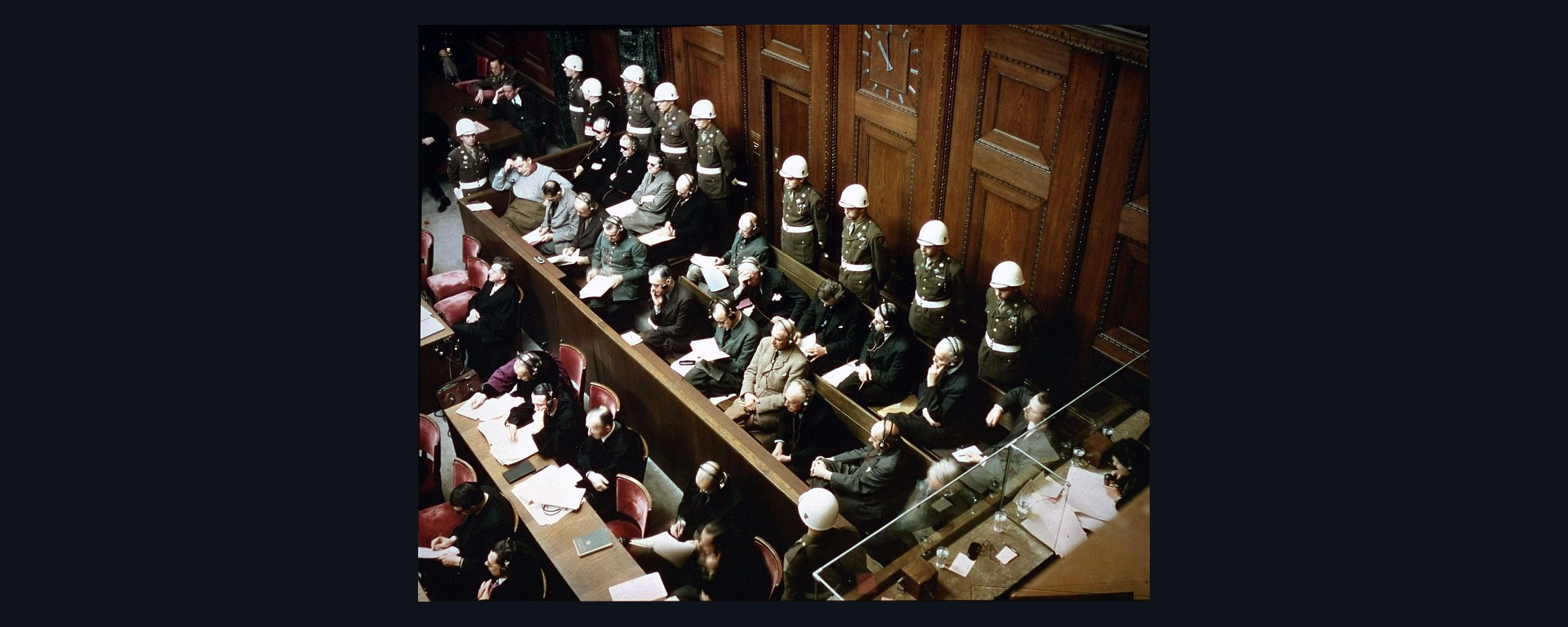
War Crime
A war crime is a serious violation of the law of armed conflict for which an individual bears personal criminal responsibility. The category covers the...

Voter ID Laws
Voter identification laws require a person presenting to vote to prove who they are, usually by producing a government-issued document. The requirement is unremarkable across...

Voter Fraud
Voter fraud is the deliberate corruption of an election by unlawful means: impersonating another voter, casting ballots in the name of the dead or the...