
Print
Cite
Feedback
Share
The question of what government is for divides political traditions more sharply than any dispute over particular policies. Conservatives answer that government exists to secure the conditions under which people can live ordered lives: defence against external attack, the suppression of violence and fraud, the enforcement of contract and property, and the administration of impartial justice. Everything beyond that list requires an argument, and the argument must clear a high bar, because power taken is rarely returned.
This is not a claim that the state should be small in every circumstance. It is a claim about the direction of proof. The burden falls on those proposing to enlarge government, not on those defending the institutions — family, congregation, firm, charity, municipality — that would otherwise do the work.
Key Takeaways
- The conservative account treats government as a remedy for human imperfection rather than an instrument for perfecting humanity.
- Edmund Burke defended the inherited constitution against abstract political theory in Reflections on the Revolution in France (1790).1
- Michael Oakeshott distinguished the state as an association of people pursuing their own ends under common rules from the state as an enterprise pursuing a single collective purpose.2
- James Madison grounded the separation of powers in the observation that men are not angels and that government must be made to control itself.4
- Subsidiarity — assigning each task to the smallest competent body — follows from conservative scepticism about centralised knowledge.
History And Context

Aristotle’s Politics treated the city as natural to human beings and its purpose as the good life rather than mere survival, a view that shaped Christian political thought through Thomas Aquinas. The modern debate begins with the collapse of that consensus.
Thomas Hobbes, writing during the English Civil War, argued in Leviathan (1651) that life without a common power is intolerable and that subjects therefore owe the sovereign obedience in exchange for peace. John Locke’s Second Treatise of Government (1689) answered that government is a trust held for the preservation of life, liberty, and estate, forfeit when it turns against those ends. The American founders took Locke’s premise and Madison’s mechanics: enumerated powers, a written constitution, and the deliberate setting of ambition against ambition.4
Burke supplied the conservative correction to both. Writing in 1790 against the French revolutionaries and their English admirers, he treated the constitution as an inheritance rather than a design, held in trust across generations, and warned that governments built on abstract theory destroy the customary restraints that made ordered liberty workable.1
The twentieth century inverted the presumption. The New Deal from 1933, the Beveridge settlement in Britain after 1942, and the growth of administrative agencies in every Western state transferred whole domains of decision from legislatures and localities to permanent bureaucracies. Government spending in the United Kingdom rose from roughly a tenth of national income before 1914 to over two-fifths by the 1970s. The conservative reaction — Thatcher from 1979, Reagan from 1981 — reduced state ownership and marginal rates while leaving the welfare state substantially intact, which is itself evidence of how difficult retrenchment proves once a function is assumed.
The Conservative Position
Conservatives hold that government’s first duty is order, because every other good depends on it. Property rights without enforcement are aspirations; commerce without courts is barter among people who already trust each other. A state that fails at policing and defence while attempting to manage diet, speech, and household arrangements has inverted its priorities.
The second commitment is to rules over commands. Oakeshott’s distinction between civil association and enterprise association captures it: in the first, government sets general rules within which people pursue purposes of their own choosing; in the second, government sets the purpose and conscripts the population to it.2 Wartime mobilisation is the legitimate case of the second, and conservatives resist its extension to peacetime problems, because the vocabulary of emergency licenses permanent expansion.
Third, dispersed knowledge. Hayek’s argument in The Constitution of Liberty is that the information required to run a complex society exists in fragments held by millions of people and cannot be assembled at the centre.3 It follows that central plans fail not through bad faith but through structural ignorance, and that the rule of law — general, prospective, known rules applied equally — outperforms discretionary administration.
Fourth, mediating institutions. Burke’s little platoon is where obligation is learned. When the state assumes their functions, it does not simply duplicate them; it makes them redundant and they decay. This is the conservative objection to programmes that substitute for the family rather than supporting it.
Fifth, constraint by structure. Conservatives place little weight on the good intentions of officeholders and considerable weight on institutional design: separated powers, federalism, judicial independence, fixed terms, and written limits on what majorities can enact. Madison’s premise is that the design must hold when the people running it are ordinary.4
Differing Positions
Progressives answer that formal liberty without material capacity is empty. A person free to seek work while lacking literacy, health, or transport is not meaningfully free, and only public provision at scale supplies those preconditions. On this view an expansive state enlarges liberty rather than shrinking it.
Economists across the spectrum add the public goods case. Defence, clean air, basic research, and public health have benefits no private actor can capture and costs no private actor will bear alone, so markets underprovide them. Where externalities are large and information is asymmetric — pollution, financial stability, pharmaceuticals — regulation corrects outcomes markets get wrong.
A third argument holds that the conservative account misreads history. Modern markets did not precede the state; they were constructed by it, through company law, patents, standardised weights, central banking, and enforceable contract. If the state constitutes the market rather than merely refereeing it, the question is not how much government but which arrangements, and the conservative presumption against action loses its foundation.
Conservatives reply that the case for correcting market failure assumes officials who possess information they lack and incentives they do not face. The choice is between imperfect markets and imperfect governments, and the comparison must be made honestly rather than between real markets and idealised administration.
References
- Edmund Burke, Reflections on the Revolution in France (J. Dodsley, 1790).
- Michael Oakeshott, On Human Conduct (Oxford University Press, 1975), essay 2, “On the Civil Condition.”
- F. A. Hayek, The Constitution of Liberty (University of Chicago Press, 1960), pt. I, ch. 2.
- James Madison, The Federalist, no. 51 (1788).
- [1] Tanzi, Vito . 1999. “Transition and the Changing Role of Government.” IMF.org. June. https://www.elibrary.imf.org/downloadpdf/journals/022/0036/002/article-A006-en.pdf.
- [2] Wehner , Peter, and Michael Gerson. 2014. “A Conservative Vision of Government.” Www.nationalaffairs.com. https://www.nationalaffairs.com/publications/detail/a-conservative-vision-of-government.
- [3] Gregg, Samuel, and D. Phil • November 07. 2017. “Edmund Burke’s Conservative Case for Free Markets.” Acton Institute. November 7. https://www.acton.org/pub/commentary/2017/11/07/edmund-burkes-conservative-case-free-markets.
You've read articles over the past year
Will you support conservative education?
A gift of any amount helps keep unique explanatory journalism free for all, and
supports our mission to help everyone understand the world, regardless of their
ability to pay.One-time contributors join our community of givers and will be kept
up to date on the journalism that you help keep free.

Westernization
Westernization is the adoption by non-Western societies of institutions, technologies, laws, manners and habits of mind that originated in Western Europe and its colonial offshoots....
War Crime
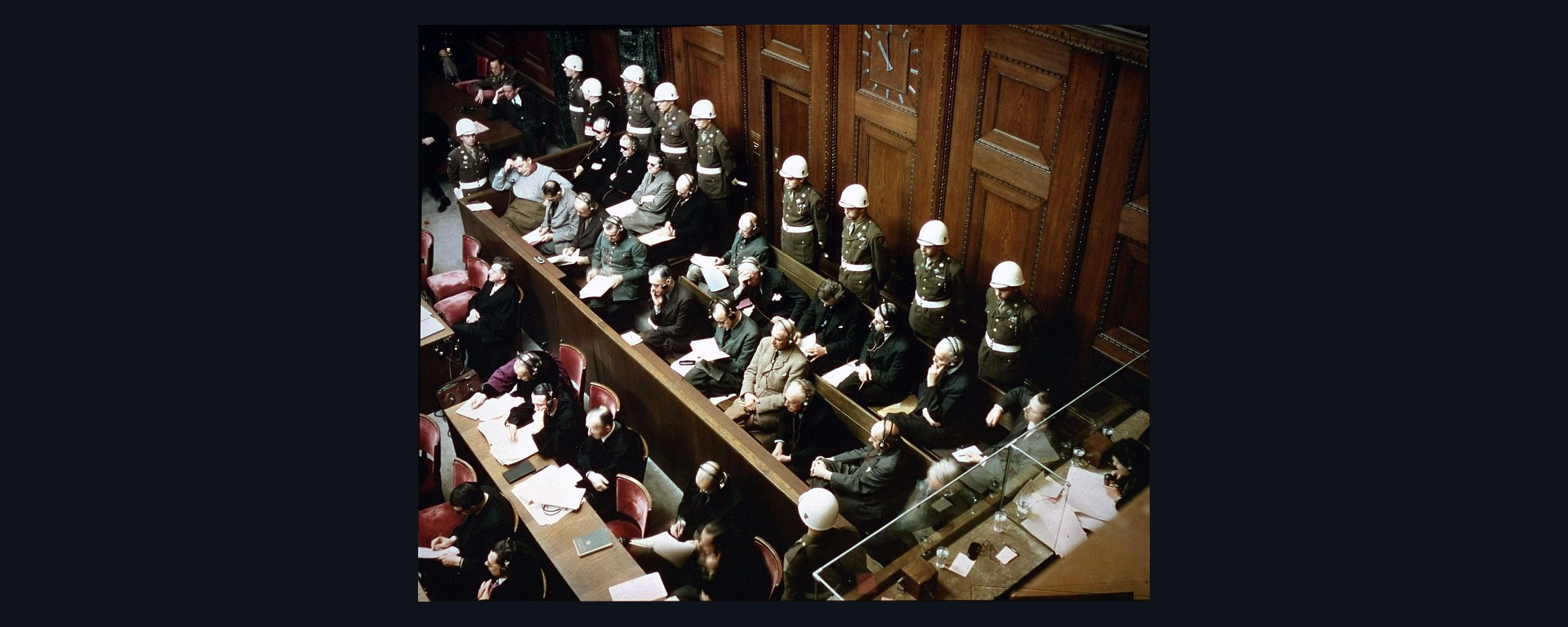
A war crime is a serious violation of the law of armed conflict for which an individual bears personal criminal responsibility. The category covers the...

Voter ID Laws
Voter identification laws require a person presenting to vote to prove who they are, usually by producing a government-issued document. The requirement is unremarkable across...

Voter Fraud
Voter fraud is the deliberate corruption of an election by unlawful means: impersonating another voter, casting ballots in the name of the dead or the...