
Print
Cite
Feedback
Share
George Orwell’s Nineteen Eighty-Four, published on 8 June 1949, is the most widely read political novel of the twentieth century and the one conservatives cite most. Its subject is not merely surveillance or dictatorship but the deliberate destruction of the inherited things that make independent thought possible: a stable language, a recorded past, private affection, and the ordinary loyalties of family and place.
Conservatives read the book as a study in what happens when a governing party treats every human institution as raw material for reconstruction. Winston Smith’s rebellion begins with a diary and a fragment of coral, both survivals from a world Ingsoc has not yet finished erasing.1
Key Takeaways
- Orwell published the novel in 1949, seven months before his death from tuberculosis in January 1950.
- The central mechanisms are Newspeak, the memory hole, and doublethink: attacks on language, history, and reason respectively.
- Conservatives treat the book as an argument for inherited limits on power, not as a partisan tract against one regime.
- Orwell was a lifelong democratic socialist; his warning was aimed at the totalitarian temptation inside his own camp.
- The phrase “Orwellian” has been stretched to cover any state action a speaker dislikes, which weakens its use.
History And Context
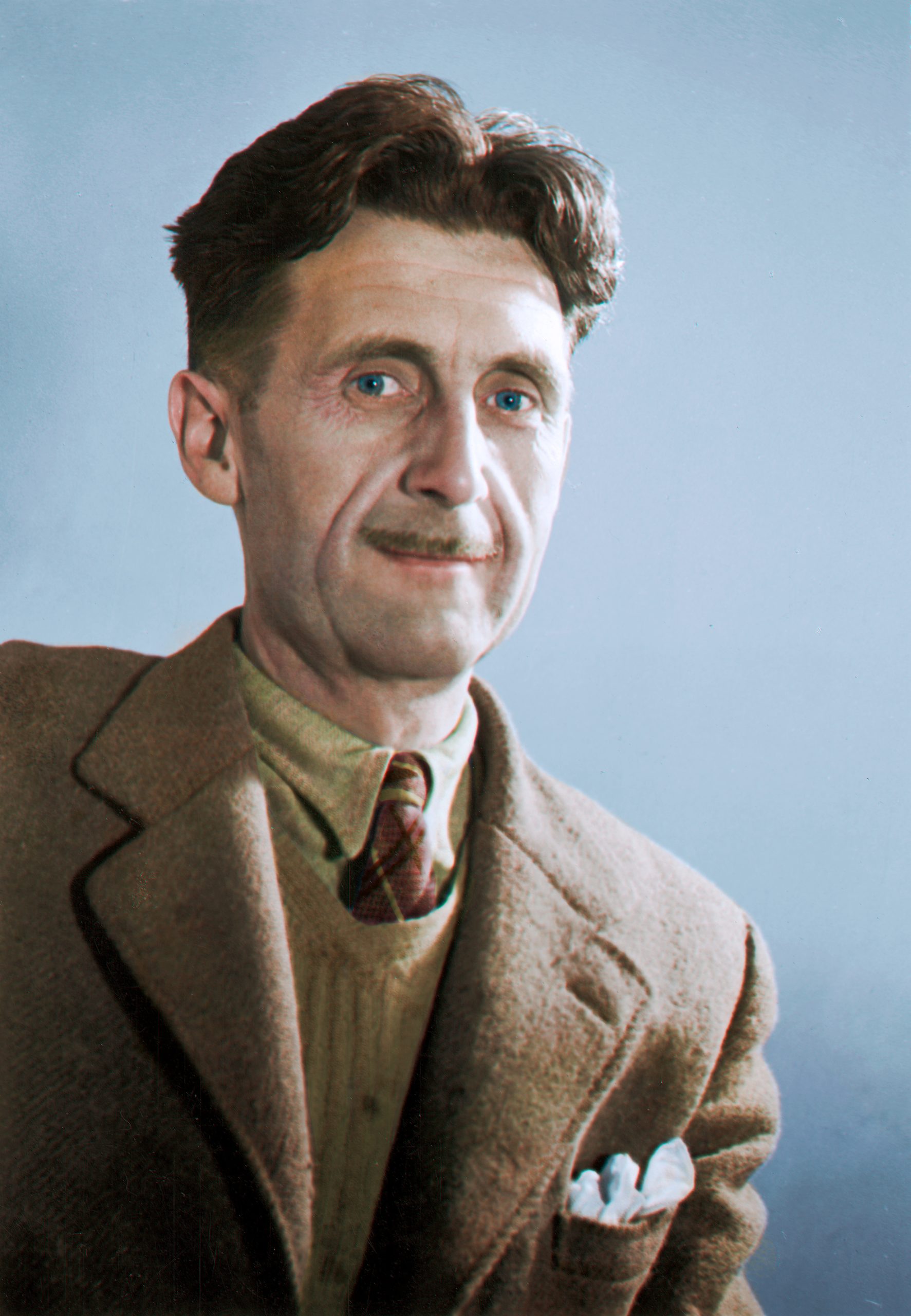
Eric Arthur Blair, writing as George Orwell, fought with the POUM militia in the Spanish Civil War in 1937 and was shot through the throat near Huesca. What changed him was not the wound but the propaganda that followed: Soviet-aligned papers in Barcelona described battles he had witnessed in terms he knew to be false, and the fabrications were printed as record. He set this down in Homage to Catalonia in 1938.2
The novel took shape on the Hebridean island of Jura between 1946 and 1948, written in poor health on a manual typewriter. Its intellectual furniture came from several sources. Yevgeny Zamyatin’s We, which Orwell reviewed in 1946, supplied the shape of the dystopia. Arthur Koestler’s Darkness at Noon (1940) supplied the interrogation. James Burnham’s The Managerial Revolution (1941) supplied the three-superstate world order of Oceania, Eurasia and Eastasia, and Orwell argued with Burnham in print about it.3
The wartime BBC, where Orwell worked from 1941 to 1943 producing broadcasts to India, supplied the Ministry of Truth. He knew the machinery from inside, and he disliked what he saw himself doing.
The Conservative Position
Conservatives find in the novel a defence of the concrete against the abstract. Ingsoc does not simply rule; it abolishes the standards by which rule could be judged. Newspeak is designed so that heretical thought becomes literally unsayable, which is a totalitarian ambition no ordinary tyranny has held. Russell Kirk argued that the conservative mind rests on belief in a moral order that men discover rather than invent, and Orwell’s Party denies exactly this by insisting that two plus two equals whatever the Party says.4
The second conservative reading concerns intermediate institutions. Robert Nisbet’s account of the modern state describes it advancing by dissolving the smaller associations that stand between the individual and central power: the family, the guild, the parish, the town.5 Oceania has completed that dissolution. Children denounce parents through the Spies. Marriage exists only for procreation. The Junior Anti-Sex League attacks private affection because loyalty to a person competes with loyalty to Big Brother. Winston’s affair with Julia is treated as a political crime precisely because it is a private good.
The third is the memory hole. A society that can revise its own record has cut itself off from the accumulated judgment of the dead, which Edmund Burke described as the partnership between those living, those dead, and those yet to be born. Ingsoc’s rolling revision of newspapers is that partnership dissolved by administrative routine. Roger Scruton made the same point about modern iconoclasm: a culture that despises its inheritance leaves nothing for the next generation to receive.6
Differing Positions
The main objection is that conservatives have annexed a socialist author. Orwell described himself in 1946 as writing for democratic socialism, and his target was Stalinism and the fellow-travelling English intelligentsia rather than collective provision as such. On this reading, Nineteen Eighty-Four argues for honest socialism, not against redistribution, and citing it in debates over taxation or health policy misuses it.
A second objection holds that the book’s warnings have been over-applied. Critics on both left and right note that “Orwellian” now attaches to speed cameras and content moderation alike, which flattens the distinction between an inconvenient bureaucracy and a state that tortures dissidents into loving it. The novel’s specific horror is the Ministry of Love, and stretching the label to routine regulation drains the word of force.
A third argues the diagnosis is dated. Aldous Huxley wrote to Orwell in October 1949 predicting that populations would be governed by pleasure and suggestion rather than the boot, and many now judge Brave New World the more accurate forecast. Conservatives answer that the two are not rivals: soft managerial control and hard coercion share the same premise, that human nature is material to be administered.
References
- George Orwell, Nineteen Eighty-Four (Secker & Warburg, 1949).
- George Orwell, Homage to Catalonia (Secker & Warburg, 1938).
- James Burnham, The Managerial Revolution (John Day, 1941).
- Russell Kirk, The Conservative Mind: From Burke to Santayana (Henry Regnery, 1953).
- Robert Nisbet, The Quest for Community (Oxford University Press, 1953).
- Roger Scruton, Culture Counts: Faith and Feeling in a World Besieged (Encounter Books, 2007).
You've read articles over the past year
Will you support conservative education?
A gift of any amount helps keep unique explanatory journalism free for all, and
supports our mission to help everyone understand the world, regardless of their
ability to pay.One-time contributors join our community of givers and will be kept
up to date on the journalism that you help keep free.
1984
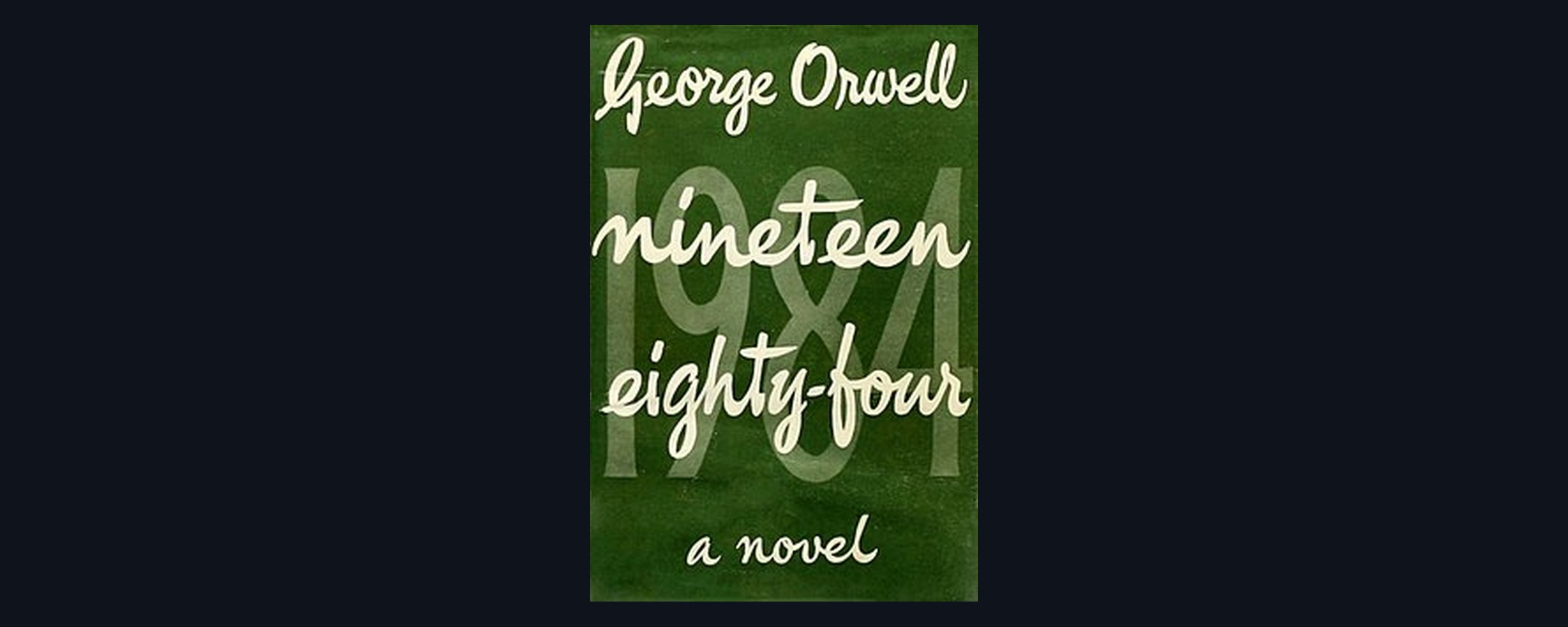
George Orwell published Nineteen Eighty-Four in June 1949, seven months before his death from tuberculosis, as a warning rather than a prophecy. The novel imagines...
Nineteen Eighty-Four
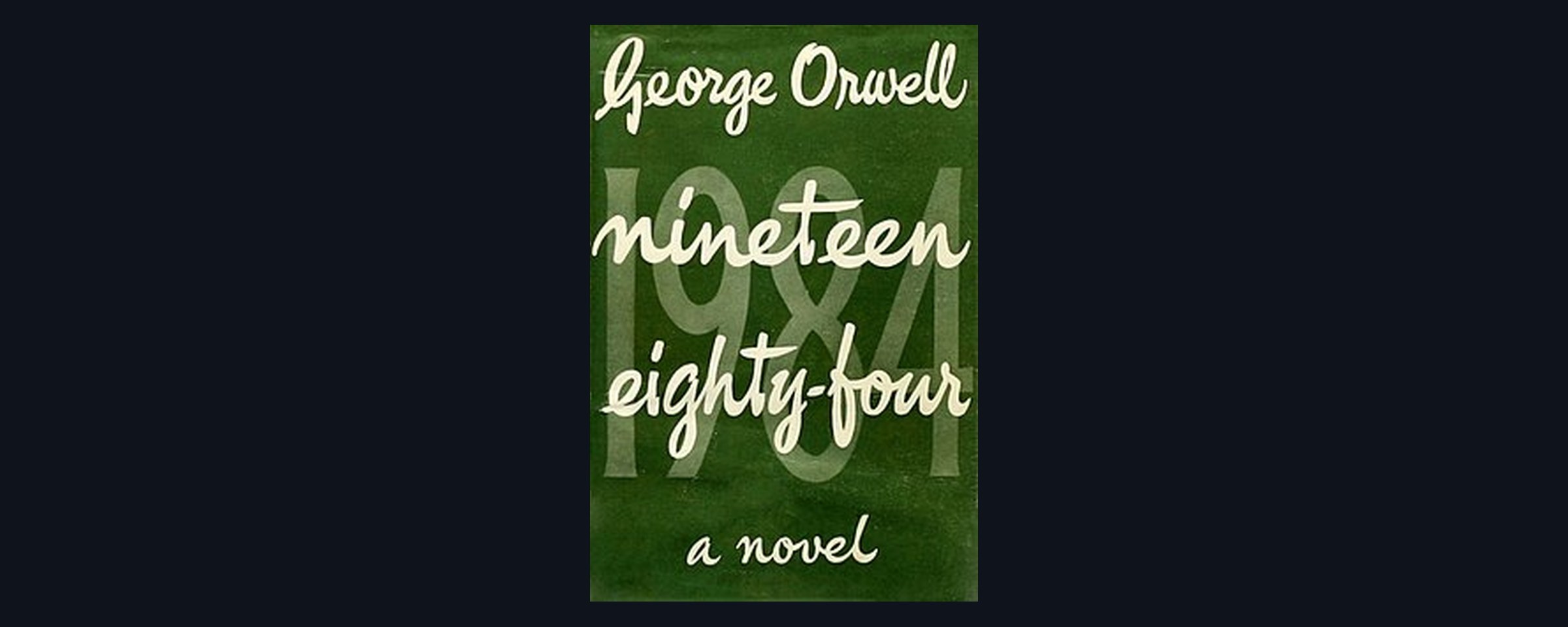
George Orwell's Nineteen Eighty-Four, published in June 1949, has become the twentieth century's standard reference point for describing state power stripped of restraint. Conservatives read...

1984
George Orwell's Nineteen Eighty-Four, published on 8 June 1949, is the most widely read political novel of the twentieth century and the one conservatives cite...

Nineteen Eighty-Four
George Orwell's Nineteen Eighty-Four, published on 8 June 1949, has become the standard warning against total state power. A dying Orwell wrote it as a...