
Print
Cite
Feedback
Share
Agrarianism holds that a society of landowning cultivators produces better citizens and steadier politics than one of wage earners in cities. It is the oldest strand of conservative thought in the English-speaking world, running from Virgil through Thomas Jefferson to the Southern Agrarians of 1930 and the American localists writing today.
Agrarianism is not nostalgia for farming as an occupation. Its claim is political: property in land gives a household independence from employers and from the state, and independent households make a republic possible. Where that independence disappears, agrarians argue, self-government becomes an empty form.
Key Takeaways
- Agrarianism ties political liberty to widely distributed ownership of productive property, not to farming as such.
- Jefferson’s argument that those who labour in the earth are the chosen people of God set the terms for American agrarian thought.
- The Southern Agrarians’ I’ll Take My Stand (1930) restated the case against industrialism at the moment of the Depression.
- Modern agrarian writing, chiefly Wendell Berry’s, shifted the argument towards ecological and communal costs of industrial farming.
- Critics answer that agrarian societies were poorer, less mobile, and — in the American South — built on slavery.
History And Context

The tradition is classical in origin. Virgil’s Georgics, composed between 37 and 29 BC, presented Italian husbandry as the school of Roman virtue, and Cato the Elder’s De Agri Cultura had earlier praised the farmer as the source of the sturdiest soldiers. The Roman ideal of the citizen-farmer, embodied in the story of Cincinnatus leaving his plough for the dictatorship in 458 BC and returning to it sixteen days later, entered the Western political vocabulary and never left it.
English republican writing carried the theme into modernity. James Harrington’s Oceana (1656) argued that political power follows the distribution of land, so that a republic requires an agrarian law limiting concentrated holdings. Harrington’s proposition — that the constitution of property determines the constitution of the state — became the intellectual bridge to America.
Thomas Jefferson made the argument central to American self-understanding. In Notes on the State of Virginia, written in 1781 and printed in 1785, he set the independence of the cultivator against the dependence of the manufacturing workman and warned that the mobs of great cities add as much to the support of pure government as sores add to the strength of the human body.1 His opposition to Hamilton’s financial and manufacturing programme in the 1790s followed from this. Jefferson’s own dependence on enslaved labour at Monticello sits at the centre of every serious assessment of his agrarianism.
The tradition’s sharpest modern statement came from Nashville. Twelve Southern writers — among them John Crowe Ransom, Allen Tate, Robert Penn Warren, and Donald Davidson — published I’ll Take My Stand: The South and the Agrarian Tradition in 1930, defending a rural order against industrialism.2 The book’s defence of Southern regional life carried an accommodation with segregation that its critics have pressed ever since, and which several of the contributors later repudiated.
Wendell Berry reopened the argument on different ground with The Unsettling of America (1977), written after the Nixon-era agriculture secretary Earl Butz told farmers to plant fence row to fence row or get out. Berry treated soil erosion, rural depopulation, and the collapse of farm communities as consequences of treating land as a financial asset rather than a trust.3
The Conservative Position
Conservatives take three things from agrarianism. The first is the link between property and liberty. A household that owns its means of subsistence can refuse an employer, an official, or a political faction. Hilaire Belloc argued in The Servile State (1912) that a population without property will trade freedom for security and end in a condition of managed dependence, whether the manager is a corporation or a ministry.4
The second is scale. Agrarians hold that human beings govern well what they can see. This connects agrarianism to subsidiarity and to Burke’s little platoons: the farm, the parish, and the county are units within which responsibility is legible and consequences return to the person who caused them. Distant ownership breaks that circuit, whether the distant owner is a state agency or an investment fund.
The third is stewardship. Land held across generations is treated differently from land held for resale. Berry’s argument that good farming is a cultural achievement rather than a technique matches the conservative conviction that inherited practice encodes knowledge that no model captures. This is why agrarian conservatism sits awkwardly with a purely market conservatism: agrarians accept the market as a tool while denying that land is an ordinary commodity.
Differing Positions
The economic objection is decisive for most critics. Agricultural societies were poor. The movement of labour from farms to industry raised living standards, life expectancy, and literacy across every country where it occurred, and agricultural employment in Britain fell from roughly a fifth of the workforce in 1850 to about one per cent today while food output rose. An agrarian restoration would mean accepting lower incomes for the people it claims to defend.
The historical objection is that American agrarianism was entangled with slavery and then with sharecropping and segregation. Jefferson’s independent cultivator existed alongside two hundred enslaved people at Monticello, and the Nashville Agrarians defended a social order sustained by racial hierarchy. Critics argue the tradition cannot be separated from these arrangements without becoming something else.
A third objection questions the causal claim. Landownership has coexisted with feudalism, caciquism, and rural authoritarianism across Europe and Latin America. Rural property produced deference as readily as independence, and the historical association between cities and political liberty runs in the opposite direction to the agrarian thesis.
References
- Thomas Jefferson, Notes on the State of Virginia (private printing, Paris, 1785; John Stockdale, London, 1787), Query XIX.
- Twelve Southerners, I’ll Take My Stand: The South and the Agrarian Tradition (Harper & Brothers, 1930).
- Wendell Berry, The Unsettling of America: Culture and Agriculture (Sierra Club Books, 1977).
- Hilaire Belloc, The Servile State (T. N. Foulis, 1912).
- "Agrarianism," Encyclopedia Britannica, accessed May 24, 2025.
- "Southern Agrarians," New World Encyclopedia, accessed May 24, 2025.
- Berry, Wendell. The Unsettling of America: Culture & Agriculture. Sierra Club Books, 1977. (Representing a prominent modern agrarian voice, often with conservative-leaning themes on community and tradition).
- "Yeoman," Wikipedia, accessed May 24, 2025.
- "Localism," Wikipedia, accessed May 24, 2025.
- "Subsidiarity," Stanford Encyclopedia of Philosophy, accessed May 24, 2025.
- "Distributism," Wikipedia, accessed May 24, 2025. (An economic philosophy with some overlapping themes with agrarianism, particularly regarding widespread property ownership, sometimes found in traditional conservative circles).
- Carlson, Allan C. The New Agrarian Mind: The Movement Toward Decentralist Thought in Twentieth-Century America. Transaction Publishers, 2000.
- "Environmental stewardship," Wikipedia, accessed May 24, 2025.
- "Laissez-faire," Encyclopedia Britannica, accessed May 24, 2025
- "Collectivized farming," Encyclopedia Britannica, accessed May 24, 2025.
- "Deep ecology," Encyclopedia Britannica, accessed May 24, 2025.
You've read articles over the past year
Will you support conservative education?
A gift of any amount helps keep unique explanatory journalism free for all, and
supports our mission to help everyone understand the world, regardless of their
ability to pay.One-time contributors join our community of givers and will be kept
up to date on the journalism that you help keep free.

Westernization
Westernization is the adoption by non-Western societies of institutions, technologies, laws, manners and habits of mind that originated in Western Europe and its colonial offshoots....
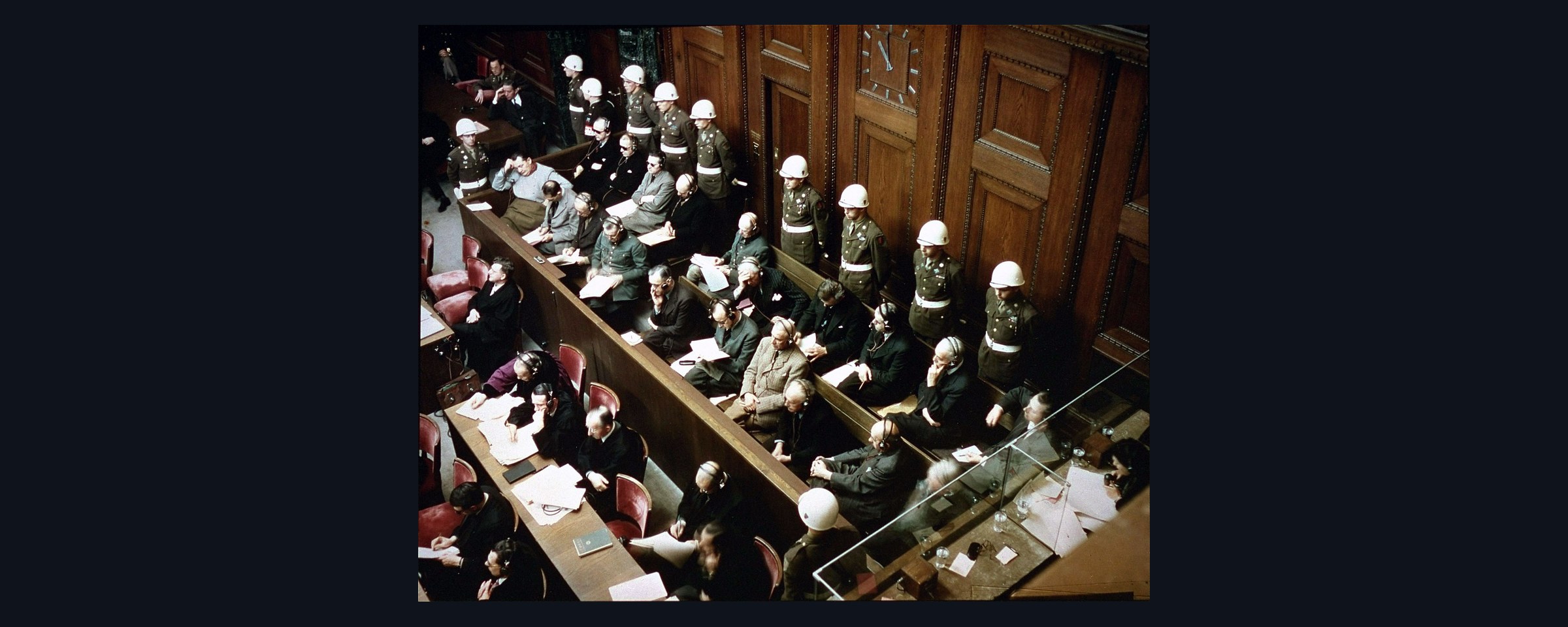
War Crime
A war crime is a serious violation of the law of armed conflict for which an individual bears personal criminal responsibility. The category covers the...

Voter ID Laws
Voter identification laws require a person presenting to vote to prove who they are, usually by producing a government-issued document. The requirement is unremarkable across...

Voter Fraud
Voter fraud is the deliberate corruption of an election by unlawful means: impersonating another voter, casting ballots in the name of the dead or the...