
Print
Cite
Feedback
Share
Authority is the right to be obeyed, as distinct from the capacity to compel. A parent, a judge, a sergeant, and a physician each direct the conduct of others, and in each case the claim rests on something other than superior force. Conservatives treat authority as the load-bearing element of a free society: where it holds, coercion is rare; where it collapses, the state fills the vacuum with police, regulation, and surveillance.
The modern argument turns on legitimacy. Progressive thought since the Enlightenment has treated every inherited authority as suspect until it justifies itself before reason. Conservatives reverse the burden. An institution that has held the allegiance of generations carries a presumption in its favour, and the person demanding its abolition owes an account of what will replace it.
Key Takeaways
- Authority is a right to obedience grounded in office, competence, or inheritance; power is the bare ability to enforce compliance.
- Conservatives hold that authority dispersed across families, churches, firms, professions, and local bodies restrains the central state.
- Edmund Burke argued in 1790 that prejudice — settled habit and inherited attachment — carries practical wisdom that individual reasoning cannot reconstruct from scratch.
- Max Weber’s threefold typology of traditional, charismatic, and legal-rational authority remains the standard analytical frame.
- The conservative anxiety since the 1960s is that intermediate authorities have decayed while the state and the market expanded into the space they left.
History And Context

The Roman distinction between auctoritas and potestas is the origin. The Senate held auctoritas, weight of counsel that carried no power of enforcement; magistrates held potestas, the legal power to command. The Romans took the separation seriously enough that Augustus, in the Res Gestae, claimed to have surpassed all others in auctoritas while holding no more formal power than his colleagues in office.
Medieval Europe stacked authority in overlapping layers: pope, emperor, king, baron, guild, university, and household each held a jurisdiction the others could not simply override. The result was a Christendom of competing claims rather than a sovereign command structure, and conservatives have looked back on it as the source of Western liberty precisely because no single authority reached everywhere.
Hobbes broke this in 1651. Leviathan argued that divided authority produces civil war, and that peace requires one sovereign whose word settles every dispute. Locke’s Two Treatises of Government, written against Filmer around 1680 and published in 1689, answered with government by consent and a right of resistance. Both, in different ways, made legitimacy a matter of agreement rather than inheritance.
Burke wrote against that whole framing in 1790. Watching the French revolutionaries dismantle church, nobility, guild, and province in the name of reason, he argued that a society’s inherited arrangements encode more practical intelligence than any individual or assembly can supply, and that men who sweep them away find themselves ruled by whoever holds the sword.1 Within four years the Terror had supplied his evidence.
Max Weber gave sociology its vocabulary in the early twentieth century, distinguishing traditional authority resting on custom, charismatic authority resting on the personal gift of a leader, and legal-rational authority resting on impersonal rules and offices.2 Weber expected bureaucratic legal-rational authority to displace the other two. He had already described the resulting condition in The Protestant Ethic and the Spirit of Capitalism as a housing hard as steel, rendered into English by Talcott Parsons as the iron cage.7
Robert Nisbet extended the analysis in The Quest for Community in 1953, arguing that the destruction of intermediate associations — guild, parish, extended family, locality — leaves individuals isolated and drives them toward the total state as a substitute for the belonging they have lost.3
The Conservative Position
Conservatives distinguish authority from authoritarianism, and treat the second as a symptom of the first’s failure. A school where teachers hold recognised authority needs few sanctions. A school where that authority has evaporated needs cameras, resource officers, and behavioural policies. The same holds nationally: as churches, unions, families, professional bodies, and neighbourhood institutions lose their standing, the state assumes their functions and enforces by statute what was previously secured by shared expectation.
Michael Oakeshott developed the point at the level of political theory, describing the conservative disposition as an attachment to present arrangements and a preference for the familiar over the unknown improvement.4 The disposition is not stupidity about reform. It is a judgement about the odds: existing institutions have survived contact with reality, and proposed replacements have not.
Roger Scruton pressed the argument toward the family. He held that the child’s first encounter with authority — parental, unchosen, and prior to any consent — is what makes later civic obligation intelligible. A person raised to recognise no unchosen obligation will experience law as arbitrary interference rather than as a claim with a moral hold.5
The conservative caveat is that authority must be answerable. Burke’s whole career, including the impeachment of Warren Hastings, was directed against officeholders who treated authority as personal property. Authority that stops serving the trust attached to its office forfeits the presumption in its favour. Conservatives insist that the correction be reform of the institution rather than abolition of the office.
Differing Positions
Liberal and anarchist critics deny that inheritance can generate obligation. The standard position, associated with Robert Paul Wolff’s In Defense of Anarchism, is that the autonomous person is bound only by what reason endorses, and that a duty to obey simply because an authority commands is incompatible with moral responsibility.6 On this view the conservative presumption launders whatever arrangements happen to have survived, including arrangements that survived through conquest and exclusion.
The historical objection is sharper. Inherited authority in Europe and its colonies rested on slavery, disenfranchisement, and the legal subordination of women, and it was dismantled by people who refused the presumption in its favour. Every emancipation the conservative now takes for granted was, in its moment, an assault on institutions that had held the allegiance of generations.
Conservatives answer that the reformers who succeeded — Wilberforce, the common-law judges, the constitutionalists — worked through inherited institutions rather than against them, appealing to standards those institutions already professed. The revolutions that discarded the inheritance altogether, in France in 1793 and Russia in 1917, produced the concentrated power Burke predicted. The argument turns on which examples are treated as the rule.
References
- Edmund Burke, Reflections on the Revolution in France (J. Dodsley, 1790).
- Max Weber, Wirtschaft und Gesellschaft (Mohr, 1922); translated as Economy and Society, ed. Guenther Roth and Claus Wittich (University of California Press, 1978).
- Robert A. Nisbet, The Quest for Community (Oxford University Press, 1953).
- Michael Oakeshott, “On Being Conservative”, in Rationalism in Politics and Other Essays (Methuen, 1962).
- Roger Scruton, The Meaning of Conservatism (Penguin, 1980).
- Robert Paul Wolff, In Defense of Anarchism (Harper & Row, 1970).
- Max Weber, Die protestantische Ethik und der Geist des Kapitalismus (1905); translated by Talcott Parsons as The Protestant Ethic and the Spirit of Capitalism (Allen & Unwin, 1930).
- Barber, Nigel. 2021. "Why Conservatives Love Authority and Hate Government: A cozy relationship between Capitol police and rioters shows this contradiction." Psychology today. January 13. https://www.psychologytoday.com/intl/blog/the-human-beast/202101/why-conservatives-love-authority-and-hate-government.
- Denworth, Lydia. 2020. "Conservative and Liberal Brains Might Have Some Real Differences." Scientific American. October 26. https://www.scientificamerican.com/article/conservative-and-liberal-brains-might-have-some-real-differences/.
- Tutor2u. 2020. "Authority (Conservatism)." Tutor2u. June 24. https://www.tutor2u.net/politics/reference/authority-conservatism.
You've read articles over the past year
Will you support conservative education?
A gift of any amount helps keep unique explanatory journalism free for all, and
supports our mission to help everyone understand the world, regardless of their
ability to pay.One-time contributors join our community of givers and will be kept
up to date on the journalism that you help keep free.

Westernization
Westernization is the adoption by non-Western societies of institutions, technologies, laws, manners and habits of mind that originated in Western Europe and its colonial offshoots....
War Crime
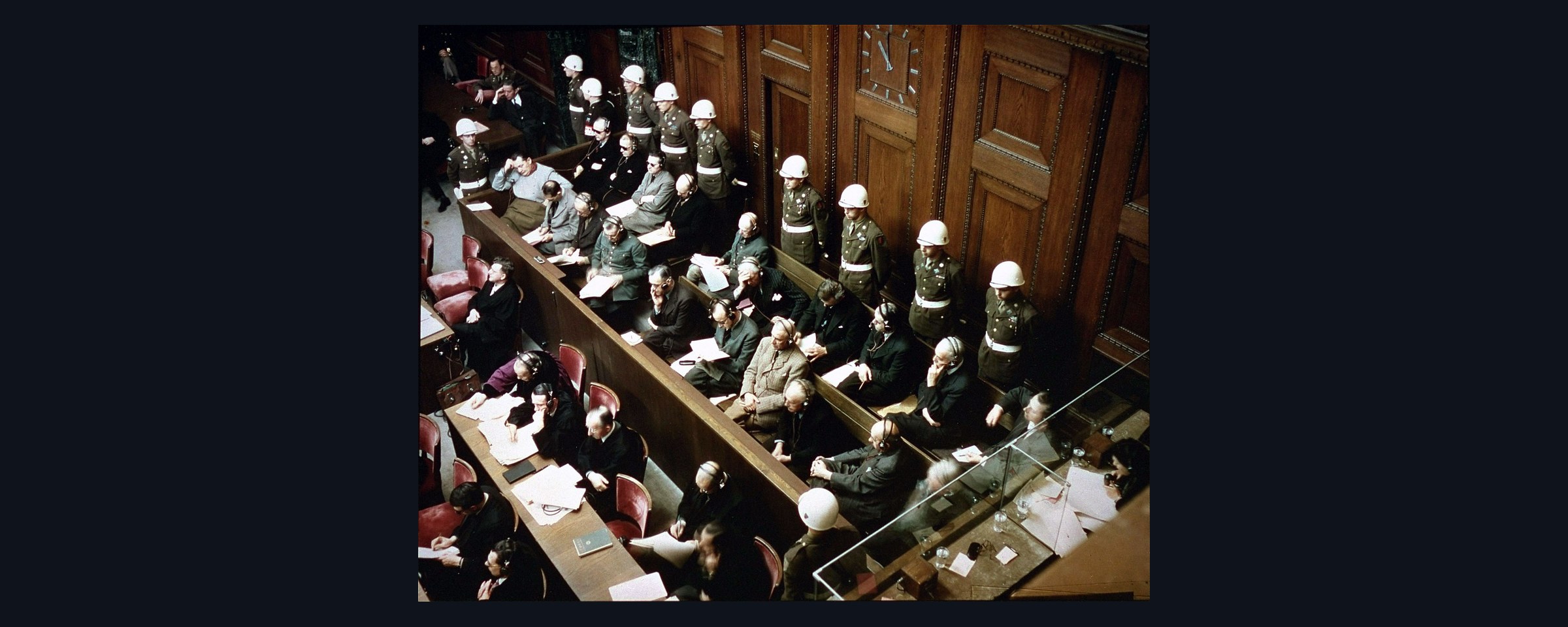
A war crime is a serious violation of the law of armed conflict for which an individual bears personal criminal responsibility. The category covers the...

Voter ID Laws
Voter identification laws require a person presenting to vote to prove who they are, usually by producing a government-issued document. The requirement is unremarkable across...

Voter Fraud
Voter fraud is the deliberate corruption of an election by unlawful means: impersonating another voter, casting ballots in the name of the dead or the...