
Print
Cite
Feedback
Share
Centre-left politics describes the moderate left of the democratic spectrum: parties and movements that favour social equality and an active state while accepting the market economy, private property, and constitutional democracy. It covers social democrats, modern liberals in the American sense, and the “third way” reformers of the 1990s. Conservatives engage the centre-left as their ordinary democratic opponent rather than as a revolutionary threat, crediting its acceptance of markets while disputing its faith in state remedies.
The distinction from the far left is the whole point. The centre-left made its peace with capitalism and the ballot box. That settlement is what makes it a partner in democratic argument, even where conservatives judge its prescriptions mistaken.
Key Takeaways
- The centre-left accepts capitalism and liberal democracy while seeking redistribution and an enlarged welfare state.
- It includes social democracy, modern American liberalism, and “third way” politics associated with Blair and Clinton.
- It is set apart from the far left by its rejection of revolution and wholesale state ownership of the economy.
- Conservatives criticise its expansion of state spending and regulation while acknowledging shared democratic commitments.
History And Context

The centre-left grew out of reformism that broke with revolutionary Marxism around 1900. The British Labour Party was founded in 1900, and on the Continent Eduard Bernstein’s Evolutionary Socialism (1899) argued that socialists should pursue gradual reform through parliaments rather than insurrection. The postwar decades built the welfare state: Clement Attlee’s Labour government of 1945 to 1951 created Britain’s National Health Service and nationalised key industries, and Keynesian demand management became orthodoxy across Western democracies.
The “third way” reshaped the centre-left at the end of the century. Bill Clinton’s New Democrats and Tony Blair’s New Labour, which governed Britain from 1997 to 2007, accepted market liberalisation, balanced budgets, and welfare reform while keeping public spending on health and education. The sociologist Anthony Giddens supplied the theory in The Third Way (1998), recasting social democracy for a globalised economy. This is the centre-left in its recognisable modern form.
The Conservative Position
Conservatives argue that the centre-left mistakes the state for the engine of social good. Friedrich Hayek warned that even moderate, well-intentioned expansions of state planning erode the price signals and personal responsibility that a free society depends on. Conservatives credit the centre-left for abandoning nationalisation and accepting markets, but they contend that its programme of redistribution, regulation, and credentialed administration concentrates power in bureaucracies.
The deeper conservative critique is that the welfare state crowds out the institutions Burke and Tocqueville identified as the real sources of social provision: the family, the church, and the voluntary association. When the state assumes responsibilities once carried by these bodies, conservatives argue, it weakens the civic muscles that self-government requires and fosters dependency. The fiscal objection follows: expansive welfare states accumulate unfunded liabilities that burden later generations.
Differing Positions
The centre-left answers that unregulated markets produce instability, monopoly, and inequality that undermine the very social order conservatives prize. Public provision of health, education, and pensions has proven durable and popular across the democratic world, and its defenders point to the Nordic countries as evidence that generous welfare states coexist with prosperity and high social trust. The historian Tony Judt argued that the postwar social settlement underwrote, rather than threatened, Europe’s stability.
The honest debate is empirical and continuing. It concerns how much redistribution a dynamic economy can sustain, how to design transfers that support rather than replace work, and where state provision strengthens or weakens civil society. Both sides accept markets and democracy, which keeps the argument inside the bounds of ordinary politics rather than first principles.
References
- Anthony Giddens, The Third Way: The Renewal of Social Democracy (Polity Press, 1998).
- Friedrich A. Hayek, The Road to Serfdom (University of Chicago Press, 1944).
- Eduard Bernstein, Evolutionary Socialism (Independent Labour Party, 1909).
- Tony Judt, Postwar: A History of Europe Since 1945 (Penguin, 2005).
You've read articles over the past year
Will you support conservative education?
A gift of any amount helps keep unique explanatory journalism free for all, and
supports our mission to help everyone understand the world, regardless of their
ability to pay.One-time contributors join our community of givers and will be kept
up to date on the journalism that you help keep free.

Westernization
Westernization is the adoption by non-Western societies of institutions, technologies, laws, manners and habits of mind that originated in Western Europe and its colonial offshoots....
War Crime
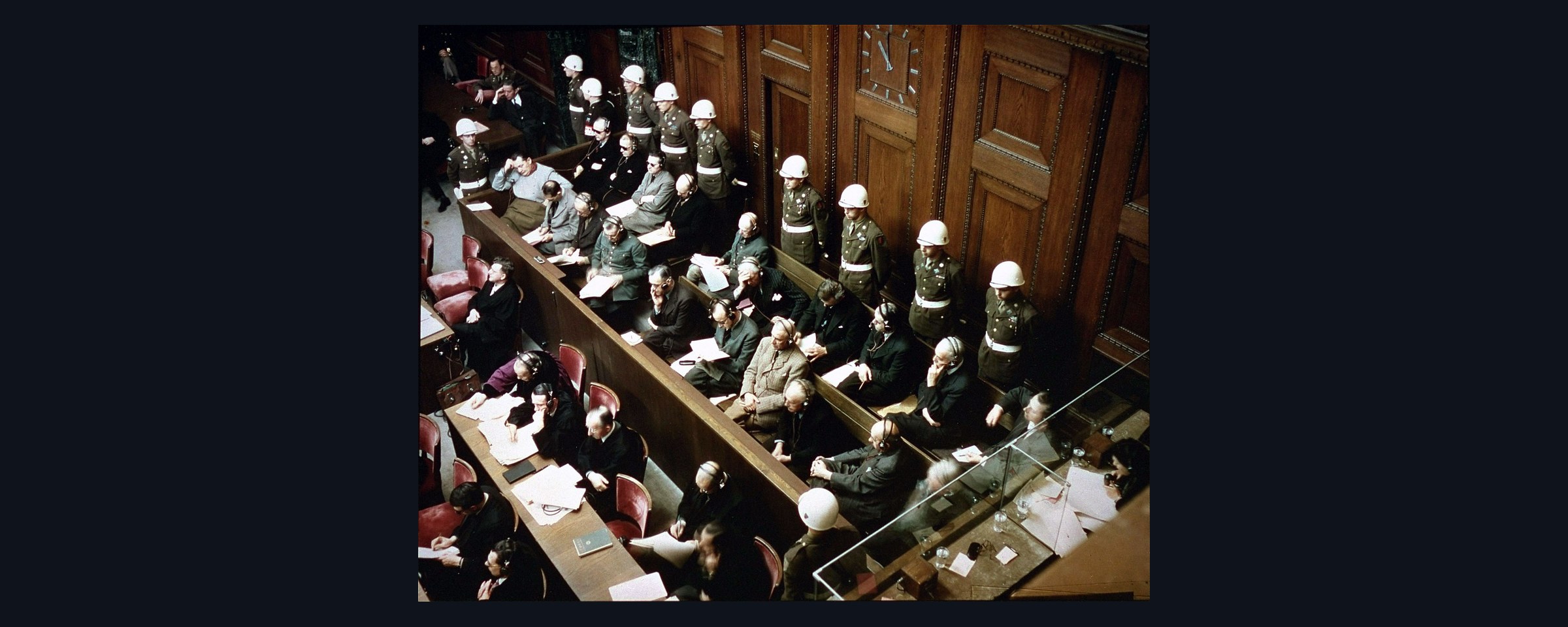
A war crime is a serious violation of the law of armed conflict for which an individual bears personal criminal responsibility. The category covers the...

Voter ID Laws
Voter identification laws require a person presenting to vote to prove who they are, usually by producing a government-issued document. The requirement is unremarkable across...

Voter Fraud
Voter fraud is the deliberate corruption of an election by unlawful means: impersonating another voter, casting ballots in the name of the dead or the...