
Print
Cite
Feedback
Share
The common good is the central organising concept of the classical and Christian political tradition. To say a community has a common good is to say there is some good that all its members share in by being members, that is not reducible to the private goods of individuals, and that gives the community its purpose. A friendship has a common good (the friendship itself, which is shared); a city has a common good (the just and ordered life that is the city’s reason for being); a marriage has a common good (the spouses’ shared life and the family that arises from it).
The concept does not say that individuals are means to the community’s ends. Rather, the relationship runs the other way: the political community exists for the sake of the integral human flourishing of its members. But that flourishing — for human beings, who are by nature political animals — is intrinsically social. To flourish individually is, in part, to participate in shared goods.
Key Takeaways
- The shared flourishing of a political community: the conditions that allow members and their associations to attain their proper ends.
- Runs from Aristotle’s polis through Aquinas’s Christian framework, which remains the reference for Catholic and traditionalist conservatism.1
- Neither the sum of individual preferences (utilitarian) nor a fair procedure (Rawlsian); a substantive good that legitimates and limits authority.
History and Context
The classical formulation is Aristotle’s. Politics book I argues that the polis is prior in nature to the household and the individual, in the sense that human beings cannot achieve their characteristic excellence outside political community.1 The good of the polis is therefore not external to the citizens; it is the form their full humanity takes.
Aquinas integrated Aristotle’s account with the doctrine of creation and the ordering of human persons to God. In his definition of law as “an ordinance of reason for the common good, made by him who has care of the community,”2 the common good is law’s intrinsic end. Aquinas’s treatment in the Summa Theologiae and the De Regno makes the common good the criterion by which both rulers and laws are judged.
The concept passed through Catholic social teaching into the modern era. Pope Leo XIII’s Rerum Novarum (1891), Pope John XXIII’s Mater et Magistra (1961), and the Second Vatican Council’s Gaudium et Spes (1965) deployed the common good against both totalitarianism and individualist liberalism. Gaudium et Spes defined it as “the sum total of social conditions which allow people, either as groups or as individuals, to reach their fulfilment more fully and more easily.”3
In recent conservative political philosophy, the concept has been recovered by writers including Alasdair MacIntyre, Charles De Koninck, Russell Hittinger, Adrian Vermeule, and Patrick Deneen. De Koninck’s On the Primacy of the Common Good Against the Personalists (1943) is a landmark text within Catholic philosophy.4
The Conservative Position
Three commitments mark the conservative use of the common good.
First, the common good is substantive, not procedural. It refers to actual conditions of flourishing — peace, justice, the conditions for family life, the conditions for honest work, the cultivation of virtue — and not merely to the rules under which individuals pursue their own conceptions of the good. This puts it in tension with the strong neutrality of Rawlsian liberalism.
Second, public authority is ordered to the common good and limited by it. Government action is justified when it serves the common good and not otherwise. This generates both an expansive case for political action where private actors cannot achieve common goods (provision of justice, defence, public order) and a strict case against political action that intrudes on goods properly belonging to families, churches, and voluntary associations.
Third, the common good is shared, not aggregative. Bentham’s account of the public interest as the sum of individual utilities is not, on the classical view, an account of the common good at all. A common good is one in which participation by one member does not diminish another’s share — analogous to the way two people can share a friendship without dividing it. The common goods of the political community include such non-rivalrous goods as just laws, the rule of law, public peace, shared culture, and the dignity that comes from membership.
Differing Positions
Liberal political theory in its dominant 20th-century form, particularly in the Rawlsian tradition, has tended to substitute a thin procedural conception (fair terms of cooperation among free and equal citizens with diverse conceptions of the good) for the classical substantive conception. The conservative reply is that procedural fairness is not self-justifying: it is itself defended by appeal to a substantive view of human dignity that liberalism prefers not to articulate.
Libertarian thinkers, particularly in the Rothbardian and Nozickian traditions, are sceptical of the common good as a category, holding that talk of social goods masks coercion against individuals. The classical reply is that this position only seems coherent because it presupposes that human beings are atomic individuals whose ends are wholly private — an anthropology the tradition rejects.
Within contemporary Catholic and conservative thought there is debate over how strongly the common good should be deployed against liberal-democratic constitutional norms. Adrian Vermeule’s “common-good constitutionalism” represents one strong reading; more cautious natural-law writers (Robert P. George, Hadley Arkes) argue for the common good’s force within rather than against constitutional liberalism.
References
- Aristotle, Politics, trans. C. D. C. Reeve (Indianapolis: Hackett, 1998), bk. I, ch. 1–2 (1252a–1253a18); bk. III, ch. 6–7 (1278b–1279b10). ↩
- Thomas Aquinas, Summa Theologiae, I-II, q. 90, a. 4; on the common good as the end of political community, see De Regno, bk. I, ch. 1, in Aquinas: Political Writings, ed. R. W. Dyson (Cambridge: Cambridge University Press, 2002). ↩
- Second Vatican Council, Gaudium et Spes (1965), §26. ↩
- Charles De Koninck, On the Primacy of the Common Good Against the Personalists (1943), in The Writings of Charles De Koninck, vol. 2, ed. Ralph McInerny (Notre Dame: University of Notre Dame Press, 2009). ↩
You've read articles over the past year
Will you support conservative education?
A gift of any amount helps keep unique explanatory journalism free for all, and
supports our mission to help everyone understand the world, regardless of their
ability to pay.One-time contributors join our community of givers and will be kept
up to date on the journalism that you help keep free.

Westernization
Westernization is the adoption by non-Western societies of institutions, technologies, laws, manners and habits of mind that originated in Western Europe and its colonial offshoots....
War Crime
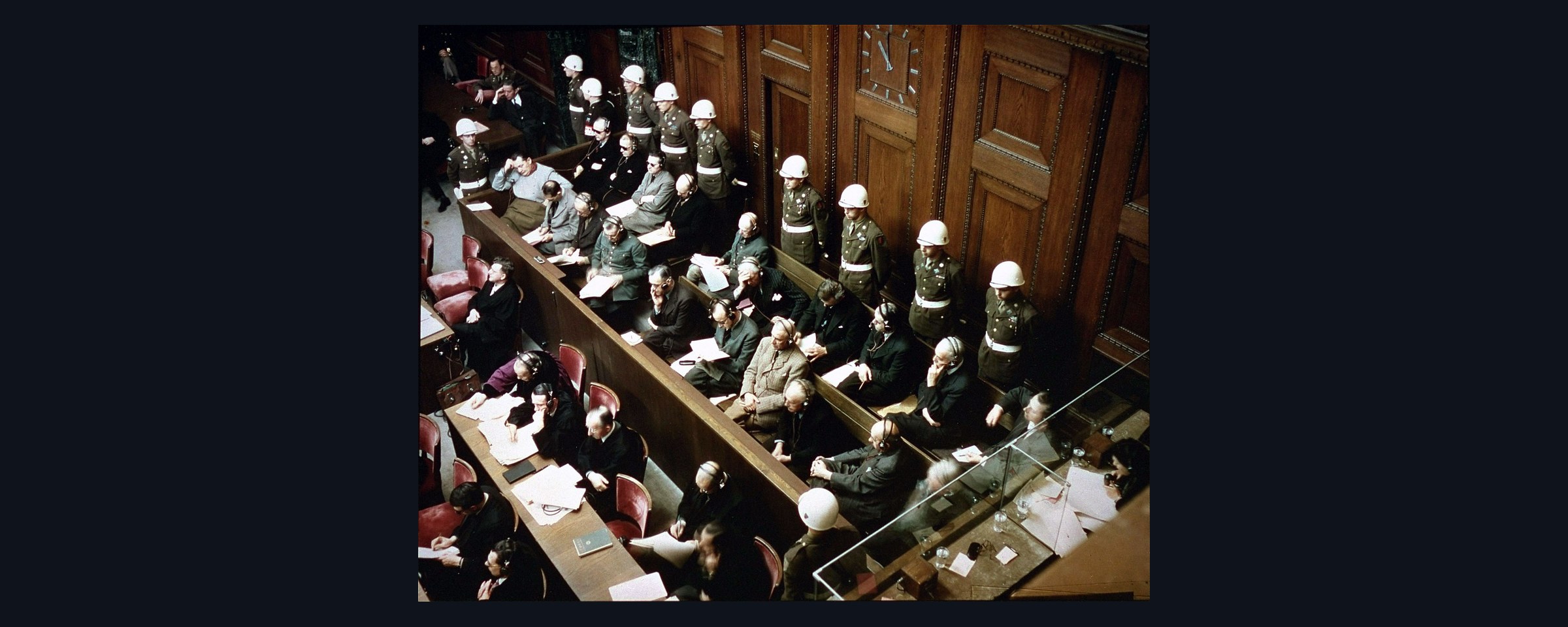
A war crime is a serious violation of the law of armed conflict for which an individual bears personal criminal responsibility. The category covers the...

Voter ID Laws
Voter identification laws require a person presenting to vote to prove who they are, usually by producing a government-issued document. The requirement is unremarkable across...

Voter Fraud
Voter fraud is the deliberate corruption of an election by unlawful means: impersonating another voter, casting ballots in the name of the dead or the...