
Print
Cite
Feedback
Share
Critical race theory (CRT) is an academic movement, born in American law schools in the late 1970s and 1980s, which holds that racism in the United States is not primarily a matter of individual prejudice but is embedded in legal structures, institutions, and ordinary social practice. Its founding scholars — Derrick Bell, Kimberlé Crenshaw, Richard Delgado, and others — argued that the civil-rights settlement of the 1960s had stalled, and that formally colour-blind law reproduces racial hierarchy beneath a neutral surface.1
After 2020, CRT moved from the seminar room to the centre of Anglo-American politics, as parents, school boards, and legislatures fought over whether its descendant ideas belonged in classrooms and workplace training. Conservatives regard the theory as a fundamental challenge to equality before the law, and contest it on those grounds.
Key Takeaways
- CRT emerged from critical legal studies; its foundational texts are collected in Critical Race Theory: The Key Writings That Formed the Movement (1995), edited by Crenshaw and colleagues.2
- Core claims include the ordinariness of racism, interest convergence (white majorities support racial reform only when it serves their interests), scepticism of colour-blindness, and the use of storytelling as legal scholarship.1
- Derrick Bell’s Faces at the Bottom of the Well (1992) advanced the thesis that racism is a permanent feature of American life.3
- Conservatives object that CRT replaces the individual with the racial group as the unit of justice, and they answer its empirical claims with the work of Thomas Sowell.4
History And Context
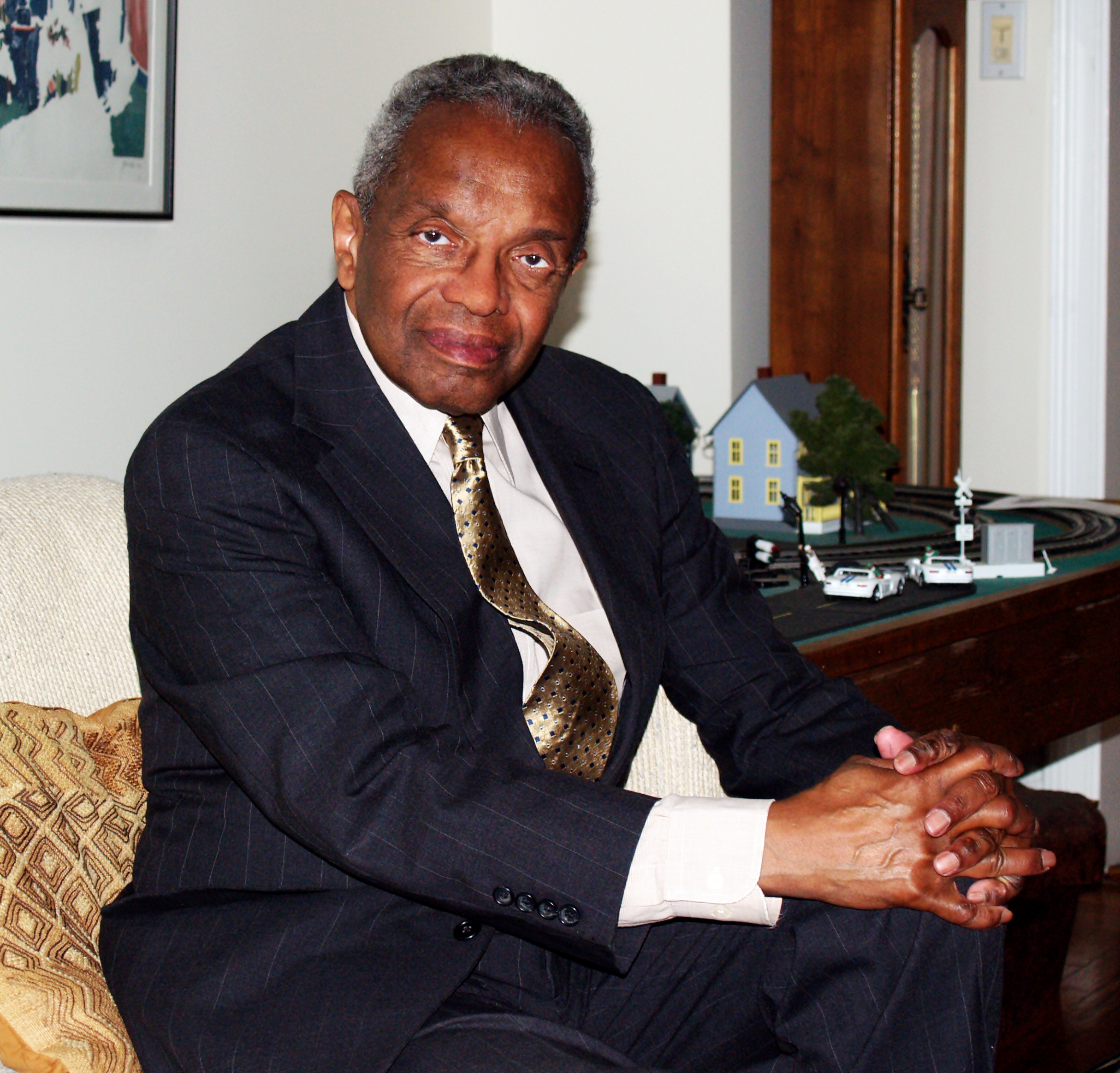
CRT’s institutional history begins with Derrick Bell, the first tenured Black professor at Harvard Law School and a former civil-rights litigator who had grown sceptical of his own victories. His 1980 Harvard Law Review article on Brown v. Board of Education proposed the interest-convergence thesis: the landmark desegregation ruling came when it did because it served American Cold War interests, not because white America had converted to racial equality. Bell developed the darker corollary — that racism is permanent, and Black Americans’ gains are cyclical rather than cumulative — in Faces at the Bottom of the Well (1992).3
The movement organised itself at a 1989 workshop in Madison, Wisconsin, where Kimberlé Crenshaw and colleagues named the school “critical race theory.” Crenshaw’s own contribution, intersectionality (1989), described how overlapping identities such as race and sex produce compound forms of disadvantage that single-axis law misses. Richard Delgado and Jean Stefancic’s Critical Race Theory: An Introduction (2001) codified the canon for students.1 For two decades the school remained an academic affair. It broke into mass politics through diversity-training programmes, the New York Times‘ 1619 Project (2019), and the post-George Floyd institutional reckonings of 2020; bestsellers by Ibram X. Kendi and Robin DiAngelo popularised adjacent ideas. The reaction was equally rapid: by 2023 more than twenty American states had restricted CRT-derived concepts in public-school instruction, and the dispute had spread to Britain and Canada.
The Conservative Position
The conservative critique begins at the level of principle. The Western legal achievement, on this view, is the slow replacement of group justice with individual justice: one law for all, judged by conduct, not bloodline. CRT, by treating the racial group as the operative unit and by defining justice as equality of group outcomes, reverses that achievement — remedies such as race-conscious hiring and admissions punish and reward individuals for what other members of their race experience. Conservatives also reject the theory’s method: scholarship built on narrative and standpoint, they argue, insulates itself from refutation, since disagreement is reclassified as evidence of the dissenter’s privilege.
The empirical counter-case rests heavily on Thomas Sowell, whose Discrimination and Disparities (2018) marshals international data showing that group outcome gaps arise routinely from differences in age structure, geography, family form, and culture, and therefore that disparity alone does not demonstrate discrimination.4 Sowell points to groups — Japanese Americans, West Indian immigrants, Jewish refugees — who faced severe prejudice yet overtook majority incomes, an outcome the structural-racism model struggles to accommodate. Conservatives add a civic objection: teaching children that they are oppressors or oppressed by birth corrodes the common citizenship a multiracial republic requires, and trades Martin Luther King’s content-of-character standard for a new racial consciousness. The policy conclusions follow: colour-blind law, curriculum transparency, an end to compelled ideological training, and the Supreme Court’s 2023 ruling against racial preferences in university admissions as a model.
Differing Positions
CRT’s defenders reply that the conservative account attacks a caricature. The theory does not claim all white individuals are racist; it claims that neutral-seeming rules — school funding tied to property taxes, sentencing guidelines, mortgage underwriting with redlining’s legacy baked into property values — distribute burdens by race without any bigot present, and the wealth gap, incarceration gap, and maternal-mortality gap are the measurable residue.2 Colour-blindness, on this reading, froze an unequal status quo: a race that was handicapped for three centuries cannot be made whole by a rule that simply stops mentioning race. Defenders also note that the K-12 panic conflated CRT, a graduate-level legal literature, with any instruction about slavery and segregation, and that several state statutes were drafted broadly enough to chill ordinary history teaching. As for Sowell’s immigrant comparisons, critics answer that voluntary migrants are self-selected strivers, an unfit comparison group for the descendants of the enslaved.
The disagreement is at bottom about the unit of justice — the individual or the group — and about whether the persistence of racial gaps six decades after the Civil Rights Act convicts the structure or the explanation.
References
- Richard Delgado and Jean Stefancic, Critical Race Theory: An Introduction (New York University Press, 2001).
- Kimberlé Crenshaw, Neil Gotanda, Gary Peller, and Kendall Thomas, eds., Critical Race Theory: The Key Writings That Formed the Movement (The New Press, 1995).
- Derrick Bell, Faces at the Bottom of the Well: The Permanence of Racism (Basic Books, 1992).
- Thomas Sowell, Discrimination and Disparities, rev. ed. (Basic Books, 2019).
- [1] Cobb, Jelani. 2021. “The Man behind Critical Race Theory.” The New Yorker. September 10. https://www.newyorker.com/magazine/2021/09/20/the-man-behind-critical-race-theory.
- [2] Butcher, Jonathan, and Mike Gonzalez. 2020. “Critical Race Theory, the New Intolerance, and Its Grip on America,” no. 3567. https://www.heritage.org/sites/default/files/2020-12/BG3567.pdf.
- [3] Anderson, Bryan. 2021. “Critical Race Theory Is a Flashpoint for Conservatives, but What Does It Mean?” PBS NewsHour. November 2. https://www.pbs.org/newshour/education/so-much-buzz-but-what-is-critical-race-theory.
You've read articles over the past year
Will you support conservative education?
A gift of any amount helps keep unique explanatory journalism free for all, and
supports our mission to help everyone understand the world, regardless of their
ability to pay.One-time contributors join our community of givers and will be kept
up to date on the journalism that you help keep free.

Westernization
Westernization is the adoption by non-Western societies of institutions, technologies, laws, manners and habits of mind that originated in Western Europe and its colonial offshoots....
War Crime
A war crime is a serious violation of the law of armed conflict for which an individual bears personal criminal responsibility. The category covers the...

Voter ID Laws
Voter identification laws require a person presenting to vote to prove who they are, usually by producing a government-issued document. The requirement is unremarkable across...

Voter Fraud
Voter fraud is the deliberate corruption of an election by unlawful means: impersonating another voter, casting ballots in the name of the dead or the...