
Print
Cite
Feedback
Share
Conservatives hold that cultures can be compared and, within limits, judged. Against the relativist claim that every way of life is equally valid and beyond outside criticism, the conservative tradition maintains that some customs secure liberty, prosperity, and human dignity better than others, and that saying so is neither bigotry nor arrogance but a precondition of moral seriousness. A culture that abolishes slavery is better than one that practises it, and no amount of relativist hedging changes that.
This does not license contempt for foreign peoples. It insists only that comparison is possible and that the achievements of one’s own civilisation may be defended without apology.
Key Takeaways
- Conservatives reject strong cultural relativism, the doctrine that no culture can be judged by standards outside itself.
- They argue that certain institutions, the rule of law, property rights, religious toleration, and limited government, have produced freedom and prosperity that others have not.
- The position distinguishes confident comparison from chauvinism: cultures are judged by their fruits, not by the race or origin of their members.
- Thinkers such as Thomas Sowell and Roger Scruton defend the Western inheritance while studying its achievements as the result of particular institutions rather than innate superiority.
History And Context
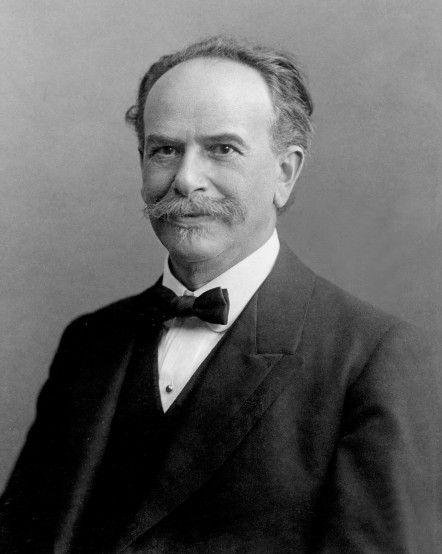
The comparison of cultures is as old as Herodotus, whose fifth-century BC histories set Greek customs beside Persian and Egyptian ones. For most of history, peoples assumed their own ways were best, sometimes crudely so. The Enlightenment introduced both a sharper comparative method and, eventually, its opposite: a romantic and later anthropological insistence that each culture be understood on its own terms.
In the twentieth century that insistence hardened into cultural relativism, associated with the anthropologist Franz Boas and his students, who argued that moral and aesthetic standards are internal to each society and cannot be ranked across cultures. By the late twentieth century this doctrine had spread well beyond anthropology into education and public life, where it shaded into the claim that any comparative judgement, especially any favourable to Western civilisation, was a form of prejudice.
Conservatives pushed back. Thomas Sowell devoted a major trilogy, beginning with Race and Culture (1994), to showing that cultural practices, skills, attitudes to work, saving, and education, have measurable consequences for the prosperity of groups, and that pretending otherwise helps no one.1 Roger Scruton, defending the Western inheritance, argued that its distinctive goods, personal freedom under law and the secular state, are real achievements that grew from a particular history and deserve to be conserved.2
The Conservative Position
The conservative argument turns on a simple objection to strong relativism: it is self-refuting. To say that no culture may be judged by external standards is itself an external standard imposed on all cultures, and one that, taken seriously, would forbid criticism of slavery, the subjection of women, or human sacrifice wherever they have been customary. Conservatives find that conclusion intolerable and conclude that the premise must be false.
What conservatives put in relativism’s place is comparison by fruits. Sowell’s life work documents that the difference in outcomes between societies and groups tracks differences in culture, the habits and skills people carry, far more than differences in geography or innate capacity, and that these cultural endowments can be learned and transmitted.3 This is the opposite of racial determinism: it locates success in institutions and practices, which are open to all, rather than in blood.
The institutions conservatives single out for praise are concrete. The rule of law, which binds rulers as well as ruled; secure private property, which lets people plan and resist the state; religious toleration, hard won after Europe’s wars of religion; and the limited, accountable government that grew from the English constitutional tradition. Where these took root, conservatives argue, liberty and wealth followed; where they were absent, tyranny and poverty persisted. To notice this is not to despise other peoples but to identify what is worth preserving and, where invited, sharing.
The tradition also draws a line against gratitude’s enemy, the fashionable contempt for one’s own civilisation. Scruton held that a people who are taught to see their inheritance only as a record of crime lose the loyalty and confidence on which free institutions depend.4 Honest comparison, on the conservative view, includes the willingness to acknowledge one’s own civilisation’s faults and its goods alike, rather than performing ritual self-abasement.
Differing Positions
Defenders of cultural relativism answer that confident comparison has a dark record. The same conviction of Western superiority justified conquest, colonialism, and the destruction of peoples judged “backward,” and relativism arose in part as a corrective to that arrogance. In this view, the standards conservatives present as universal, individual liberty, the secular state, market exchange, are themselves cultural products, and dressing them as neutral measures of human progress simply privileges one tradition while calling it objectivity.
Anthropological critics argue that understanding a culture requires suspending judgement long enough to grasp it from within, and that snap moral rankings usually reveal more about the judge than the judged. Postcolonial thinkers add that comparative claims have rarely been disinterested; they have served power. The strongest version of this case does not deny that some practices are cruel but holds that the right response is humility and dialogue rather than a confident hierarchy of civilisations.
The disagreement is genuine, and it rests on a question conservatives refuse to dodge: whether there are human goods, freedom, dignity, the rule of law, by which any culture, including one’s own, can rightly be measured.
References
- Thomas Sowell, Race and Culture: A World View (New York: Basic Books, 1994), pp. 1–30.
- Roger Scruton, The West and the Rest: Globalization and the Terrorist Threat (Wilmington: ISI Books, 2002), pp. 1–25.
- Thomas Sowell, Conquests and Cultures: An International History (New York: Basic Books, 1998), pp. 330–340.
- Roger Scruton, How to Be a Conservative (London: Bloomsbury, 2014), pp. 73–78.
- [1] Galanti, G.A. 2000. “An Introduction to Cultural Differences.” Western Journal of Medicine 172 (5): 335–36. doi:https://doi.org/10.1136/ewjm.172.5.335.
- [2] Ellis, Charlie. 2008. “Relativism and Reaction: Richard Hoggart and Conservatism.” Palgrave Macmillan UK EBooks, January. Palgrave Macmillan, 198–212. doi:https://doi.org/10.1057/9780230583313_13.
- [3] Morin, Olivier. 2022. “Cultural Conservatism,” September. doi:https://doi.org/10.31235/osf.io/xutpe.
You've read articles over the past year
Will you support conservative education?
A gift of any amount helps keep unique explanatory journalism free for all, and
supports our mission to help everyone understand the world, regardless of their
ability to pay.One-time contributors join our community of givers and will be kept
up to date on the journalism that you help keep free.

Westernization
Westernization is the adoption by non-Western societies of institutions, technologies, laws, manners and habits of mind that originated in Western Europe and its colonial offshoots....
War Crime
A war crime is a serious violation of the law of armed conflict for which an individual bears personal criminal responsibility. The category covers the...

Voter ID Laws
Voter identification laws require a person presenting to vote to prove who they are, usually by producing a government-issued document. The requirement is unremarkable across...

Voter Fraud
Voter fraud is the deliberate corruption of an election by unlawful means: impersonating another voter, casting ballots in the name of the dead or the...