
Print
Cite
Feedback
Share
Conservatives draw a clear line between cultural diversity as a fact and cultural diversity as a programme. As a fact, the presence of many peoples and traditions within a society is as old as trade and empire, and conservatives have no quarrel with it. As a programme, the official doctrine that every culture deserves equal public standing and that a shared national identity is suspect, conservatives resist it as a solvent of the common bonds on which free societies depend.
The question is not whether differences exist but whether a polity can sustain liberty and trust without a centre that holds.
Key Takeaways
- Conservatives accept cultural variety while rejecting the doctrine that no culture may be preferred or that assimilation is illegitimate.
- A shared public culture, language, law, and civic loyalty is treated as the precondition for social trust, not an obstacle to it.
- Thinkers from Edmund Burke to Roger Scruton argue that liberty grows from particular inherited traditions, not from cultural neutrality.
- The conservative concern is social cohesion: the worry that managed diversity without a common identity erodes the solidarity that welfare, democracy, and self-government require.
History And Context
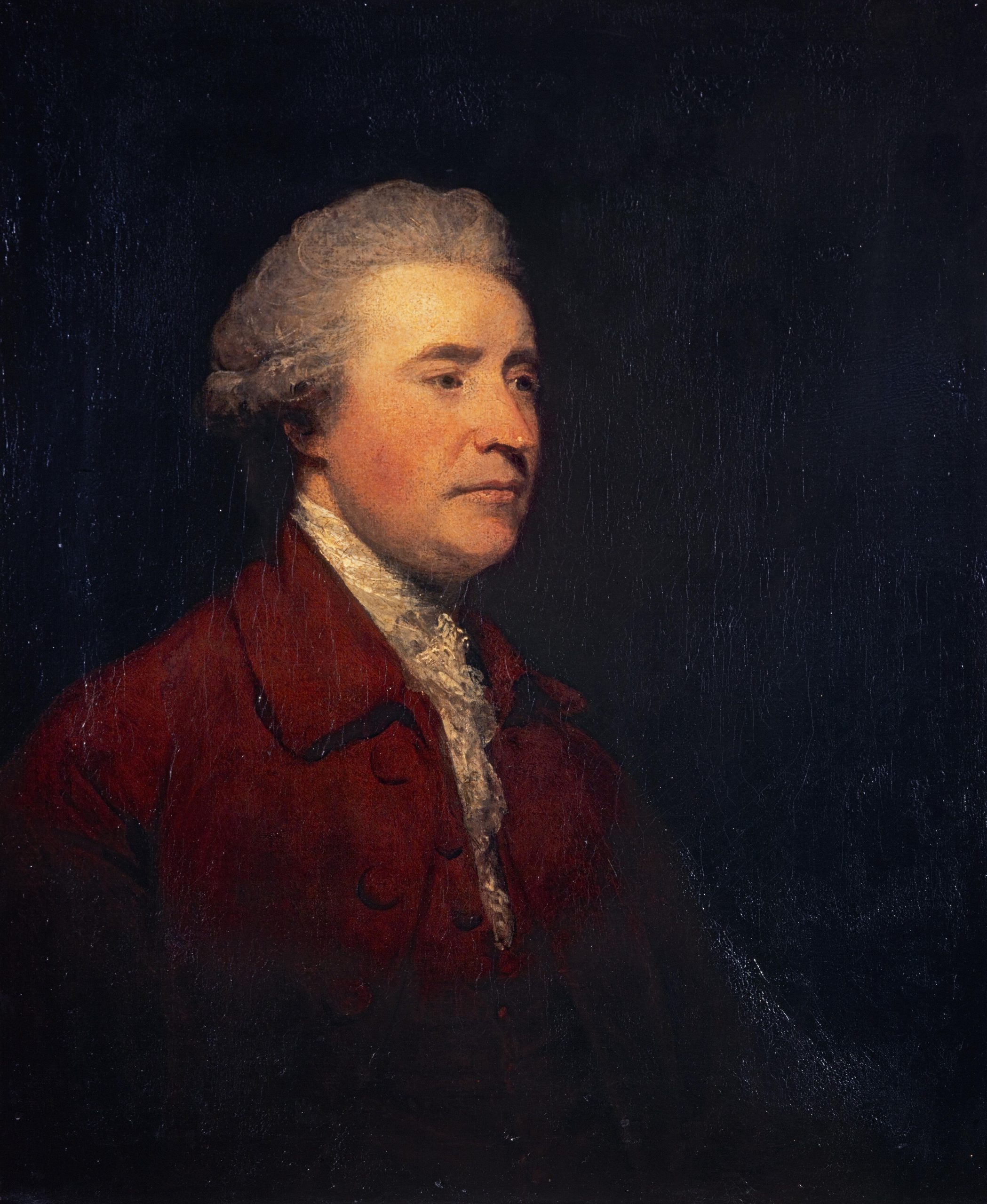
Diverse societies are nothing new. Empires from Rome to the Habsburgs governed many peoples under one crown, and great trading cities have always mixed populations. What changed in the late twentieth century was the rise of multiculturalism as a deliberate state policy, first adopted formally by Canada in 1971 and later embraced across much of the Western world.
This policy went beyond tolerating difference. It treated the maintenance of distinct group identities as a public good to be funded and protected, and it cast the older expectation of assimilation as a kind of cultural imperialism. By the 1990s, intellectual defences of the approach, most influentially Will Kymlicka’s Multicultural Citizenship (1995), argued that liberal justice required group-differentiated rights for minority cultures.
Conservatives traced the deeper roots of their counter-argument to Edmund Burke, who held that affection for one’s own “little platoon” of society is the seed from which wider loyalty grows.1 In the later twentieth century, the political theorist Samuel P. Huntington warned that the loss of a common national identity, what he called the unravelling of a shared creed, would weaken the cohesion of even the most powerful states.2
The Conservative Position
The conservative argument is not against the existence of many cultures but against the claim that a nation can dispense with a culture of its own. Roger Scruton maintained that the liberties Western peoples enjoy were not handed down by abstract reason; they grew from particular histories, languages, and religious settlements, and they survive only where citizens feel themselves heirs to a common inheritance.3 Strip a society of that shared identity, he argued, and you remove the basis for the mutual trust that lets strangers accept majority rule and contribute to common burdens.
Conservatives therefore favour integration over separation. Newcomers are welcome, but on the understanding that they adopt the host society’s language, obey its law, and take on its civic loyalties, while keeping their private customs and faith. This is not hostility to difference; it is the conviction that a polity needs a public square held in common even as private life remains plural.
The political scientist Robert Putnam’s research, reported in 2007, gave the conservative worry an empirical edge: in the short run, he found, greater ethnic diversity within American communities correlated with lower social trust, even trust within groups.4 Conservatives read such findings not as a counsel of despair but as evidence that diversity must be paired with deliberate efforts at integration if solidarity is to survive.
A further conservative point concerns the welfare state and democracy themselves. Generous redistribution and self-government both rest on a sense of shared membership, the belief that fellow citizens are part of a single “we.” Where official policy discourages that shared identity in favour of permanent group distinctions, conservatives argue, the foundations of both the welfare state and democratic consent are quietly weakened.
Differing Positions
Defenders of cultural diversity as a public value answer that the conservative emphasis on a common culture too easily becomes a demand that minorities surrender themselves to the majority. In this view, a just society does not need cultural uniformity to hold together; it needs equal respect, fair institutions, and protection for the distinct ways of life that give people meaning. Liberal multiculturalists argue that group-differentiated rights correct real disadvantages and that loyalty to shared political principles, rather than a shared ethnic or religious heritage, is enough to bind a diverse citizenry.
Critics also dispute the cohesion argument empirically, noting that trust effects vary across countries and policies and that well-designed integration can produce both diversity and solidarity. The strongest version of this case concedes that societies need some shared civic framework but insists that framework can be thin, procedural, and open, rather than rooted in one dominant cultural inheritance.
The dispute turns on a question conservatives keep returning to: how much common identity a free and generous society actually requires to function, and whether that identity can be manufactured from principles alone.
References
- Edmund Burke, Reflections on the Revolution in France (London: J. Dodsley, 1790), p. 68.
- Samuel P. Huntington, Who Are We? The Challenges to America’s National Identity (New York: Simon & Schuster, 2004), pp. 12–20.
- Roger Scruton, How to Be a Conservative (London: Bloomsbury, 2014), pp. 79–84.
- Robert D. Putnam, “E Pluribus Unum: Diversity and Community in the Twenty-first Century,” Scandinavian Political Studies 30, no. 2 (2007): 137–174.
- [1] Belfield, Lisa. 2012. “What Is Cultural Diversity?” Purdue Global. December 18. https://www.purdueglobal.edu/blog/human-services/what-is-cultural-diversity/.
- [2] May, Stephen . 1998. “Critical Multiculturalism and Cultural Difference: Avoiding Essentialism.” https://www.taylorfrancis.com/chapters/edit/10.4324/9780203979013-8/critical-multiculturalism-cultural-difference-avoiding-essentialism-stephen-may.
- [3] Lægaard, Sune. 2010. “Immigration, Social Cohesion, and Naturalization.” Ethnicities 10 (4): 452–69. doi:https://doi.org/10.1177/1468796810378324.
You've read articles over the past year
Will you support conservative education?
A gift of any amount helps keep unique explanatory journalism free for all, and
supports our mission to help everyone understand the world, regardless of their
ability to pay.One-time contributors join our community of givers and will be kept
up to date on the journalism that you help keep free.

Westernization
Westernization is the adoption by non-Western societies of institutions, technologies, laws, manners and habits of mind that originated in Western Europe and its colonial offshoots....
War Crime
A war crime is a serious violation of the law of armed conflict for which an individual bears personal criminal responsibility. The category covers the...

Voter ID Laws
Voter identification laws require a person presenting to vote to prove who they are, usually by producing a government-issued document. The requirement is unremarkable across...

Voter Fraud
Voter fraud is the deliberate corruption of an election by unlawful means: impersonating another voter, casting ballots in the name of the dead or the...