
Print
Cite
Feedback
Share
Culture wars are political conflicts fought over values, identity, religion, and ways of life rather than over the distribution of income. Conservatives did not choose the terrain, but they fight on it because they believe culture is upstream of politics: the habits formed in families, churches, and schools decide what any constitution can achieve.
The phrase implies a single front, but the reality is a series of engagements — over schooling, sex, speech, monuments, and the meaning of the nation — between two moral vocabularies that share a country without sharing premises.
Key Takeaways
- The sociologist James Davison Hunter gave the modern term its framework in 1991: a struggle between “orthodox” and “progressive” moral visions cutting across denominations and parties.1
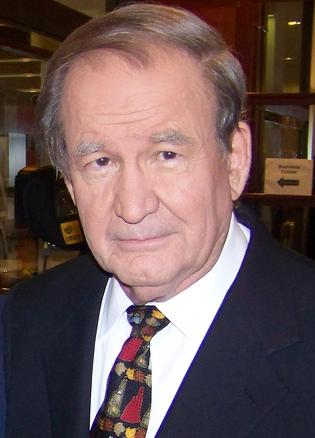
- Pat Buchanan’s address to the 1992 Republican National Convention in Houston made the culture war an explicit electoral banner.2
- Conservatives read the culture war as defensive: institutions they inherited are being revised faster than consent can form.
- The strongest critique holds that cultural conflict distracts voters from material interests and rewards the consultants who stoke it.3
History And Context
The phrase has an imperial ancestor. The Kulturkampf of the 1870s was Otto von Bismarck’s campaign to subordinate the Catholic Church in Prussia — closing seminaries, jailing bishops — and it ended in failure, with the Church strengthened and the state forced to retreat. The episode remains conservatism’s standing warning that governments which make war on inherited faiths usually lose.
The American sequence is younger. The school prayer decisions of 1962-63, Roe v. Wade in 1973, and the rise of the Moral Majority in 1979 assembled the modern battle lines. James Davison Hunter’s Culture Wars: The Struggle to Define America (1991) supplied the sociology: the meaningful divide no longer ran between Protestant and Catholic but between those who locate moral authority in a transcendent order and those who locate it in evolving human experience.1 A year later, Pat Buchanan told the Republican convention in Houston that the contest with the Clinton Democrats was a religious and cultural war for the soul of the country, fusing Hunter’s diagnosis with partisan strategy.2
The fronts have moved — from school prayer to same-sex marriage, settled nationally by Obergefell in 2015, to campus speech, statue removals, gender identity, and curriculum fights such as the parental-rights revolt in Virginia’s 2021 governor’s race — but the underlying division Hunter described has proved durable.
The Conservative Position
Conservatives hold, first, that the culture war is real and was not started by them. Institutions that took centuries to grow — marriage, the church congregation, the neighbourhood school, the national story taught to children — have been subjected since the 1960s to revision at a pace that allows no settlement. Defence of these institutions is not nostalgia; it is the core conservative claim, from Burke onward, that society is a contract between the dead, the living, and the unborn, and that the living have no right to liquidate the estate.
Second, culture precedes policy. Andrew Breitbart’s aphorism that politics is downstream from culture is a popularisation of an older insight: majorities are formed in families and schools long before they reach a ballot box. A movement that wins elections while losing the universities, the press, and the entertainment industry has won nothing durable — which is why conservatives since William F. Buckley founded National Review in 1955 have treated institution-building as the real war.
Third, conservatives counsel against total war. Roger Scruton argued that conservatism is at bottom a politics of love for what exists, not hatred of opponents; a culture war fought in the spirit of the Kulturkampf, aiming to crush rather than persuade, repeats Bismarck’s error and corrupts the combatant.4 The goal is a settlement in which dissenting institutions — religious schools, traditional families — retain the liberty to live by their convictions.
Differing Positions
Thomas Frank’s What’s the Matter with Kansas? (2004) made the most influential counter-argument: cultural grievance functions as a machine for persuading working-class voters to support economic policies that injure them, with each cultural defeat recycled as fundraising material.3 A second critique, made by political scientists such as Morris Fiorina, holds that the culture war is an elite phenomenon — activists and donors are polarised, but most voters hold mixed, moderate views and resent being conscripted into either army. Progressives add that what conservatives call defence is simply the loss of unjust privilege: the extension of marriage, suffrage, and civil rights felt like aggression to incumbents every time. Conservatives reply that the survey data showing moderate voters also show collapsing trust in every institution the culture war touches, which is the cost the combatants on both sides keep ignoring.
References
- James Davison Hunter, Culture Wars: The Struggle to Define America (Basic Books, 1991).
- Patrick J. Buchanan, address to the Republican National Convention, Houston, 17 August 1992.
- Thomas Frank, What’s the Matter with Kansas? (Metropolitan Books, 2004).
- Roger Scruton, How to Be a Conservative (Bloomsbury, 2014).
You've read articles over the past year
Will you support conservative education?
A gift of any amount helps keep unique explanatory journalism free for all, and
supports our mission to help everyone understand the world, regardless of their
ability to pay.One-time contributors join our community of givers and will be kept
up to date on the journalism that you help keep free.

Westernization
Westernization is the adoption by non-Western societies of institutions, technologies, laws, manners and habits of mind that originated in Western Europe and its colonial offshoots....
War Crime
A war crime is a serious violation of the law of armed conflict for which an individual bears personal criminal responsibility. The category covers the...

Voter ID Laws
Voter identification laws require a person presenting to vote to prove who they are, usually by producing a government-issued document. The requirement is unremarkable across...

Voter Fraud
Voter fraud is the deliberate corruption of an election by unlawful means: impersonating another voter, casting ballots in the name of the dead or the...