
Print
Cite
Feedback
Share
Economics begins from a single unavoidable fact: scarcity. Wants exceed resources, so every choice carries a cost — the value of the alternative forgone. From that starting point follow the discipline’s core tools: supply and demand, incentives, marginal analysis, and the price system. Conservatives treat these basics not as one school’s doctrine but as constraints on political ambition, closer to arithmetic than to ideology.1
The conservative claim is that prices, profits, and losses form an information system no planner can replicate, and that policies which ignore incentives fail no matter how noble their aims. Thomas Sowell compressed the point into a maxim: there are no solutions, only trade-offs.
Key Takeaways
- Scarcity forces choice; every choice has an opportunity cost, whether or not anyone prices it.
- Prices coordinate the knowledge of millions of strangers; controls on prices produce shortages and gluts, not abundance.
- Incentives govern behaviour: people respond to what a policy rewards, not to what it intends.
- Demand curves slope downward — raise the cost of anything, including labour, and buyers take less of it.
- Conservatives read economic basics as limits on planning; critics reply that real markets fail in ways the basics understate.
History And Context
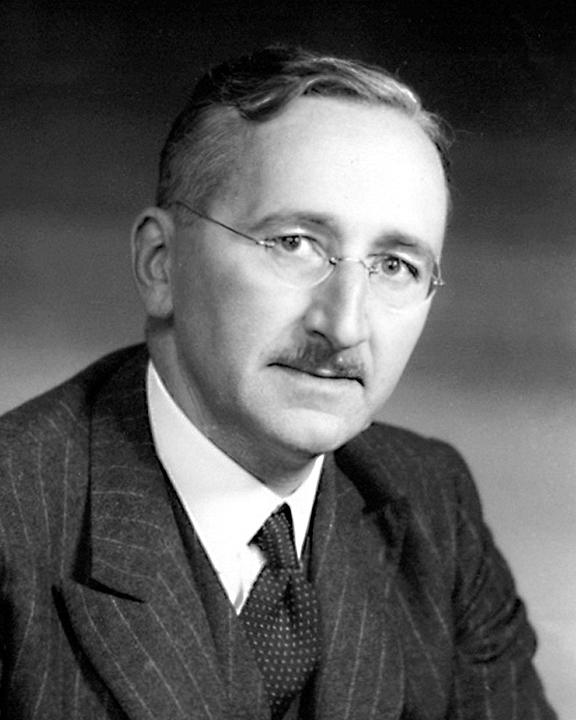
Adam Smith founded the modern discipline with An Inquiry into the Nature and Causes of the Wealth of Nations (1776), arguing that the division of labour and voluntary exchange raise the wealth of ordinary people, and that self-interested actors, competing under law, produce public benefits none of them intends.2 The marginal revolution of the 1870s — William Stanley Jevons in England, Carl Menger in Austria, Léon Walras in Lausanne — replaced labour theories of value with subjective valuation at the margin, resolving classical puzzles such as why water is cheap and diamonds dear.
The twentieth century turned the basics into a contest over planning. John Maynard Keynes’s The General Theory of Employment, Interest and Money (1936) argued that aggregate demand could fail and that governments should manage it. Friedrich Hayek answered in his 1945 essay “The Use of Knowledge in Society” that the knowledge relevant to economic decisions exists only in dispersed, local, and tacit form, and that the price system is the sole mechanism that communicates it.3 Postwar experience supplied the tests: price controls during the 1970s produced queues at American petrol stations, rent control constricted housing supply in every city that tried it, and the socialist economies of the Eastern bloc collapsed under exactly the calculation problems Hayek and Ludwig von Mises had predicted.
The Conservative Position
Conservatives hold that economic basics are what stand between voters and expensive illusions. A minimum wage set above productivity prices the least skilled out of work; a cap on rents becomes a ceiling on the housing stock; a subsidy summons more of whatever it touches, including dependency. None of this requires hostility to the poor — it requires taking seriously that demand curves slope downward and that sellers respond to returns. Sowell’s Basic Economics built a full account of markets on one definition: economics is the study of the use of scarce resources which have alternative uses.1
The deeper conservative point is epistemic. Hayek’s insight makes central planning not merely inefficient but impossible in principle: the planner cannot gather knowledge that exists nowhere in collected form. Prices are a discovery procedure, profits the signal that resources have moved to higher-valued uses, and losses the discipline that no committee applies to itself. Conservatives accordingly favour stable money, low and predictable taxes, secure property, and the rule of law — the framework within which the basics work — over discretionary management of outcomes.
Differing Positions
Mainstream and left-leaning economists answer that the basics, honestly stated, include market failure. Externalities such as pollution impose costs on parties outside the transaction; public goods are underprovided because non-payers cannot be excluded; monopoly power distorts prices; and information asymmetries — George Akerlof’s used-car market, Joseph Stiglitz’s work on screening — unravel the assumption that exchanges are fully informed. Keynes argued further that economies can settle into prolonged underemployment, making demand management a necessity rather than a conceit.4 On this view the conservative rendering of the basics is selective: supply and demand are common ground, but the same toolkit licenses carbon taxes, financial regulation, and countercyclical spending. Empirical work has also complicated the cleanest predictions — David Card and Alan Krueger’s 1994 New Jersey study found no detectable job losses from a moderate minimum-wage rise, a result still contested but impossible to dismiss from first principles alone.
References
- Thomas Sowell, Basic Economics: A Common Sense Guide to the Economy, 5th ed. (Basic Books, 2014).
- Adam Smith, An Inquiry into the Nature and Causes of the Wealth of Nations (W. Strahan and T. Cadell, 1776).
- F. A. Hayek, “The Use of Knowledge in Society,” American Economic Review 35, no. 4 (1945).
- John Maynard Keynes, The General Theory of Employment, Interest and Money (Macmillan, 1936).
You've read articles over the past year
Will you support conservative education?
A gift of any amount helps keep unique explanatory journalism free for all, and
supports our mission to help everyone understand the world, regardless of their
ability to pay.One-time contributors join our community of givers and will be kept
up to date on the journalism that you help keep free.

Westernization
Westernization is the adoption by non-Western societies of institutions, technologies, laws, manners and habits of mind that originated in Western Europe and its colonial offshoots....
War Crime
A war crime is a serious violation of the law of armed conflict for which an individual bears personal criminal responsibility. The category covers the...

Voter ID Laws
Voter identification laws require a person presenting to vote to prove who they are, usually by producing a government-issued document. The requirement is unremarkable across...

Voter Fraud
Voter fraud is the deliberate corruption of an election by unlawful means: impersonating another voter, casting ballots in the name of the dead or the...