
Print
Cite
Feedback
Share
Election fraud is the corruption of the vote itself: ballot-box stuffing, impersonation, vote buying, falsified counts, and the manipulation of absentee ballots. It is as old as mass democracy and, in the American case, thoroughly documented from the machine politics of the nineteenth century to isolated modern prosecutions. The live political dispute is not whether fraud has ever happened but how common it is now, and what precautions the risk justifies.
Conservatives argue that the integrity of the process is a precondition of consent, that safeguards such as photo identification and accurate voter rolls are ordinary prudence rather than suppression, and that the burden of proof runs in favour of security because a corrupted election cannot be un-run. Critics answer that documented fraud is vanishingly rare and that some safeguards cost more legitimate votes than they protect.
Key Takeaways
- American history supplies genuine cases: Tammany Hall’s naturalization mills, the 1948 “Box 13” affair in Texas, and the 2018 North Carolina absentee-ballot scandal that forced a new congressional election.
- The bipartisan Carter-Baker Commission of 2005 recommended photo identification for voters alongside measures making identification easy to obtain, and identified absentee voting as the channel most exposed to abuse.1
- The Supreme Court upheld voter-identification laws in Crawford v. Marion County Election Board (2008).
- Systematic studies find verified fraud to be rare, and courts rejected the legal challenges to the 2020 presidential result.
History And Context
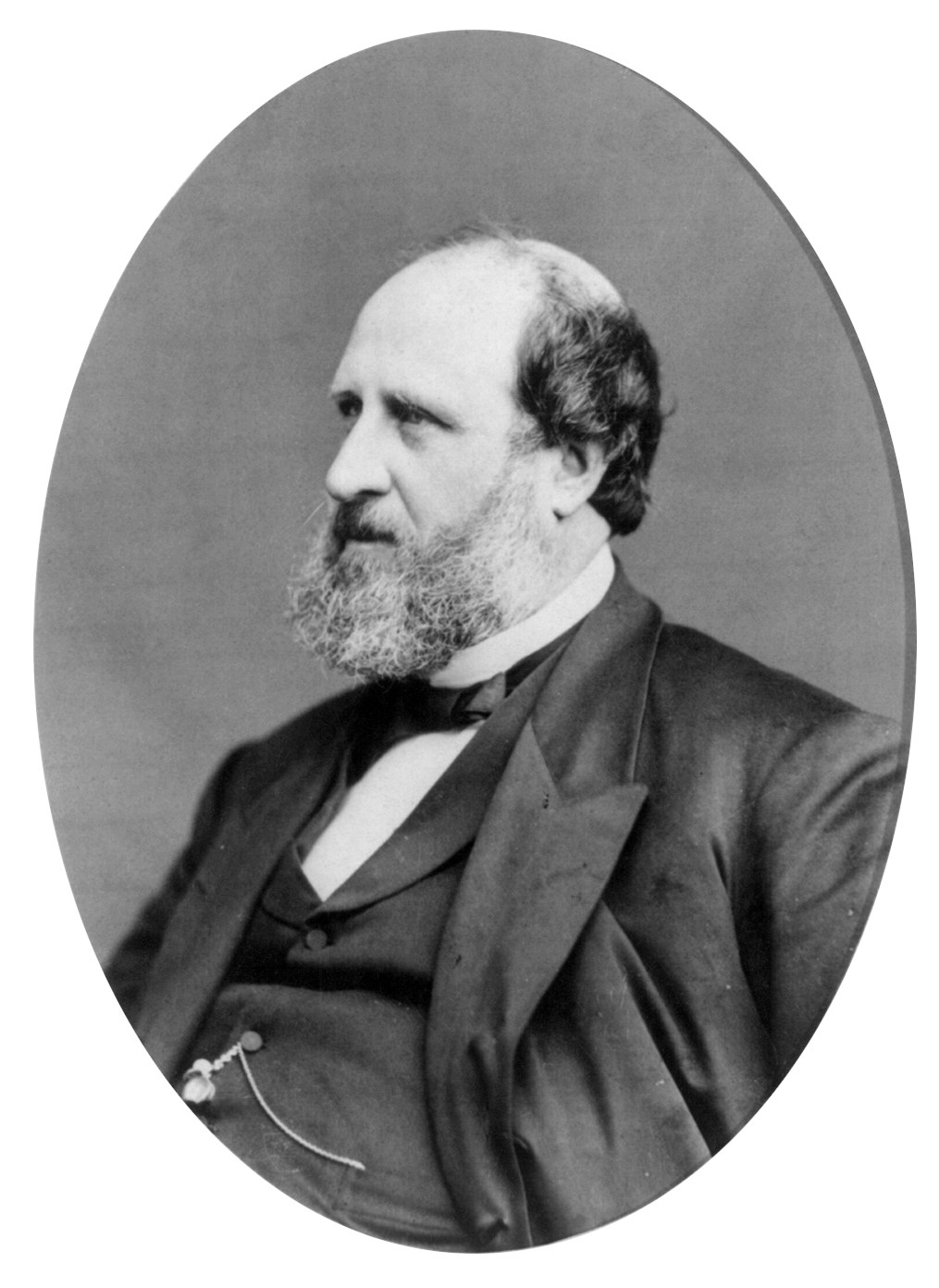
Organised fraud arrived with organised machines. William M. Tweed’s Tammany Hall ring naturalised immigrants by the tens of thousands in the weeks before New York’s 1868 elections and marshalled repeat voters through the polls; the Tweed courthouse and the ring’s collapse in 1871 made “Boss Tweed” the permanent shorthand for municipal corruption. Reformers responded with the secret “Australian ballot,” which spread across American states from 1888 and ended the era of openly purchased votes.
The twentieth century’s most famous case is Box 13. In the 1948 Texas Democratic Senate primary, a late-reported ballot box from Jim Wells County delivered Lyndon Johnson an 87-vote statewide victory; the box contained some 200 additional votes recorded in alphabetical order in the same ink, as Johnson biographer Robert Caro reconstructed in detail.2 Modern instances cluster in absentee ballots, where the act of voting leaves the supervised polling place: the 1997 Miami mayoral election was overturned for absentee fraud, and in February 2019 North Carolina’s bipartisan elections board unanimously threw out the 9th District congressional result after evidence that a political operative’s crew had collected and tampered with absentee ballots in Bladen County.
The 2005 Commission on Federal Election Reform, co-chaired by former President Jimmy Carter and former Secretary of State James Baker, set the modern policy benchmark: uniform photo identification phased in with free cards for those lacking documents, cleaner statewide registration lists, auditable paper trails, and tightened controls on absentee ballots.1
The Conservative Position
The conservative case rests on three propositions. First, elections are trust machinery: the loser’s consent depends on confidence in the count, so prevention has value even where detection finds little, in the same way that audits are not evidence that accountants are thieves. Second, the safeguards at issue are modest and popular — photo identification is required to board aircraft and collect parcels, most democracies from France to Mexico require it to vote, and polling has shown consistent majority support across racial and partisan lines. Third, the vulnerabilities are real where verification is weakest: registration rolls carrying the dead and the departed, and mail ballots handled outside any official’s sight.3 Carter-Baker singled out the absentee channel in 2005, and the North Carolina operation of 2018 exploited exactly that weakness.
In Crawford v. Marion County Election Board, 553 U.S. 181 (2008), the Supreme Court, in a lead opinion by Justice John Paul Stevens, held Indiana’s photo-ID requirement a legitimate response to the state’s interest in electoral integrity even without proof of recent impersonation fraud in the state.4 Conservatives read Crawford as settling the constitutional point: a state need not wait for a stolen election before locking the door.
Differing Positions
The opposing position holds that in-person fraud, the kind photo ID addresses, is close to non-existent: law professor Justin Levitt’s widely cited investigation identified 31 credible impersonation incidents out of more than one billion ballots cast between 2000 and 2014. On this view, strict ID laws and aggressive roll purges answer a phantom problem while imposing real costs on poor, elderly, and minority voters who disproportionately lack the required documents. The claims of decisive fraud in the 2020 presidential election failed everywhere they were tested: some sixty lawsuits were dismissed or withdrawn, Georgia counted its ballots three times with consistent results, and Attorney General William Barr stated in December 2020 that the Justice Department had found no fraud on a scale that would change the outcome. Critics conclude that the greater contemporary danger to elections is not fraud at the ballot box but the erosion of public confidence by unsupported allegations of it.
References
- Commission on Federal Election Reform, Building Confidence in U.S. Elections (Center for Democracy and Election Management, American University, 2005).
- Robert A. Caro, The Years of Lyndon Johnson: Means of Ascent (Alfred A. Knopf, 1990).
- John Fund, Stealing Elections: How Voter Fraud Threatens Our Democracy (Encounter Books, 2004).
- *Crawfor
You've read articles over the past year
Will you support conservative education?
A gift of any amount helps keep unique explanatory journalism free for all, and
supports our mission to help everyone understand the world, regardless of their
ability to pay.One-time contributors join our community of givers and will be kept
up to date on the journalism that you help keep free.

Westernization
Westernization is the adoption by non-Western societies of institutions, technologies, laws, manners and habits of mind that originated in Western Europe and its colonial offshoots....
War Crime
A war crime is a serious violation of the law of armed conflict for which an individual bears personal criminal responsibility. The category covers the...

Voter ID Laws
Voter identification laws require a person presenting to vote to prove who they are, usually by producing a government-issued document. The requirement is unremarkable across...

Voter Fraud
Voter fraud is the deliberate corruption of an election by unlawful means: impersonating another voter, casting ballots in the name of the dead or the...