
Print
Cite
Feedback
Share
Epidemic disease has killed more human beings than war, and it raises a permanent political question: what is the state permitted to do to its citizens in the name of their health? Conservatives answer that protecting people from contagion is a legitimate government function with centuries of precedent behind it — and that emergency powers claimed during plagues have a documented habit of outliving the plague.
The record from Justinian’s Constantinople to COVID-19 supports both halves of that answer. Quarantine, sanitation, and vaccination stand among the state’s genuine achievements; so does the ratchet by which each crisis leaves government permanently larger than it found it.
Key Takeaways
- Pandemics recur: the Plague of Justinian (541), the Black Death (1347–51), nineteenth-century cholera, the 1918 influenza, and COVID-19 each reshaped politics as well as demography.
- Conservatives accept quarantine and sanitation as core public-order functions, upheld in American law since Jacobson v. Massachusetts (1905).
- The chief conservative concern is the ratchet effect: powers seized in emergencies rarely return to their pre-crisis baseline.
- Centralized pandemic management collides with the knowledge problem; families, congregations, and local institutions hold information distant planners lack.
History And Context
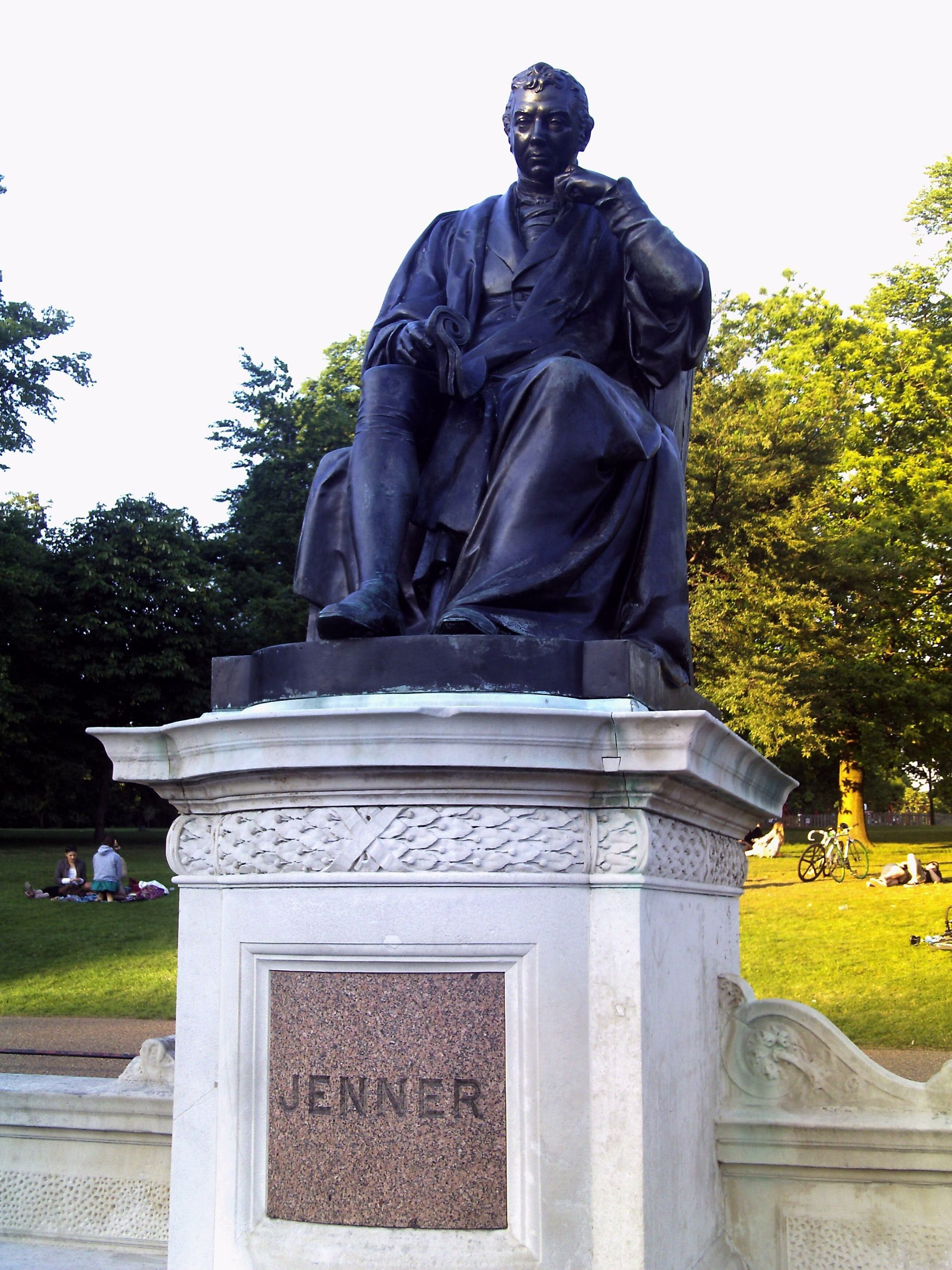
The Plague of Justinian reached Constantinople in 541 and returned in waves for two centuries. The Black Death arrived in Sicily in October 1347 and killed between a third and half of Europe’s population within five years; the Venetian practice of holding inbound ships for forty days — quaranta giorni — gave quarantine its name. Edward Jenner demonstrated cowpox vaccination against smallpox in 1796, the founding act of immunology. Cholera swept Europe repeatedly in the nineteenth century: John Snow traced the 1854 Soho outbreak to the Broad Street pump, and Edwin Chadwick’s sanitary investigations produced England’s Public Health Act of 1848, the template for modern public-health administration.
The influenza pandemic of 1918–19, among whose earliest recorded cases were American soldiers at Camp Funston, Kansas, in March 1918, killed on the order of fifty million people worldwide — more than the war it accompanied.1 Jonas Salk’s polio vaccine was declared safe and effective on 12 April 1955, to public celebration. The World Health Organization declared COVID-19 a pandemic on 11 March 2020, and governments answered with the broadest peacetime restrictions on movement, commerce, worship, and assembly in modern history.
The Conservative Position
Conservatives begin from the state’s oldest duty: protecting the lives of those it governs. Quarantine and sanitation belong to that duty as surely as defence against invasion, which is why conservative statesmen from the Venetian magistrates onward built such machinery without embarrassment. The US Supreme Court stated the settled position in Jacobson v. Massachusetts (1905), upholding a five-dollar fine for refusing smallpox vaccination while insisting that the police power remains subject to constitutional limits.2
The conservative caution follows from the historical record rather than from indifference to disease. Robert Higgs documented how each twentieth-century American emergency enlarged the state and how little of the enlargement receded when the emergency passed.3 The conservative prescription is procedural: emergency powers require statutory foundation, legislative renewal, sunset clauses, and courts that stay open while they operate. Subsidiarity does the rest of the work. Robert Nisbet argued that when the central state absorbs the functions of family, parish, and township, it hollows out the very communities whose cooperation a crisis demands.4 These instincts made many conservatives early critics of extended school closures and of rules that treated a distanced church service as more dangerous than a crowded supermarket — judgments about proportion, not denials of the pathogen.
Differing Positions
The public-health tradition replies that contagion is the textbook externality: one person’s infection is another’s risk, so the libertarian presumption against coercion is at its weakest precisely here. A pathogen ignores county lines, which argues for coordination at national and international scale rather than a patchwork of local judgments. Defenders of the 2020 response add that decisions taken under radical uncertainty should be judged by what was known at the time, not by the retrospective epidemiology of 2023, and that hospital systems near collapse justified blunt instruments. An equity argument runs alongside: essential workers and the poor carry the burden of “letting the virus run,” so restraint by the healthy is a matter of justice rather than mere prudence. Where conservatives see the ratchet, this tradition sees capacity built in advance of the next, possibly worse, pathogen.
References
- John M. Barry, The Great Influenza: The Story of the Deadliest Pandemic in History (New York: Viking, 2004).
- Jacobson v. Massachusetts, 197 U.S. 11 (1905).
- Robert Higgs, Crisis and Leviathan: Critical Episodes in the Growth of American Government (New York: Oxford University Press, 1987).
- Robert Nisbet, The Quest for Community (New York: Oxford University Press, 1953).
You've read articles over the past year
Will you support conservative education?
A gift of any amount helps keep unique explanatory journalism free for all, and
supports our mission to help everyone understand the world, regardless of their
ability to pay.One-time contributors join our community of givers and will be kept
up to date on the journalism that you help keep free.

Westernization
Westernization is the adoption by non-Western societies of institutions, technologies, laws, manners and habits of mind that originated in Western Europe and its colonial offshoots....
War Crime
A war crime is a serious violation of the law of armed conflict for which an individual bears personal criminal responsibility. The category covers the...

Voter ID Laws
Voter identification laws require a person presenting to vote to prove who they are, usually by producing a government-issued document. The requirement is unremarkable across...

Voter Fraud
Voter fraud is the deliberate corruption of an election by unlawful means: impersonating another voter, casting ballots in the name of the dead or the...