
Print
Cite
Feedback
Share
The First Amendment to the United States Constitution, ratified in 1791 as the opening article of the Bill of Rights, forbids Congress from establishing a religion, prohibiting its free exercise, or abridging the freedom of speech, the press, peaceable assembly, and the right to petition the government. Conservatives regard it as the institutional spine of a free society: a written limit on state power that shields the individual conscience from the political majority of the moment.
For the conservative, the amendment is not a grant of permission handed down by the state. It is a recognition that these liberties precede government and that government exists to secure them, not to dispense or revise them.
Key Takeaways
- The First Amendment protects six freedoms: the establishment and free exercise of religion, speech, the press, assembly, and petition.
- Conservatives read it as a restraint on government, rooted in natural rights and English common-law tradition, not as a licence the state can withdraw.
- The phrase “Congress shall make no law” is treated as a hard boundary, which is why conservatives resist speech codes, compelled speech, and content regulation even of offensive expression.
- Rulings such as Barnette (1943) and Brandenburg (1969) strengthened protection against compelled speech and against punishing advocacy short of incitement.
- The present dispute centres on whether campus codes, “hate speech” rules, and platform moderation square with the amendment’s text.
History And Context
The amendment did not appear from nowhere. Its roots lie in the long English struggle against the licensing of the press, a fight John Milton joined in 1644 with his argument against the prior restraint of books.1 Colonial America absorbed this inheritance. The 1735 trial of the printer John Peter Zenger, acquitted of seditious libel after his lawyer argued that truth was a defence, fixed press freedom in the American imagination decades before independence.
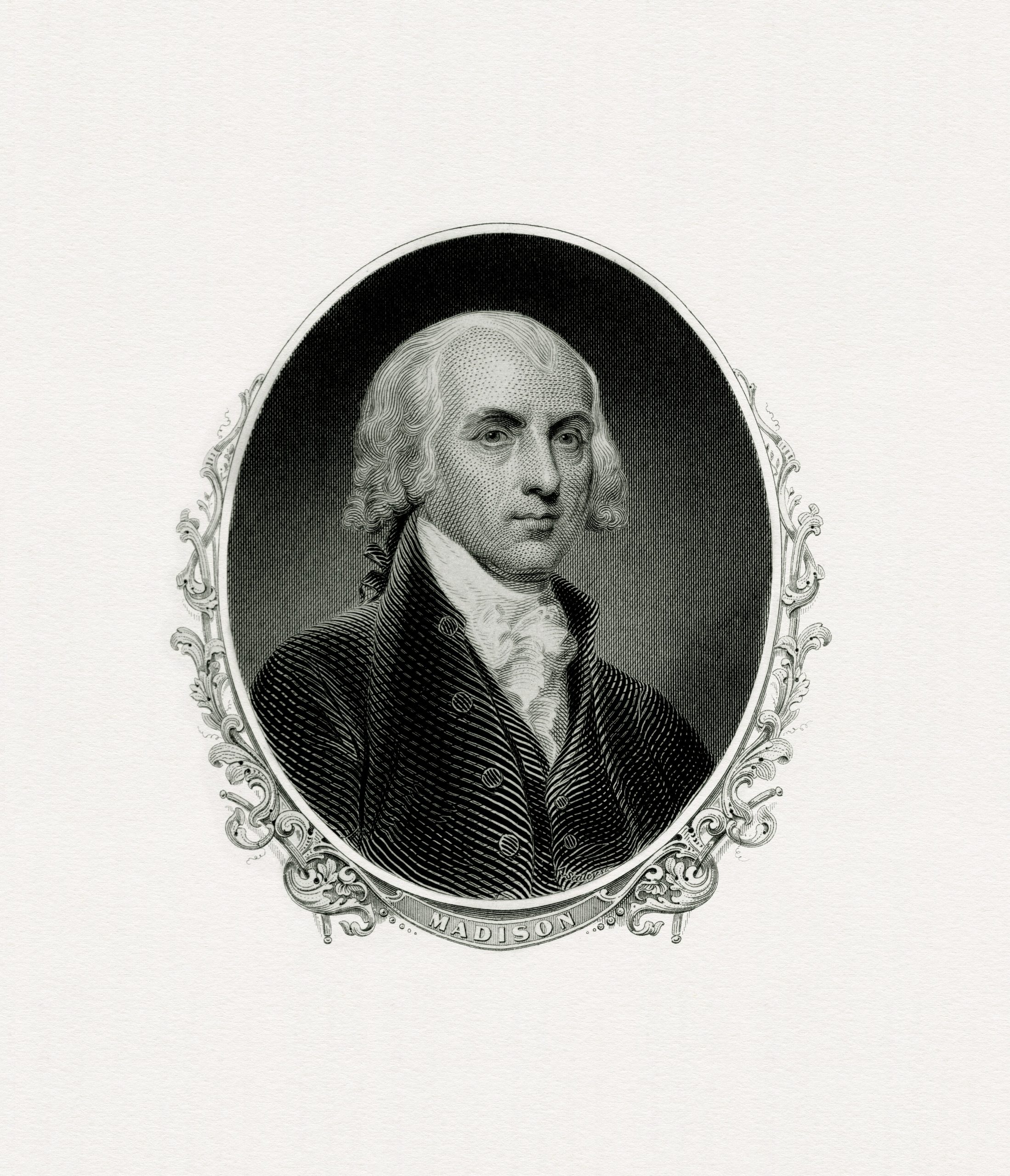
James Madison drafted the constitutional amendments in 1789, drawing on George Mason’s 1776 Virginia Declaration of Rights. Ten were ratified in 1791. For more than a century the clauses restrained only the federal government; the Fourteenth Amendment, ratified in 1868, became the vehicle through which the Supreme Court later applied them to the states.
The twentieth century built the modern doctrine. In Schenck v. United States (1919) the Court allowed punishment of speech posing a “clear and present danger.” That permissive standard narrowed over time. In West Virginia State Board of Education v. Barnette (1943) the Court held that the state could not compel schoolchildren to salute the flag.2 In Brandenburg v. Ohio (1969) it ruled that even inflammatory advocacy is protected unless it is directed to inciting imminent lawless action and likely to produce it.3 The trajectory ran toward wider protection.
The Conservative Position
Conservatives defend the amendment as the charter of ordered liberty: the freedom to speak, worship, publish, and assemble without state coercion. The deepest argument is epistemic. No government official commands the knowledge needed to decide in advance which ideas are true and which are dangerous; truth surfaces through open contest, not official decree.4 A state empowered to silence error is a state empowered to silence dissent, because the two look identical to the censor.
This is why conservatives treat compelled speech as a twin of censorship. Forcing a citizen to affirm an orthodoxy, as in the flag-salute case, violates conscience as surely as forbidding speech does. On religion, conservatives stress the free-exercise clause: the establishment clause exists to keep the state out of the church, not the church out of public life. They resist readings that would scrub religious expression from schools, legislatures, and the public square in the name of a separation the founders did not intend in that form.
The contemporary application is consistent. Conservatives oppose university speech codes, the deplatforming of disfavoured speakers, and government pressure on private platforms to suppress lawful expression, holding that the cure for bad speech is more speech, not an official arbiter of permitted opinion.
Differing Positions
The strongest opposing case holds that free-speech absolutism is not neutral in its effects. Critics argue that unrestricted expression can entrench existing harms: harassment, intimidation, and disinformation that silence vulnerable voices and corrode the very debate the amendment is meant to protect. On this view the “marketplace of ideas” assumes a rough equality of standing that does not exist, so that the loudest and best-funded speech crowds out the rest.
From this premise, some legal scholars defend narrow limits on incitement, defamation, and targeted harassment, and argue that private platforms moderating content are exercising their own expressive rights rather than censoring. They point out that no liberal democracy treats speech as wholly without limits, and that the line-drawing is a matter of degree rather than principle. Conservatives reply that once the state assumes the power to draw those lines around political opinion, the power is rarely surrendered and seldom used against its own friends.
References
- John Milton, Areopagitica (1644).
- West Virginia State Board of Education v. Barnette, U.S. Supreme Court (1943).
- Brandenburg v. Ohio, U.S. Supreme Court (1969).
- Friedrich A. Hayek, The Constitution of Liberty (University of Chicago Press, 1960).
- [1] The White House. "The Constitution." Accessed on March 8, 2024. https://www.whitehouse.gov/about-the-white-house/our-government/the-constitution/#:~:text=The%20First%20Amendment%20provides%20that,the%20right%20to%20bear%20arms.
- [2] The White House. "The Constitution." Accessed on March 8, 2024. https://www.whitehouse.gov/about-the-white-house/our-government/the-constitution/#:~:text=The%20First%20Amendment%20provides%20that,the%20right%20to%20bear%20arms.
- [3] Batchis, Wayne. 2016. “Conservatism and the First Amendment.” Stanford University Press Blog. https://stanfordpress.typepad.com/blog/2016/06/conservatism-and-the-first-amendment.html.
- [4] Douek , Evelyn, and Genevieve Lakier. 2022. “First Amendment Politics Gets Weird: Public and Private Platform Reform and the Breakdown of the Laissez-Faire Free Speech Consensus.” The University of Chicago Law Review Online. June 6. https://lawreviewblog.uchicago.edu/2022/06/06/douek-lakier-first-amendment/.
You've read articles over the past year
Will you support conservative education?
A gift of any amount helps keep unique explanatory journalism free for all, and
supports our mission to help everyone understand the world, regardless of their
ability to pay.One-time contributors join our community of givers and will be kept
up to date on the journalism that you help keep free.

Westernization
Westernization is the adoption by non-Western societies of institutions, technologies, laws, manners and habits of mind that originated in Western Europe and its colonial offshoots....
War Crime
A war crime is a serious violation of the law of armed conflict for which an individual bears personal criminal responsibility. The category covers the...

Voter ID Laws
Voter identification laws require a person presenting to vote to prove who they are, usually by producing a government-issued document. The requirement is unremarkable across...

Voter Fraud
Voter fraud is the deliberate corruption of an election by unlawful means: impersonating another voter, casting ballots in the name of the dead or the...