
Print
Cite
Feedback
Share
Globalism is the family of ideas favouring the integration of national economies, legal systems, and political authority into transnational structures, on the belief that the great problems of the age are global in scope and demand global governance. Conservatives draw a sharp line between globalisation, the organic spread of trade, travel, and exchange across borders, which many of them welcome, and globalism, the political project of subordinating the nation-state to supranational bodies, which they resist.
The conservative objection rests on a single conviction: that self-government requires a self, a bounded political community whose members share loyalties, laws, and accountability to one another.
Key Takeaways
- Conservatives distinguish globalisation (trade and exchange crossing borders) from globalism (transferring political authority to supranational institutions).
- The value at stake is national sovereignty: the capacity of a people to govern themselves under their own laws.
- Critics on the right argue that bodies such as the European Union and unaccountable international agencies erode democratic accountability.
- Roger Scruton tied legitimate government to national loyalty and a shared “first-person plural” that supranational bodies cannot supply.
- Defenders of globalism counter that climate, pandemics, and finance are genuinely transnational and cannot be managed by states acting alone.
History And Context
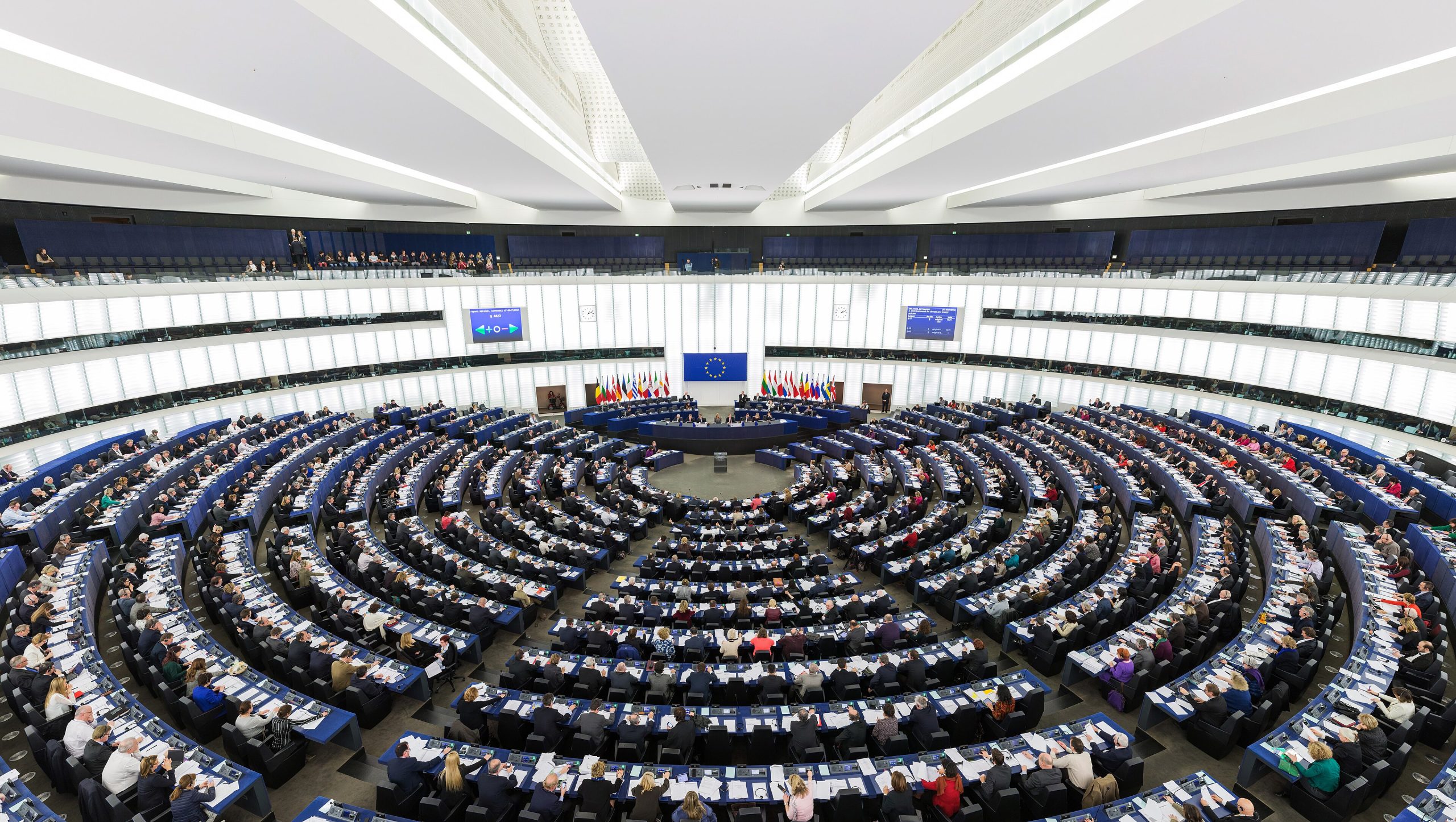
Trade across borders is ancient, but the project of formal international governance accelerated after 1945. The United Nations was founded in 1945, the Bretton Woods financial institutions in 1944, and the General Agreement on Tariffs and Trade in 1947, which became the World Trade Organization in 1995. European integration advanced from the 1957 Treaty of Rome to the 1992 Maastricht Treaty, which created the European Union and bound member states into a shared currency, court, and parliament.
The end of the Cold War produced confident talk of a borderless world and the spread of a single liberal order. That confidence broke against events. The 2008 financial crisis discredited the managers of the global economy in many eyes. The European migration crisis of 2015 strained the bloc’s open internal borders. In 2016 the United Kingdom voted to leave the European Union, the sharpest reassertion of national control by any advanced democracy in the era, and parallel movements gathered across the West.
The Conservative Position
The conservative argument is about legitimacy. Scruton held that lawful government depends on a national “we,” a community defined by territory, history, and shared loyalty, within which citizens accept laws they did not personally choose because they belong to one another.1 Supranational governance lacks this. It produces rule by officials and courts accountable to no single people, issuing directives that override domestic law without the consent that makes law binding in conscience as well as fact.
Burke’s localism scales up to the nation. The attachments that begin in family and place extend to country, and it is at the national level, conservatives argue, that genuine democratic accountability can exist: a parliament that can be thrown out, a public that shares a language and a press, a budget answerable to taxpayers who recognise one another as fellow citizens.2 Conservatives are not opposed to cooperation between nations. They support trade, treaties, and alliances freely entered by sovereign states. What they oppose is the pooling of sovereignty into bodies that stand above the nation and cannot be voted out, and they invoke subsidiarity, the principle that decisions belong at the lowest competent level, against the drift of power upward.
Differing Positions
The strongest opposing case is that the gravest modern problems ignore borders, so governance must too. Climate change, pandemics such as COVID-19, nuclear proliferation, financial contagion, and transnational crime cannot be solved by states acting alone, and the institutions built after 1945, whatever their flaws, coincided with the longest peace among great powers in the modern record and with the steepest fall in global poverty ever measured.
Liberal internationalists argue that economic integration, the European single market above all, raised living standards across a continent, and that pure sovereignty in a deeply interdependent world is closer to a fiction than a fact: a state that refuses to coordinate simply exports its problems and imports everyone else’s. Conservatives reply that the benefits of cooperation can be had through agreements among sovereign nations without surrendering self-government, and that institutions which cannot be held to account by any electorate will, in time, serve themselves.
References
- Roger Scruton, How to Be a Conservative (Bloomsbury, 2014).
- Edmund Burke, Reflections on the Revolution in France (1790).
- Friedrich A. Hayek, The Road to Serfdom (University of Chicago Press, 1944).
- Yoram Hazony, The Virtue of Nationalism (Basic Books, 2018).
- [1] Noguchi, Makoto, and Yoshimura Mako . 2005. “Globalism and Developmentalism.” Taylor & Francis Group. https://www.taylorfrancis.com/chapters/edit/10.4324/9780203007518-1/introduction-makoto-noguchi-mako-yoshimura?context=ubx&refId=f3dabd96-1a8d-4caa-95cd-d1f14f62e55e.
- [2] Baker, David, Andrew Gamble, and David Seawright. 2002. “Sovereign Nations and Global Markets: Modern British Conservatism and Hyperglobalism.” The British Journal of Politics and International Relations 4 (3): 399–428. doi:https://doi.org/10.1111/1467-856x.t01-1-00086.
- [3] Schoenfeld, Gabriel. 2019. “The Conservative Case for Globalism.” The American Interest. September 30. https://www.the-american-interest.com/2019/09/30/the-conservative-case-for-globalism/.
You've read articles over the past year
Will you support conservative education?
A gift of any amount helps keep unique explanatory journalism free for all, and
supports our mission to help everyone understand the world, regardless of their
ability to pay.One-time contributors join our community of givers and will be kept
up to date on the journalism that you help keep free.

Westernization
Westernization is the adoption by non-Western societies of institutions, technologies, laws, manners and habits of mind that originated in Western Europe and its colonial offshoots....
War Crime
A war crime is a serious violation of the law of armed conflict for which an individual bears personal criminal responsibility. The category covers the...

Voter ID Laws
Voter identification laws require a person presenting to vote to prove who they are, usually by producing a government-issued document. The requirement is unremarkable across...

Voter Fraud
Voter fraud is the deliberate corruption of an election by unlawful means: impersonating another voter, casting ballots in the name of the dead or the...