
Print
Cite
Feedback
Share
A government mandate is a command backed by penalty that compels citizens to act—buy a product, take a medicine, close a business—rather than merely forbidding them to harm others. Conservatives draw a sharp line between these two kinds of law. Prohibitions on force and fraud protect liberty; compulsions to affirmative action by the state expand it at liberty’s expense, and each mandate accepted makes the next one easier to impose.1
The question is not whether any mandate can ever be justified—quarantine powers are as old as the common law—but where the burden of proof lies. The conservative answer: always on the state, and the bar is high.
Key Takeaways
- Mandates differ in kind from prohibitions: they conscript citizens into positive action chosen by the state.
- The US Supreme Court upheld a smallpox vaccination fine in Jacobson v. Massachusetts (1905) but rejected the Commerce Clause defence of the insurance-purchase mandate in NFIB v. Sebelius (2012).
- Conservative objections rest on the knowledge problem, the precedent problem, and the displacement of family, church, and voluntary association.
- The COVID-19 era made mandate politics central: the Supreme Court stayed the federal vaccine-or-test rule for large employers in January 2022.
History And Context
Compulsion by the state has a long lineage. English common law recognized quarantine and militia obligations; the young American republic added compulsory smallpox inoculation in some states and, later, conscription. The modern legal benchmark is Jacobson v. Massachusetts (1905), in which the Supreme Court upheld a five-dollar fine on a Cambridge pastor who refused vaccination during a smallpox outbreak, holding that liberty is not absolute when the community faces epidemic disease.2
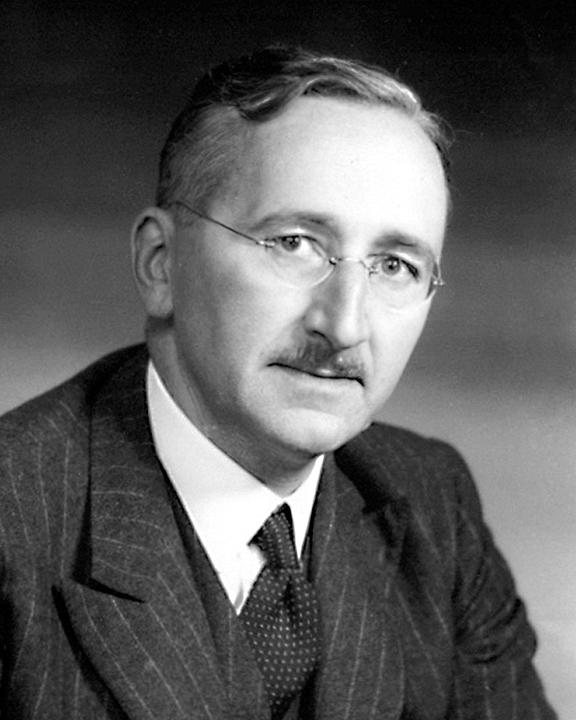
The twentieth century multiplied mandates: school attendance, Social Security participation, seat belts, motorcycle helmets, employer insurance rules. Friedrich Hayek, writing in The Constitution of Liberty (1960), supplied the era’s most influential critique of the planning mentality behind such measures, arguing that no central authority can possess the dispersed, local knowledge its commands presume.1 The Affordable Care Act of 2010 pushed the question to its constitutional limit with the individual mandate to purchase health insurance. In NFIB v. Sebelius (2012), Chief Justice Roberts wrote that the Commerce Clause does not permit Congress to compel commerce in order to regulate it, sustaining the provision only as a tax.3 The COVID-19 pandemic then produced the largest mandate wave in living memory—business closures, mask rules, and vaccination requirements—culminating in the Supreme Court’s January 2022 stay of the OSHA vaccine-or-test rule covering some 84 million workers.
The Conservative Position
Three arguments organize conservative resistance. First, the knowledge problem: mandates apply a single rule to millions of unlike situations, and the planner cannot know what the shopkeeper, the nurse, or the parent knows about their own circumstances. Hayek’s point was not that officials are wicked but that they are necessarily ignorant.1 Second, the precedent problem: powers claimed in an emergency outlive it. Each upheld mandate becomes the floor for the next claim, which is why Roberts’s Commerce Clause holding in NFIB mattered to conservatives even though the ACA survived—it refused to convert the power to regulate commerce into a power to command it.3
Third, and deepest, the displacement problem. Michael Oakeshott distinguished civil association, in which law provides neutral rules of conduct, from enterprise association, in which the state directs society toward chosen ends and citizens become instruments of the plan.4 Mandates are the signature tool of enterprise association. They also crowd out the institutions—families, congregations, mutual-aid societies, employers acting voluntarily—through which free societies actually coordinate behaviour in a crisis. Where genuine emergencies demand compulsion, conservatives insist on the Jacobson template: local, temporary, narrow, and modestly enforced, not national, indefinite, and punitive.
Differing Positions
Defenders of mandates argue from externalities and collective action. An unvaccinated person imposes risk on others; an uninsured driver shifts costs to the insured; individual choice cannot solve a coordination problem in which each person’s safety depends on what everyone else does. On this view, Jacobson was rightly decided and rightly extended: democratic majorities are entitled to require modest burdens for large public gains, and the alternative to mandates in a pandemic is not liberty but more death and, eventually, harsher restrictions imposed later.
Public-health scholars add that many mandates conservatives now accept without complaint—school vaccination schedules, food-safety rules, building codes—were fought on identical grounds when introduced, and that the dire predictions did not come true. The disagreement is finally about default settings: whether the state must prove necessity before commanding, or citizens must prove harm before refusing.
References
- F. A. Hayek, The Constitution of Liberty (University of Chicago Press, 1960).
- Jacobson v. Massachusetts, 197 U.S. 11 (1905).
- National Federation of Independent Business v. Sebelius, 567 U.S. 519 (2012).
- Michael Oakeshott, On Human Conduct (Clarendon Press, 1975).
You've read articles over the past year
Will you support conservative education?
A gift of any amount helps keep unique explanatory journalism free for all, and
supports our mission to help everyone understand the world, regardless of their
ability to pay.One-time contributors join our community of givers and will be kept
up to date on the journalism that you help keep free.

Westernization
Westernization is the adoption by non-Western societies of institutions, technologies, laws, manners and habits of mind that originated in Western Europe and its colonial offshoots....
War Crime
A war crime is a serious violation of the law of armed conflict for which an individual bears personal criminal responsibility. The category covers the...

Voter ID Laws
Voter identification laws require a person presenting to vote to prove who they are, usually by producing a government-issued document. The requirement is unremarkable across...

Voter Fraud
Voter fraud is the deliberate corruption of an election by unlawful means: impersonating another voter, casting ballots in the name of the dead or the...