
Print
Cite
Feedback
Share
Gun violence in America is concentrated to a degree the national debate rarely acknowledges: a small number of offenders, in a small number of neighbourhoods, commit most of the shootings. Conservatives argue that this fact dictates the remedy—identify, deter, and incarcerate the violent few—and that broad restrictions on the tens of millions of citizens who own firearms lawfully punish the innocent while leaving the violent untouched.1
The conservative position treats gun violence as a crime problem with a firearms dimension, not a firearms problem with a crime dimension. The distinction determines everything about policy.
Key Takeaways
- Homicide is heavily concentrated among identifiable networks of offenders and victims, which makes targeted enforcement the highest-yield intervention.
- District of Columbia v. Heller (2008) held that the Second Amendment protects an individual right to keep arms for self-defence in the home.
- Criminologist Gary Kleck’s survey research put defensive gun uses in the hundreds of thousands or more per year, a figure that remains contested but changed the terms of debate.
- Focused-deterrence programmes such as Boston’s Operation Ceasefire cut youth homicide sharply by concentrating on the violent few.
History And Context
The Anglo-American right to arms predates the republic: the English Bill of Rights of 1689 confirmed the right of Protestant subjects to have arms for their defence, and the Second Amendment constitutionalized the tradition in 1791. Federal regulation arrived in stages—the National Firearms Act of 1934, the Gun Control Act of 1968, the Brady background-check act of 1993, and a federal ban on certain semi-automatic rifles from 1994 until its expiry in 2004.
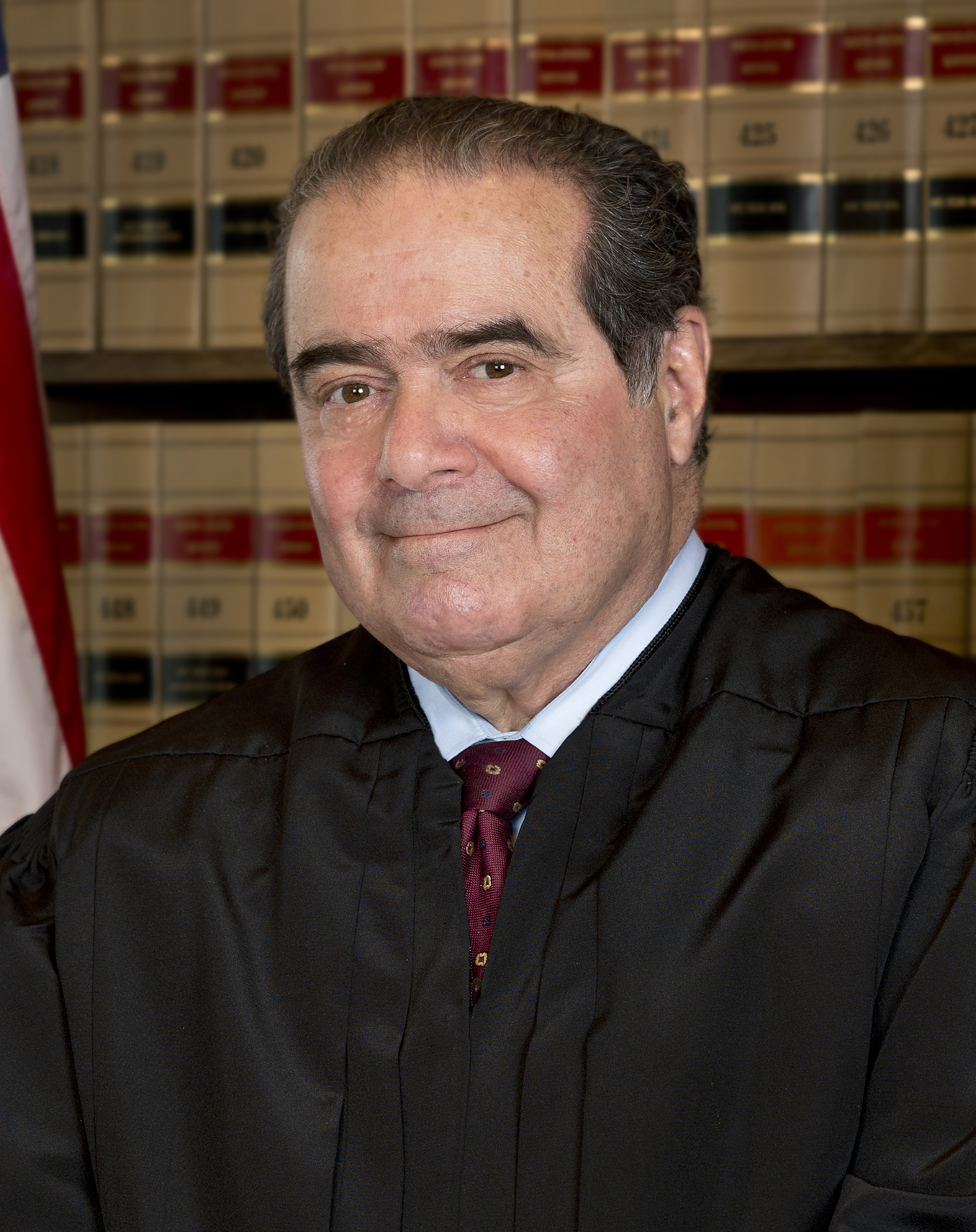
Crime, meanwhile, moved on its own track. American homicide peaked around 1980 and again in the early 1990s, then fell for two decades even as the number of firearms in private hands grew by tens of millions—a divergence that shaped conservative scepticism about supply-side gun control. Criminologist David M. Kennedy demonstrated in Boston in the mid-1990s that homicide clusters within tiny, police-identifiable networks of offenders; his Operation Ceasefire was followed by a steep fall in youth murders.2 The constitutional question was settled in 2008, when Justice Antonin Scalia wrote for the Supreme Court in District of Columbia v. Heller that the Second Amendment secures an individual right, unconnected to militia service, to keep and bear arms for lawful purposes such as defence of the home.3
The Conservative Position
Conservatives begin with the offender, not the object. Since shootings concentrate among a small population already known to police and courts—typically young men with prior records, in gangs or crews, in a handful of city blocks—policy should concentrate there too: certain and swift prosecution of gun crimes, focused deterrence on the Kennedy model, no plea-bargaining away firearms charges, and long sentences for repeat violent offenders. Richmond’s Project Exile, which routed felon-in-possession cases to federal court in the late 1990s, became the template.
The lawful owner stands on different ground. Firearms in private hands are used defensively at rates Kleck’s research placed far above their criminal use, and armed self-defence is, for conservatives, not a policy cost to be tolerated but a right with practical value—especially for people the police cannot reach in time.1 John Lott’s econometric work arguing that concealed-carry liberalization did not raise, and by his estimates lowered, violent crime supplied the empirical case for the shall-issue wave that swept the states after 1987.4 Broad measures—bans on common rifles, registries, waiting periods—fail the conservative test because they burden millions of non-offenders to reach a criminal population that does not obey purchase laws in the first place.
Differing Positions
The public-health school reads the evidence differently. Researchers in this tradition find that firearm availability correlates with firearm death across states and countries, that suicides—a majority of American gun deaths—rise with access, and that Kleck’s defensive-use estimates are inflated by survey artifacts. The RAND Corporation’s ongoing evidence review rates the support for Lott’s more-guns-less-crime hypothesis as weak, with several re-analyses finding the opposite sign. On this view, universal background checks, permit-to-purchase laws, safe-storage requirements, and red-flag orders are modest burdens with measurable returns, and the offender-focused frame ignores the deaths—suicides, domestic shootings, accidents—that occur outside criminal networks entirely.
Both sides claim the mantle of evidence; they disagree about which deaths policy can actually reach, and at what cost to a constitutional right.
References
- Gary Kleck, Point Blank: Guns and Violence in America (Aldine de Gruyter, 1991).
- David M. Kennedy, Don’t Shoot: One Man, a Street Fellowship, and the End of Violence in Inner-City America (Bloomsbury, 2011).
- District of Columbia v. Heller, 554 U.S. 570 (2008).
- John R. Lott Jr., More Guns, Less Crime (University of Chicago Press, 1998).
You've read articles over the past year
Will you support conservative education?
A gift of any amount helps keep unique explanatory journalism free for all, and
supports our mission to help everyone understand the world, regardless of their
ability to pay.One-time contributors join our community of givers and will be kept
up to date on the journalism that you help keep free.

Westernization
Westernization is the adoption by non-Western societies of institutions, technologies, laws, manners and habits of mind that originated in Western Europe and its colonial offshoots....
War Crime
A war crime is a serious violation of the law of armed conflict for which an individual bears personal criminal responsibility. The category covers the...

Voter ID Laws
Voter identification laws require a person presenting to vote to prove who they are, usually by producing a government-issued document. The requirement is unremarkable across...

Voter Fraud
Voter fraud is the deliberate corruption of an election by unlawful means: impersonating another voter, casting ballots in the name of the dead or the...