
Print
Cite
Feedback
Share
Healthcare policy concerns how a society organises, finances, and delivers medical care: who pays, who provides, and who decides. The conservative position favours markets, competition, and individual choice over centralised single-payer control, holding that price signals and provider competition allocate scarce medical resources better than government command, and that a payment system detached from cost is the root of runaway spending.
Conservatives accept a role for government, a safety net for the poor and the old and regulation against fraud, while resisting the nationalisation of medicine and the rationing that follows from it.
Key Takeaways
- Conservatives favour market mechanisms, competition, price transparency, consumer choice, and health savings accounts, over single-payer or fully nationalised systems.
- The diagnosis is that third-party payment insulates patients from cost, distorting incentives and inflating spending.
- A targeted safety net for the poor, the disabled, and the elderly is accepted; a universal state monopoly is rejected.
- Single-payer systems are criticised for waiting lists, rationing, and slower access to new treatments and drugs.
- Supporters of universal public systems point to lower per-capita costs and universal coverage in countries such as Canada and the United Kingdom.
History And Context
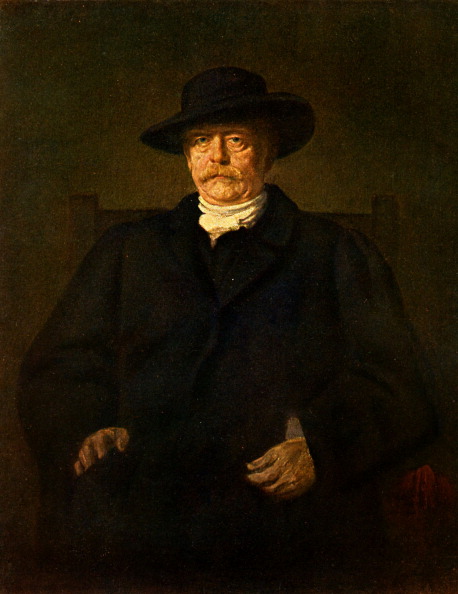
State involvement in health insurance began in Germany in 1883, when Otto von Bismarck enacted the first national sickness-insurance law, binding workers into a compulsory scheme.1 The model spread. Britain went furthest, creating the tax-funded National Health Service in 1948, which made the state the owner and employer of the medical system rather than merely its insurer.
The United States took a mixed path. Employer-based private insurance grew out of wage controls during the Second World War, when firms competed for workers through benefits rather than pay. Medicare and Medicaid, enacted in 1965, extended public coverage to the elderly and the poor while leaving the working-age majority in private plans. The Affordable Care Act of 2010 expanded coverage through an individual mandate, regulated exchanges, and subsidies, without moving to a single-payer model. Canada built its single-payer Medicare province by province through the 1960s, formalised nationally by the Canada Health Act of 1984.
The Conservative Position
The conservative argument rests on the economics of knowledge and incentives. Friedrich Hayek’s account of dispersed knowledge applies directly to medicine: no central planner can know the preferences, trade-offs, and circumstances of millions of patients, so a system that replaces their choices with an administrative schedule will misallocate care.2 Prices, in this view, are not a nuisance to be abolished but signals that coordinate supply with need.
From this follows the conservative diagnosis of cost. When a third party, an insurer or the state, pays the bill, neither patient nor provider faces the price, and demand detaches from any sense of value. Milton Friedman argued that this structure, more than any failure of markets, drives medical inflation, and that restoring the link between the patient and the cost of care is the route to discipline.3 The conservative agenda follows: health savings accounts that give patients a stake in spending, catastrophic insurance for genuine risk, price transparency, and deregulation that lets providers compete across state lines and lets nurses and pharmacists practise to the full extent of their training.
Conservatives also press an argument about innovation. The bulk of new drugs, devices, and procedures originates disproportionately in market-based systems, and Thomas Sowell has stressed the difference between insurance “coverage” and actual access to timely care, noting that a queue is a form of denial that does not show up as an uninsured statistic.4 A safety net for those who cannot provide for themselves is accepted; a monopoly that rations care for everyone is not.
Differing Positions
The strongest opposing case is comparative. Countries with universal public systems, Canada, the United Kingdom, and most of the OECD, achieve universal coverage while spending a smaller share of national income on health than the United States, and they post comparable or better results on headline measures such as life expectancy and infant mortality. On this evidence, supporters argue that single-payer systems are both fairer and cheaper.
The deeper claim is moral. Illness is not a consumer choice, and a person struck by cancer is in no position to shop. Pooling risk across the whole population, on this view, avoids the cruelty of medical bankruptcy and treats care as a right of citizenship rather than a commodity. Advocates add that the administrative overhead of a fragmented multi-payer system is itself a large and avoidable cost. Conservatives answer that lower headline spending in state systems is achieved partly by rationing and by suppressing the innovation the whole world relies on, and that “coverage” guaranteed on paper is not the same as care delivered in time.
References
- Milton Friedman, Capitalism and Freedom (University of Chicago Press, 1962).
- Friedrich A. Hayek, “The Use of Knowledge in Society,” American Economic Review (1945).
- Milton Friedman and Rose Friedman, Free to Choose (Harcourt Brace Jovanovich, 1980).
- Thomas Sowell, Applied Economics (Basic Books, 2004).
You've read articles over the past year
Will you support conservative education?
A gift of any amount helps keep unique explanatory journalism free for all, and
supports our mission to help everyone understand the world, regardless of their
ability to pay.One-time contributors join our community of givers and will be kept
up to date on the journalism that you help keep free.

Westernization
Westernization is the adoption by non-Western societies of institutions, technologies, laws, manners and habits of mind that originated in Western Europe and its colonial offshoots....
War Crime
A war crime is a serious violation of the law of armed conflict for which an individual bears personal criminal responsibility. The category covers the...

Voter ID Laws
Voter identification laws require a person presenting to vote to prove who they are, usually by producing a government-issued document. The requirement is unremarkable across...

Voter Fraud
Voter fraud is the deliberate corruption of an election by unlawful means: impersonating another voter, casting ballots in the name of the dead or the...