
Print
Cite
Feedback
Share
Immigration policy sets the legal terms under which non-citizens may enter, work, settle, and eventually naturalize within a state’s territory, covering visa categories, refugee and asylum procedures, enforcement against unauthorized entry, and the criteria for citizenship itself. Conservative approaches to the subject start from the premise that a nation is a bounded political community with the right, and the practical need, to control who joins it and on what terms; the debate among conservatives is less about whether immigration should be controlled than about how large the flow should be, how it should be selected, and how strictly its rules should be enforced.
Key Takeaways
- Conservative immigration thought treats border control and rule-of-law enforcement as prerequisites for any functioning immigration system, not as optional add-ons to it.
- Points-based and skills-based selection systems, used in Canada and Australia, are cited by conservative reformers as models that prioritize economic contribution and assimilation capacity over family chain migration.
- Concerns about wage competition for lower-income native workers, documented in economic studies dating to the 1980s, inform conservative skepticism of high-volume, low-skill immigration.
- Cultural assimilation, including language acquisition and civic integration, is treated by traditionalist conservatives as a policy goal equal in importance to economic screening.
- Business-oriented and libertarian-leaning conservatives diverge sharply from restrictionist conservatives on the desirability of expanded legal immigration, producing an internal split that has shaped Republican Party platforms since the 1980s.
History And Context
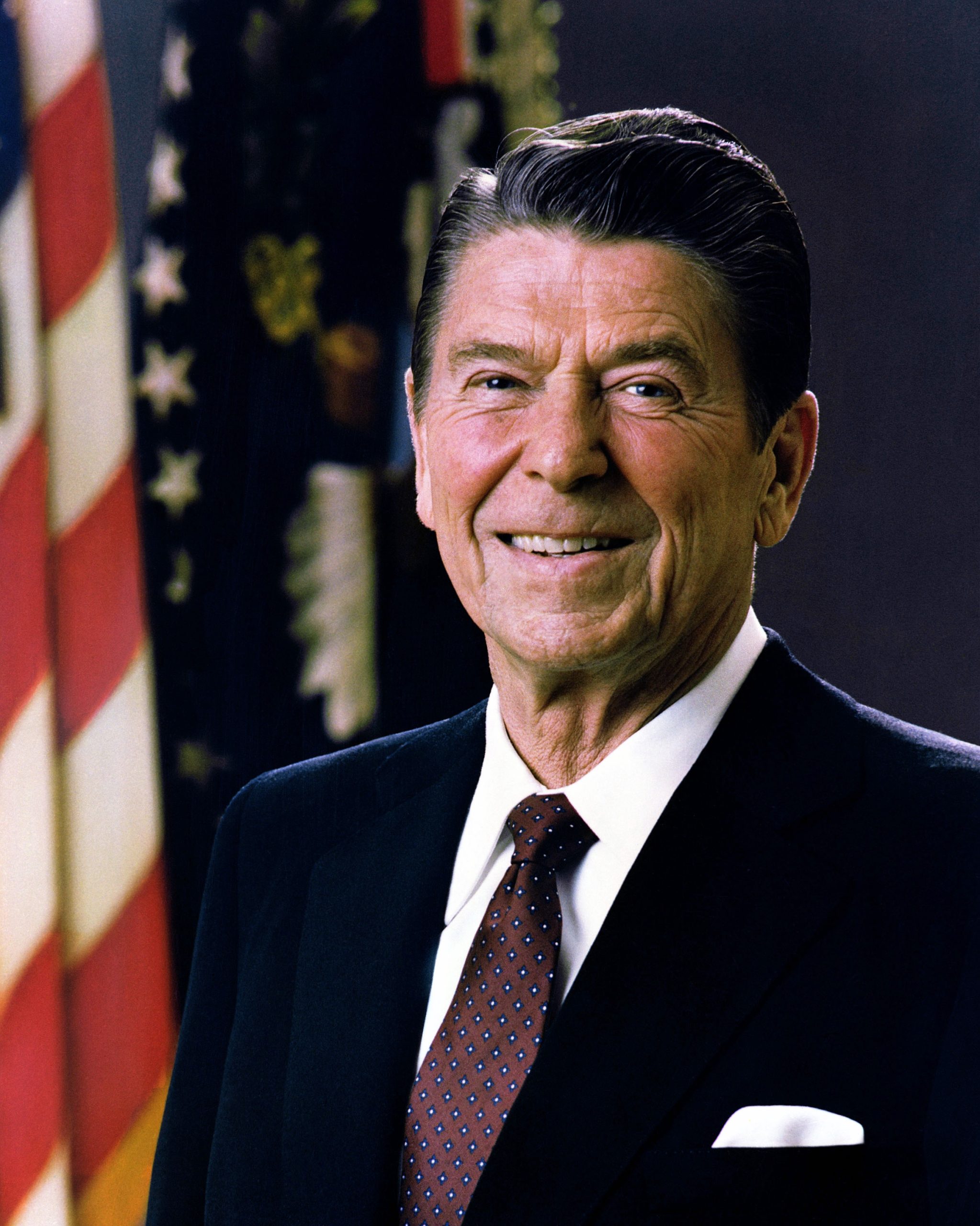
The United States operated with few federal immigration restrictions until the Chinese Exclusion Act of 1882, followed by the Immigration Act of 1924, which imposed national-origin quotas favoring northern European immigration and remained in force until the Immigration and Nationality Act of 1965 replaced it with a system centered on family reunification and, later, employment categories. Britain’s postwar immigration policy shifted comparably: the 1948 British Nationality Act granted Commonwealth citizens the right to enter and settle in the United Kingdom, a policy tightened progressively through the Commonwealth Immigrants Acts of 1962 and 1968 as settlement from the Caribbean and South Asia grew. Canada adopted a points-based selection system in 1967, ranking applicants by education, language ability, and occupational demand rather than national origin, a model conservative reformers in the United States and Britain have cited since the 1990s as an alternative to family-based chain migration. The Immigration Reform and Control Act of 1986, signed by Ronald Reagan, combined an amnesty for roughly three million unauthorized immigrants already in the country with new employer sanctions intended to deter future illegal hiring, an approach later criticized by restrictionist conservatives on the grounds that the enforcement provisions were never adequately funded or applied while the amnesty proceeded as planned.
The Conservative Position
Conservative restrictionists, drawing on the work of economists such as George Borjas at Harvard, argue that large-scale low-skill immigration depresses wages for native workers in competing occupations and imposes net fiscal costs on local governments through schooling, healthcare, and social services, even where immigration produces aggregate economic gains. Traditionalist conservatives add a cultural argument distinct from the economic one: a nation’s civic cohesion depends on a common language, shared historical memory, and reciprocal expectations of assimilation, and immigration policy should be calibrated to a pace and composition the receiving society can absorb without straining those bonds. Writers in the tradition of Russell Kirk and, more recently, figures associated with national conservatism have argued that unrestricted movement of peoples treats the nation as an economic zone rather than a political community bound by mutual obligation, a distinction they regard as central to conservative thought. Enforcement-first conservatives hold that legal status changes, guest worker programs, or expanded quotas should follow demonstrated control of the border and interior enforcement, not precede it, citing the unmet enforcement commitments of the 1986 reform as the reason later legalization proposals have failed to win conservative support.
Differing Positions
Free-market and libertarian-leaning conservatives, including economists associated with the Cato Institute, argue that immigration restrictions function as a labor market distortion no different in kind from tariffs, and that expanded legal immigration raises aggregate output, fills demographic gaps left by falling native birth rates, and benefits consumers and employers even if it produces localized wage pressure in specific sectors. Business groups within the Republican coalition have historically favored expanded guest worker programs and higher visa caps for agriculture, technology, and construction, arguing that labor shortages in those sectors constrain growth more than immigration constrains wages. Some pro-immigration conservatives further argue that assimilation concerns are overstated, pointing to naturalization rates and English-language acquisition among second-generation immigrants as evidence that the American civic model absorbs newcomers effectively over time, a claim restrictionists dispute by pointing to slower assimilation rates in specific immigrant-origin cohorts and enclaves. The resulting divide, between a restrictionist wing emphasizing wages, culture, and enforcement and a market-oriented wing emphasizing growth and labor supply, has made immigration one of the most persistent fault lines within the conservative coalition since the Reagan era.
References
- George J. Borjas, Heaven’s Door: Immigration Policy and the American Economy (Princeton University Press, 1999).
- Otis L. Graham Jr., Unguarded Gates: A History of America’s Immigration Crisis (Rowman & Littlefield, 2004).
- Russell Kirk, The Conservative Mind: From Burke to Santayana (Regnery, 1953).
- Peter Brimelow, Alien Nation: Common Sense About America’s Immigration Disaster (Random House, 1995).
- Cerda, Andy, Oliphant, J. Baxter. 2022. "Republicans and Democrats have different top priorities for U.S. immigration policy." Pew Research Center. September 8. https://www.pewresearch.org/short-reads/2022/09/08/republicans-and-democrats-have-different-top-priorities-for-u-s-immigration-policy/.
- Qamar, Zoha. 2022. "When Republicans Talk About Immigration, They Don’t Just Mean Illegal Immigration." FiveThirtyEight. August 4. https://fivethirtyeight.com/features/when-republicans-talk-about-immigration-they-dont-just-mean-illegal-immigration/.
You've read articles over the past year
Will you support conservative education?
A gift of any amount helps keep unique explanatory journalism free for all, and
supports our mission to help everyone understand the world, regardless of their
ability to pay.One-time contributors join our community of givers and will be kept
up to date on the journalism that you help keep free.

Westernization
Westernization is the adoption by non-Western societies of institutions, technologies, laws, manners and habits of mind that originated in Western Europe and its colonial offshoots....
War Crime
A war crime is a serious violation of the law of armed conflict for which an individual bears personal criminal responsibility. The category covers the...

Voter ID Laws
Voter identification laws require a person presenting to vote to prove who they are, usually by producing a government-issued document. The requirement is unremarkable across...

Voter Fraud
Voter fraud is the deliberate corruption of an election by unlawful means: impersonating another voter, casting ballots in the name of the dead or the...