
Print
Cite
Feedback
Share
Inalienable rights are those a person is understood to possess simply by virtue of being human, rights that cannot be surrendered, transferred, or justly revoked by government because they do not originate from government in the first place. The phrase entered American political vocabulary through the Declaration of Independence’s 1776 assertion that all men are endowed by their Creator with “certain unalienable Rights,” among them life, liberty, and the pursuit of happiness, a formulation drawn from a longer natural rights tradition running through John Locke’s Two Treatises of Government (1689). Conservatives who ground political order in natural law or natural rights treat the concept as a check on state power: if rights exist prior to and independent of government, no government, however democratically elected, can legitimately abolish them.
Key Takeaways
- The Declaration of Independence’s 1776 language of “unalienable Rights” draws on John Locke’s natural rights theory but transforms it into a specifically political and revolutionary claim against the British Crown.
- Natural rights theory holds that rights derive from human nature or divine endowment rather than from positive law, meaning legislatures can recognize but cannot create or abolish them.
- The distinction between natural rights and legal or civil rights, which are created and can be altered by statute, remains central to conservative constitutional argument, particularly regarding judicial interpretation.
- Edmund Burke, despite sharing Locke’s broadly liberal inheritance, criticized abstract rights talk detached from historical prescription and inherited constitutional practice, producing a lasting tension within conservative thought between natural-rights and traditionalist strands.
- Twentieth-century conservative constitutionalists have invoked inalienable rights and the Ninth Amendment to argue against the idea that citizens possess only those rights specifically enumerated by government.
History And Context
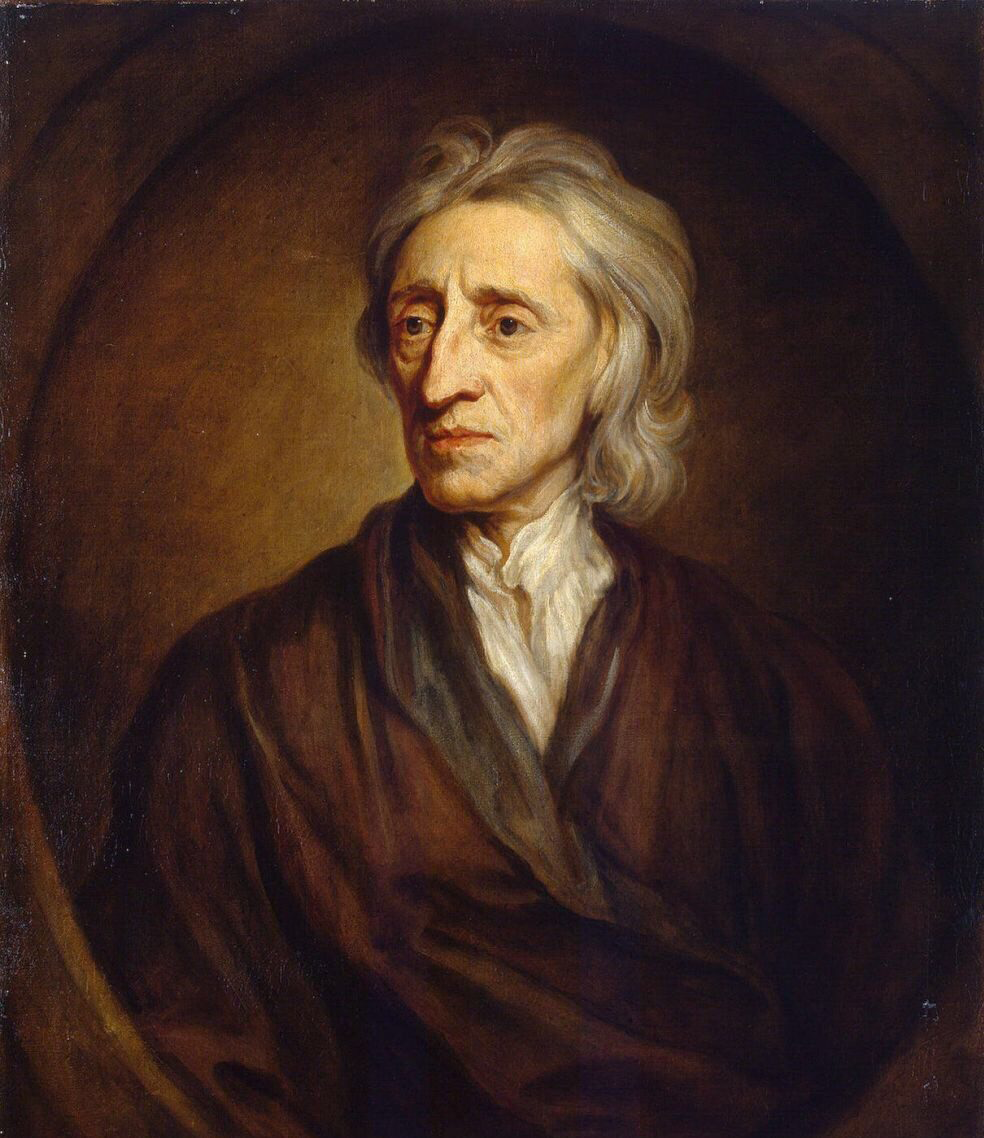
The natural rights tradition Jefferson drew on for the Declaration traces most directly to John Locke, whose Second Treatise of Government argued that individuals in a hypothetical state of nature possess rights to life, liberty, and property, and that they form governments by consent specifically to secure those pre-existing rights rather than to receive rights from the state. Locke’s language echoes earlier natural law theorists, including Hugo Grotius and Samuel von Pufendorf, and stands in a lineage tracing back to Thomas Aquinas’s medieval synthesis of natural law with Christian theology. Thomas Jefferson’s draft of the Declaration, revised by the Continental Congress in July 1776, replaced Locke’s triad of “life, liberty, and property” with “life, liberty, and the pursuit of happiness,” a change scholars have debated since the nineteenth century without reaching consensus on Jefferson’s precise reasoning, though the property right reappears in the Fifth Amendment’s due process and takings clauses ratified in 1791. George Mason’s Virginia Declaration of Rights, adopted weeks before Jefferson’s draft in June 1776, used closely related language declaring that men have “certain inherent rights” of which they cannot, “by any compact, deprive or divest their posterity,” language that directly informed Jefferson’s phrasing. The concept resurfaced in debates over the Bill of Rights, where James Madison and other framers worried that enumerating specific rights might imply that unlisted rights did not exist, a concern addressed by the Ninth Amendment’s declaration that the Constitution’s enumeration of certain rights “shall not be construed to deny or disparage others retained by the people.”
The Conservative Position
Conservatives in the natural-law and natural-rights tradition treat inalienable rights as the foundation that makes limited government coherent: because rights precede the state, the state’s proper function is to secure them rather than dispense them, and any government that treats rights as revocable grants has exceeded its legitimate authority. This view underwrites conservative skepticism of expansive administrative and legislative power, on the grounds that a right subject to majority vote or bureaucratic redefinition is not, in the relevant sense, inalienable at all. Clarence Thomas and other originalist jurists have drawn on the Declaration’s natural rights language to argue that constitutional interpretation should recognize unenumerated rights rooted in this older tradition, rather than treating the Bill of Rights as an exhaustive list. At the same time, a traditionalist strand associated with Edmund Burke and, in the American context, with Russell Kirk, treats purely abstract rights claims with suspicion, arguing that rights are best secured through inherited constitutional practice, custom, and prescription rather than through appeals to an ahistorical state of nature; Burke’s Reflections on the Revolution in France (1790) specifically warned that revolutionary rights talk, severed from established institutions, ends in violence rather than liberty. Conservatives who follow this Burkean line still affirm the substance of inalienable rights while locating their guarantee in constitutional structure and historical continuity rather than in abstract philosophical deduction alone.
Differing Positions
Legal positivists and progressive constitutional scholars reject the natural rights framework outright, arguing that rights are social and legal constructs that exist only insofar as a political community recognizes and enforces them, with no coherent meaning prior to or independent of law. Jeremy Bentham’s eighteenth-century dismissal of natural rights as “nonsense upon stilts” remains the classic statement of this position, and contemporary legal realists in that tradition argue that appeals to inalienable rights function rhetorically to place certain policy preferences beyond democratic revision rather than describing any verifiable moral fact. Critical legal scholars further argue that historical claims of universal natural rights coexisted, in the American founding period, with chattel slavery and the exclusion of women from political participation, a contradiction they treat as evidence that the language of inalienable rights has served to legitimate existing power arrangements as often as to constrain them. Conservative natural-rights theorists respond that the principle itself, properly understood, condemned slavery from the outset, and that the Founders’ failure to apply their own stated principles consistently is a moral failure of application rather than a flaw in the underlying theory.
References
- John Locke, Two Treatises of Government (1689).
- Edmund Burke, Reflections on the Revolution in France (1790).
- Michael P. Zuckert, The Natural Rights Republic: Studies in the Foundation of the American Political Tradition (University of Notre Dame Press, 1996).
- Russell Kirk, The Conservative Mind: From Burke to Santayana (Regnery, 1953).
- Clarence Thomas, “The Higher Law Background of the Privileges or Immunities Clause,” Harvard Journal of Law & Public Policy 12 (1989).
- [1] Simmons, A. John. 1983. “Inalienable Rights and Locke’s Treatises.” Philosophy & Public Affairs 12 (3): 175–204. https://www.jstor.org/stable/2265297.
- [2] Geisler , Norman L. n.d. “The Conservative Agenda: Its Basis and Its Basics.” https://crossroadsarl.org/wp-content/uploads/2020/08/Geisler-on-Conservatism.pdf.
- [3] Hardy, David T. 1990. “The Unalienable Right to Self-Defense and the Second Amendment.” Journal of Christian Jurisprudence 8: 87. https://heinonline.org/HOL/LandingPage?handle=hein.journals/jcj8&div=10&id=&page=.
You've read articles over the past year
Will you support conservative education?
A gift of any amount helps keep unique explanatory journalism free for all, and
supports our mission to help everyone understand the world, regardless of their
ability to pay.One-time contributors join our community of givers and will be kept
up to date on the journalism that you help keep free.

Westernization
Westernization is the adoption by non-Western societies of institutions, technologies, laws, manners and habits of mind that originated in Western Europe and its colonial offshoots....
War Crime
A war crime is a serious violation of the law of armed conflict for which an individual bears personal criminal responsibility. The category covers the...

Voter ID Laws
Voter identification laws require a person presenting to vote to prove who they are, usually by producing a government-issued document. The requirement is unremarkable across...

Voter Fraud
Voter fraud is the deliberate corruption of an election by unlawful means: impersonating another voter, casting ballots in the name of the dead or the...