
Print
Cite
Feedback
Share
To speak of individualism in the conservative tradition is to enter a quarrel about a word. In one register, individualism names the Christian and classical insight that each human person is a particular, unrepeatable being of intrinsic worth — an insight that conservatives share with the broader Western tradition and defend against every collectivism. In another register, individualism names a more recent doctrine: the claim that the person is metaphysically prior to society, that obligations are valid only when chosen, and that the social order is best understood as a contract among pre-social selves.
The conservative tradition affirms the first sense and contests the second.
Key takeaways
- Individualism, in the conservative tradition, is a contested term: an honourable name for the dignity and irreducibility of the human person, and a pejorative name for the modern doctrine that treats the person as prior to, and detachable from, the communities that form him.
- Alexis de Tocqueville, who introduced the word to political analysis in Democracy in America (1840), distinguished individualism from egoism and treated it as a specifically democratic disease: a calm withdrawal of the citizen from public life into a small circle of family and friends.1
- The mature conservative position, developed by Robert Nisbet, Alasdair MacIntyre, and Roger Scruton, accepts the dignity of the person while rejecting the metaphysical individualism that treats persons as self-constituting atoms, and locates the person within the mediating institutions — family, parish, neighbourhood, profession — through which actual selves are formed.2
History and context
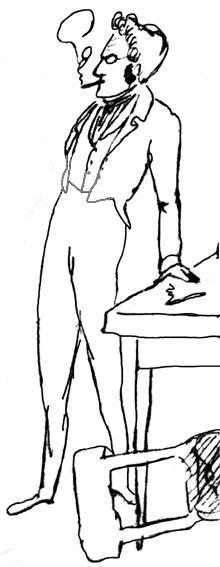
The word individualism enters European political vocabulary in the 1820s, coined by French critics of the Revolution to describe what they saw as its corrosive social effect. Alexis de Tocqueville gave the term its enduring shape in volume two of Democracy in America (1840), where he distinguished it from selfishness or egoism. Individualism, Tocqueville wrote, “is a calm and considered feeling which disposes each citizen to isolate himself from the mass of his fellows and withdraw into the circle of family and friends; with this little society formed to his taste, he gladly leaves the greater society to look after itself.”1 Tocqueville treated this disposition as the characteristic vice of democratic ages, and saw American voluntary associations and local self-government as the principal correctives.
The nineteenth-century Catholic and Tory critiques of laissez-faire deepened this analysis. Writers from Coleridge and Carlyle to Disraeli on the English side, and from Joseph de Maistre and Louis de Bonald to Leo XIII on the Continental side, charged that the political and economic theories of the Enlightenment had abstracted the person from the orders — family, guild, parish, nation — within which his actual identity was constituted, and were producing a society in which the appearance of liberty masked the reality of isolation.
The twentieth century saw the conservative critique sharpened in two directions. Robert Nisbet’s The Quest for Community (1953) argued that the central political fact of the modern age was not the contest between liberty and authority but the contest between centralised state power and the older mediating institutions, and that the destruction of those institutions by liberal individualism had paradoxically prepared the way for totalitarian collectivism rather than for a flourishing free society.3 Alasdair MacIntyre’s After Virtue (1981) attacked the philosophical premise of modern individualism — the idea of a self prior to its ends and roles — and recovered the Aristotelian and Thomistic picture of the person as constituted by tradition and narrative.4 Roger Scruton, in The Meaning of Conservatism (1980) and subsequent works, developed the related claim that the bonds of attachment to family, locality, and nation are not external constraints on a pre-existing self but the very materials out of which a self is built.5
The conservative position
Three claims structure the mature conservative position.
First, the human person is irreducible, and any politics that treats persons as means to collective ends violates a moral order that precedes the state. The conservative tradition’s defence of personal dignity is grounded in classical and Christian sources — the imago Dei doctrine, the natural-law tradition, the Kantian recognition of persons as ends in themselves — and is not, on the conservative reading, a discovery of liberal modernity. It is older and deeper than liberalism, and conservatives defend it against socialist, fascist, and technocratic threats alike.
Second, the person is constituted by his communities, not merely housed by them. The atomistic picture of the self — a freestanding chooser whose attachments are themselves chosen and discardable — is, on the conservative view, a philosophical mistake and a sociological impossibility. Persons are formed in particular families, by particular languages, within particular religious and civic traditions. To deny this is not to liberate the person but to render the person unintelligible to himself.
Third, the institutions that form persons — what Burke called the “little platoon” and Nisbet called the mediating institutions — require active defence against both market and state. The conservative tradition is suspicious of any economic or political programme that, in the name of liberating the individual, weakens the family, the parish, the locality, the union, or the voluntary association. Centralised power and atomised individuals are not opposites but correlates; each produces the other.
Differing positions
The classical-liberal or libertarian position, drawing on John Locke, Herbert Spencer, and twentieth-century writers such as Friedrich Hayek and Robert Nozick, holds that the conservative critique overstates the danger of individualism and underestimates the danger of the communal pieties that conservative thinkers prize. On this view, individualism rightly understood is simply the recognition that persons are the only entities with rights, that collectives are useful fictions, and that a free society is one in which persons may choose their own communities rather than inherit them.6
The communitarian position, developed by writers such as Michael Sandel and Charles Taylor, agrees with the conservative diagnosis of modern individualism but draws different political conclusions, typically pointing toward a more egalitarian and participatory democratic politics rather than toward the conservative defence of inherited authority and traditional institutions.
The progressive critique holds that the conservative attack on individualism is a coded defence of patriarchal, ecclesiastical, and ethnic hierarchies that the modern recognition of individual rights has rightly displaced, and that “mediating institutions” frequently functioned as instruments of unfreedom for those — women, religious minorities, the working poor — over whom they exercised authority. The conservative reply is that the modern alternative has substituted the impersonal authority of state and market for the personal authority of family and community, and that this is rarely the liberation it advertises itself to be.
References
- Alexis de Tocqueville, Democracy in America, vol. 2 (1840), trans. George Lawrence, ed. J. P. Mayer (New York: Anchor/Doubleday, 1969), Part II, Chapter 2 (“Of Individualism in Democratic Countries”), 506–508.
- Robert Nisbet, The Quest for Community (New York: Oxford University Press, 1953); Alasdair MacIntyre, After Virtue: A Study in Moral Theory, 3rd ed. (Notre Dame: University of Notre Dame Press, 2007); Roger Scruton, The Meaning of Conservatism, 3rd ed. (Basingstoke: Palgrave Macmillan, 2001).
- Robert Nisbet, The Quest for Community (1953).
- Alasdair MacIntyre, After Virtue (1981; 3rd ed. 2007), especially chapter 15, “The Virtues, the Unity of a Human Life and the Concept of a Tradition.”
- Roger Scruton, The Meaning of Conservatism (1980).
- Friedrich A. Hayek, The Constitution of Liberty (Chicago: University of Chicago Press, 1960); Robert Nozick, Anarchy, State, and Utopia (New York: Basic Books, 1974).
You've read articles over the past year
Will you support conservative education?
A gift of any amount helps keep unique explanatory journalism free for all, and
supports our mission to help everyone understand the world, regardless of their
ability to pay.One-time contributors join our community of givers and will be kept
up to date on the journalism that you help keep free.

Westernization
Westernization is the adoption by non-Western societies of institutions, technologies, laws, manners and habits of mind that originated in Western Europe and its colonial offshoots....
War Crime
A war crime is a serious violation of the law of armed conflict for which an individual bears personal criminal responsibility. The category covers the...

Voter ID Laws
Voter identification laws require a person presenting to vote to prove who they are, usually by producing a government-issued document. The requirement is unremarkable across...

Voter Fraud
Voter fraud is the deliberate corruption of an election by unlawful means: impersonating another voter, casting ballots in the name of the dead or the...