
Print
Cite
Feedback
Share
International human rights law is the body of treaties and customary norms that claims to bind states in their treatment of individuals, including their own citizens. It is the most contested branch of international law for conservatives, because it reaches furthest into what was once the reserved domain of national self-government. The conservative response is neither to deny that some rights are universal nor to defend tyranny, but to distinguish between concrete liberties secured by a people’s own laws and abstract entitlements proclaimed by international bodies and enforced by judges.
That distinction has a long pedigree on the right. It descends from Edmund Burke’s argument that the real rights of Englishmen were inherited, specific, and enforceable, and that the abstract “rights of man” preached in the French Revolution dissolved the institutions that make any rights secure.
Key Takeaways
- Modern international human rights law began with the Universal Declaration of Human Rights (1948) and the treaties that followed.
- Conservatives distinguish classical negative liberties — life, liberty, property, conscience — from expansive social and economic entitlements later labelled rights.
- The chief conservative worry is that unelected courts expand rights indefinitely through doctrines like the “living instrument,” overriding national democratic choices.
- Burke’s critique of abstract natural rights (1790) supplies the tradition’s intellectual foundation.
- Defenders argue that after the Holocaust some protections must stand above the sovereign state, and that universal rights are a moral achievement rather than an imposition.
History And Context
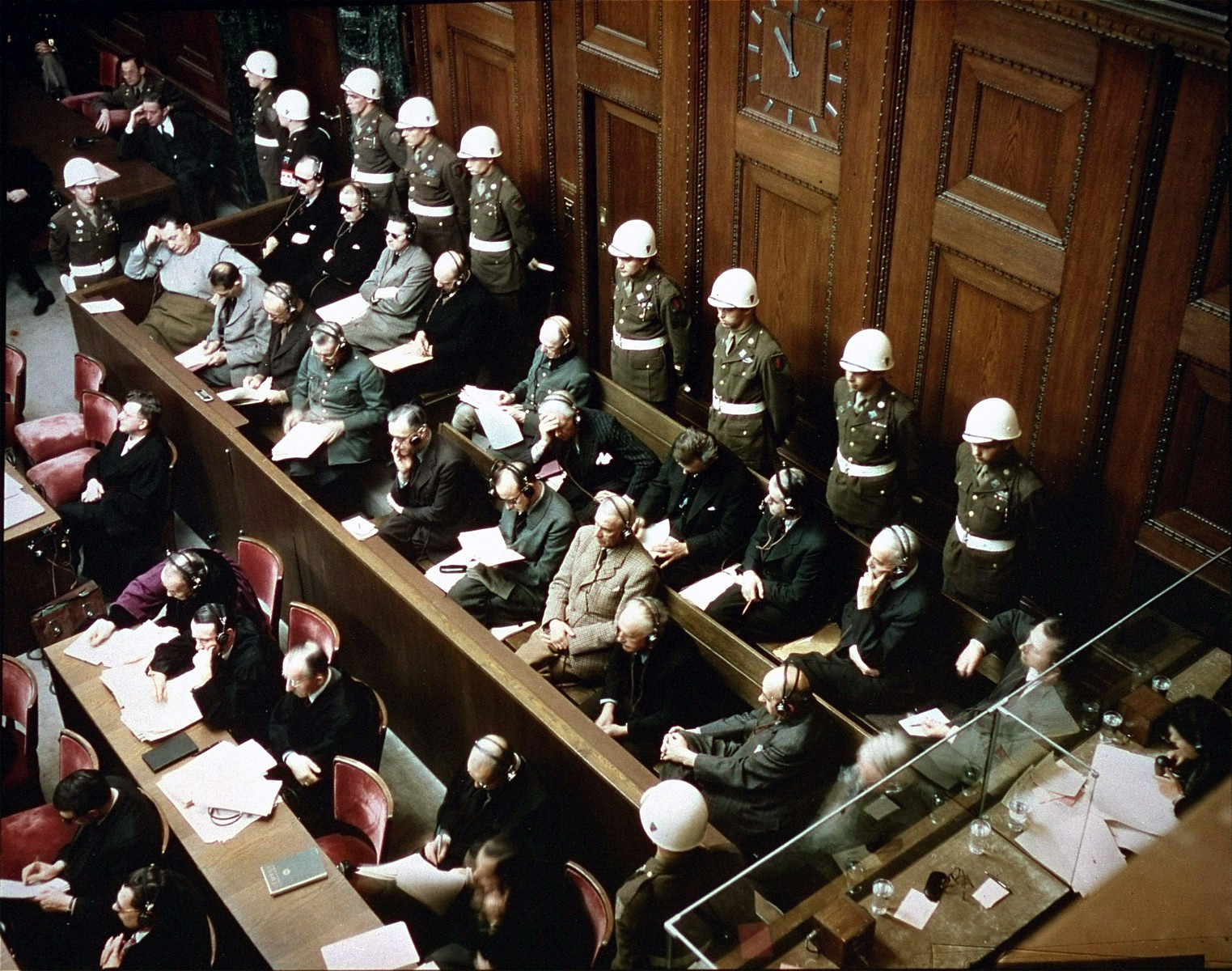
The catalyst for modern human rights law was the Second World War and the Nuremberg trials of 1945 to 1946, which established that individuals could be held to account under international law for atrocities committed under colour of state authority. In 1948 the United Nations General Assembly adopted the Universal Declaration of Human Rights, drafted by a committee chaired by Eleanor Roosevelt with the French jurist René Cassin among its principal authors. The Declaration was a statement of principle rather than a binding treaty, but it framed everything that followed.
Binding instruments came next. The European Convention on Human Rights (1950) provided for the European Court of Human Rights in Strasbourg, which began work in 1959; the International Covenant on Civil and Political Rights and the International Covenant on Economic, Social and Cultural Rights, both adopted in 1966, split the field into two families of rights. That split matters to the conservative reading: the first covenant protects classical freedoms against state interference, while the second commits states to provide goods such as housing, work, and social security. Conservatives have long argued that combining the two confuses liberties that restrain government with claims that expand it.
The Conservative Position
Conservatives accept that there are universal moral limits on how any government may treat a person — prohibitions on torture, slavery, and arbitrary killing command wide agreement. What they resist is the steady expansion of human rights from this hard core into an open-ended charter administered by international courts. When the European Court treats its convention as a “living instrument” whose meaning evolves with the times, it can discover obligations that no signatory parliament enacted and no electorate endorsed. The conservative objection is that this transfers moral and political judgment from self-governing communities to a transnational judiciary.
Burke framed the underlying case in 1790. He did not deny real rights; he insisted that they are secured by particular constitutions, customs, and laws, and that abstract declarations of the rights of man, detached from any concrete order, license the destruction of existing liberties in the name of theory. Roger Scruton carried the argument into the modern debate, contending that rights make sense only alongside duties and membership in a settled community, and that a culture of proliferating entitlements corrodes the loyalties on which real freedom rests. Jeremy Rabkin added the sovereignty dimension: a nation that cedes final say over its citizens’ rights to outside bodies has surrendered the self-government that lets a free people correct its own mistakes.
Differing Positions
Defenders of international human rights law answer that the sovereign state, left to itself, is exactly what the twentieth century showed cannot be trusted. The Holocaust was legal under the domestic law of the regime that carried it out; the point of the postwar order was to place certain protections beyond the reach of any government’s legislation. On this view, universal rights are not a Western imposition but a floor beneath which no state may fall, and international courts are a check on majorities that would otherwise trample minorities.
Supporters also defend the broader catalogue of social and economic rights, arguing that formal freedoms mean little to those without the means to use them, and that the two 1966 covenants belong together. They point out that many conservatives readily invoke human rights when dissidents are jailed abroad, and that the principle cannot be switched off at the national border when it becomes inconvenient. The dispute, once again, is over who decides — the nation or the tribunal — and over how far the list of rights should grow.
References
- Universal Declaration of Human Rights (United Nations, 1948).
- Edmund Burke, Reflections on the Revolution in France (1790).
- Roger Scruton, The Meaning of Conservatism (Penguin Books, 1980).
- Jeremy A. Rabkin, Law Without Nations? Why Constitutional Government Requires Sovereign States (Princeton University Press, 2005).
You've read articles over the past year
Will you support conservative education?
A gift of any amount helps keep unique explanatory journalism free for all, and
supports our mission to help everyone understand the world, regardless of their
ability to pay.One-time contributors join our community of givers and will be kept
up to date on the journalism that you help keep free.

Westernization
Westernization is the adoption by non-Western societies of institutions, technologies, laws, manners and habits of mind that originated in Western Europe and its colonial offshoots....
War Crime
A war crime is a serious violation of the law of armed conflict for which an individual bears personal criminal responsibility. The category covers the...

Voter ID Laws
Voter identification laws require a person presenting to vote to prove who they are, usually by producing a government-issued document. The requirement is unremarkable across...

Voter Fraud
Voter fraud is the deliberate corruption of an election by unlawful means: impersonating another voter, casting ballots in the name of the dead or the...