
Print
Cite
Feedback
Share
International sanctions are coercive measures — usually economic — that states or coalitions impose to change another government’s behaviour without going to war. Conservatives treat them as a legitimate instrument of statecraft that must be judged by results rather than intentions. A sanction that expresses moral disapproval while failing to alter conduct, or that punishes ordinary people while entrenching the regime it targets, is not a policy but a gesture. The conservative question is always whether a given sanction advances the national interest and can actually be enforced.
This hard-headed view sits within a realist tradition that measures foreign policy by consequences. Sanctions can be the right tool — cheaper than force, sharper than diplomacy alone — but only when tied to clear objectives and credible pressure. Applied loosely, they substitute the appearance of action for the substance of strategy.
Key Takeaways
- Sanctions are coercive economic tools used as an alternative to, or a prelude to, military force.
- Conservatives judge them by effectiveness and enforceability, not by the moral satisfaction of imposing them.
- Economic coercion is ancient: the Megarian Decree of 432 BC is the earliest well-documented case.
- The historical record shows sanctions failing to change a determined regime’s core behaviour more often than not.
- Debate centers on whether targeted “smart” sanctions and multilateral pressure can succeed where broad embargoes have not.
History And Context

Economic coercion is older than the modern state. The Athenian statesman Pericles imposed the Megarian Decree around 432 BC, barring Megara from the harbours of the Athenian empire; Thucydides records it among the grievances that helped ignite the Peloponnesian War. The episode set an enduring pattern: economic pressure provokes resentment and can harden the target rather than bend it.
Later history repeated the lesson on a larger scale. Napoleon’s Continental System, begun in 1806, tried to ruin Britain by closing European markets to its trade, and instead strained the economies of Napoleon’s own allies. In 1935 the League of Nations imposed sanctions on Italy for its invasion of Ethiopia, but exempted oil and failed to include the United States, and Mussolini completed his conquest regardless — a failure that discredited the League. In the modern era the United States embargo on Cuba, in force since 1960, outlasted the government it was meant to topple, while sanctions on Iran, Iraq, and Russia became central instruments of Western policy. Each case feeds the long argument over what sanctions can and cannot accomplish.
The Conservative Position
Conservatives approach sanctions as one tool among several, useful in proportion to the pressure they can bring and the clarity of the goal they serve. The standard scholarly reference, the Peterson Institute’s Economic Sanctions Reconsidered, surveys more than a century of cases and finds that sanctions succeed in only a minority of them, and least of all when the demand is regime survival itself. The political scientist Robert Pape argued that broad economic sanctions rarely coerce governments into major concessions, because rulers pass the pain to their subjects and rally opinion against the foreign power inflicting it. Conservatives take these findings seriously rather than assuming that moral resolve guarantees results.
The practical conclusion is discipline. Sanctions work best when they are targeted at a regime’s leaders and their finances rather than a whole population, when a wide coalition enforces them so the target cannot simply trade elsewhere, and when they are paired with a credible threat of escalation and a clear statement of what would lift them. Margaret Thatcher’s approach to statecraft treated economic pressure as an adjunct to strength, not a replacement for it. Conservatives are therefore skeptical of sanctions imposed mainly to signal virtue at home, and insist that a measure which imposes real costs on one’s own economy must be justified by a realistic prospect of changing the target’s behaviour.
Differing Positions
Supporters of a wider use of sanctions argue that they are the humane alternative to war, and that the choice is rarely between sanctions and success but between sanctions and either bloodshed or passivity. They point to the international pressure on apartheid South Africa as a case where sustained economic and diplomatic isolation helped bring a regime to the table, and to the sanctions that pushed Iran toward nuclear negotiations. On this view, even sanctions that fail to topple a government can constrain it, deny it resources, and signal that aggression carries a price.
Advocates also stress the shift toward smart sanctions — asset freezes, travel bans, and financial measures aimed at named officials — designed to spare ordinary citizens while squeezing the powerful. Human-rights campaigners defend targeted measures such as Magnitsky-style laws as a way to hold individual abusers accountable. Conservatives generally welcome this precision, while maintaining that the essential test is unchanged: a sanction is justified by what it achieves, not by the conviction behind it.
References
- Thucydides, History of the Peloponnesian War (c. 400 BC).
- Gary Clyde Hufbauer, Jeffrey J. Schott, Kimberly Ann Elliott, and Barbara Oegg, Economic Sanctions Reconsidered, 3rd ed. (Peterson Institute for International Economics, 2007).
- Robert A. Pape, “Why Economic Sanctions Do Not Work,” International Security 22, no. 2 (1997).
- Margaret Thatcher, Statecraft: Strategies for a Changing World (HarperCollins, 2002).
You've read articles over the past year
Will you support conservative education?
A gift of any amount helps keep unique explanatory journalism free for all, and
supports our mission to help everyone understand the world, regardless of their
ability to pay.One-time contributors join our community of givers and will be kept
up to date on the journalism that you help keep free.

Westernization
Westernization is the adoption by non-Western societies of institutions, technologies, laws, manners and habits of mind that originated in Western Europe and its colonial offshoots....
War Crime
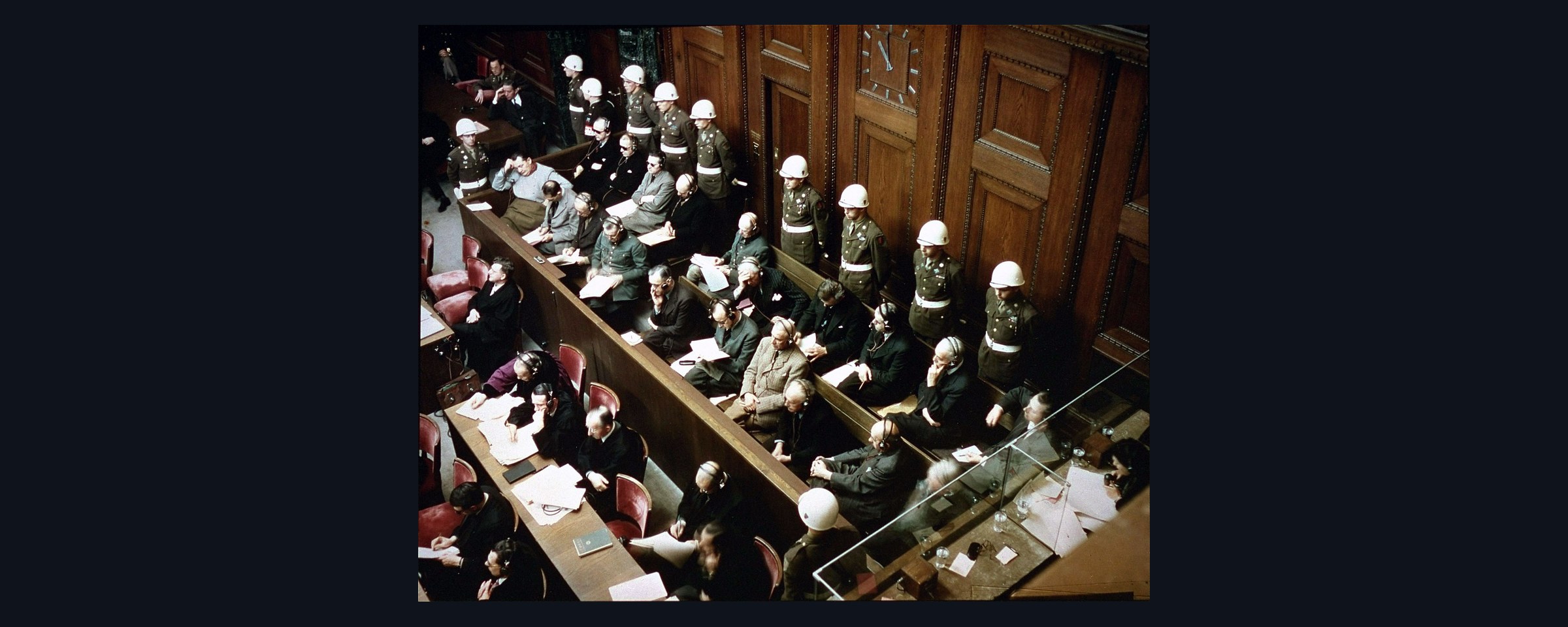
A war crime is a serious violation of the law of armed conflict for which an individual bears personal criminal responsibility. The category covers the...

Voter ID Laws
Voter identification laws require a person presenting to vote to prove who they are, usually by producing a government-issued document. The requirement is unremarkable across...

Voter Fraud
Voter fraud is the deliberate corruption of an election by unlawful means: impersonating another voter, casting ballots in the name of the dead or the...