
Print
Cite
Feedback
Share
An Islamic state is a polity that grounds its law and public order in the sharia, holding that sovereignty belongs to God and that government exists to implement divine command. The classical form was the caliphate; modern versions range from Iran’s clerical republic to constitutional monarchies that name Islam in their basic law.1
Western conservatives approach the model with respect for the seriousness of its claims and firm disagreement with its answer. The conservative tradition holds that spiritual and civil authority are distinct jurisdictions, and that fusing them endangers both religion and liberty.
Key Takeaways
- Classical jurists such as al-Mawardi (d. 1058) systematized the caliphate as a contractual office charged with guarding the faith and administering justice under sharia.1
- The Ottoman caliphate, the office’s last major embodiment, was abolished by Turkey’s Grand National Assembly on 3 March 1924.
- Twentieth-century revivalists, including Abul A’la Maududi and Ruhollah Khomeini, recast the Islamic state as a modern ideological project; Iran institutionalized it in 1979.
- Conservatives distinguish the historic civilization of Islam, with its legal learning and customary limits on rulers, from modern Islamist states, which they class among the centralizing ideologies.
- The self-styled “Islamic State” (ISIS), which proclaimed a caliphate in 2014 and lost its territory by 2019, is rejected by nearly all Muslim authorities as a criminal counterfeit.
History And Context
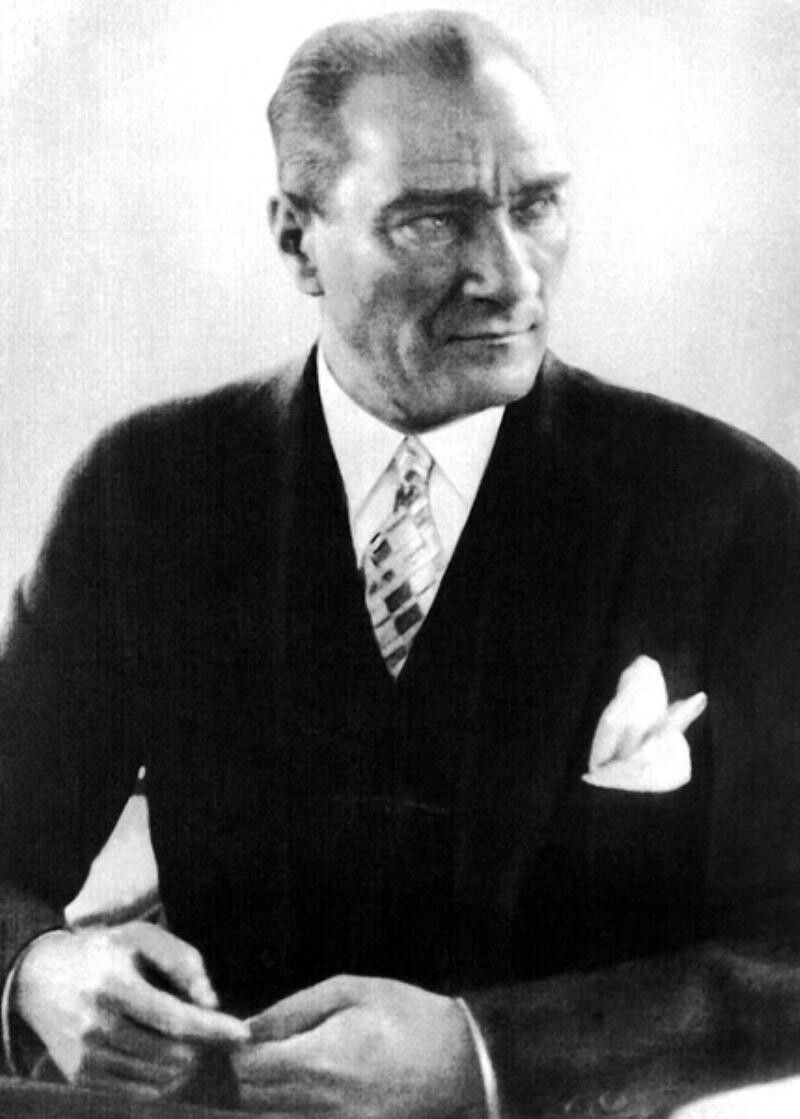
The tradition begins with the Prophet Muhammad’s polity at Medina after 622, in which religious and political leadership were united. The Rashidun caliphs (632–661), then the Umayyad and Abbasid dynasties, governed empires in which jurists rather than caliphs articulated the law. Al-Mawardi’s eleventh-century Ordinances of Government gave the office its classic legal theory: the caliph is contracted to defend the faith, apply the sharia, and keep order, and the scholars judge whether he has done so.1 In practice authority divided early between sultans who ruled and ulama who interpreted, a separation of functions, though not the Western separation of church and state. The Ottoman sultans carried the caliphal title into the twentieth century, until Mustafa Kemal Atatürk’s new Turkish republic abolished the sultanate in 1922 and the caliphate itself on 3 March 1924. The abolition provoked movements to restore Islamic government: Rashid Rida’s writings on the caliphate, Hasan al-Banna’s Muslim Brotherhood (1928), Maududi’s Jamaat-e-Islami (1941), and eventually Khomeini’s doctrine of guardianship of the jurist, realized in the Islamic Republic of Iran in 1979. Pakistan declared itself an Islamic republic in 1956, and Saudi Arabia has always claimed the Qur’an as its constitution.
The Conservative Position
The Western conservative case rests on a distinction older than liberalism. From the Gospel’s command to render to Caesar what is Caesar’s, through Pope Gelasius I’s doctrine of the two powers (494), the Latin West built its politics on the premise that church and crown hold separate commissions. Conservatives regard that inheritance as a discovery about human nature rather than an accident of geography: when one institution holds both the sword and the keys to salvation, error becomes irreformable and dissent becomes blasphemy. Roger Scruton argued that Western political order rests on territorial law and national loyalty, membership defined by citizenship rather than creed, and that a jurisprudence derived wholly from revelation cannot found free government on those terms.2 Bernard Lewis traced how the absence of a native church-state distinction shaped the Middle East’s difficult encounter with modernity.3 Conservatives also apply their standing critique of ideology: the states designed by Maududi’s and Khomeini’s followers are twentieth-century constructions that concentrate power in the name of an abstraction, displacing the organic institutions, the schools of law, endowments, guilds, and families, through which Muslim societies governed themselves for centuries. Respect for religion, on this view, argues against theocracy, because coerced faith corrupts faith.
Differing Positions
Proponents answer that the Islamic state supplies exactly what conservatives elsewhere demand: law anchored in something firmer than majority will. Maududi argued that divine sovereignty limits rulers in a way Western constitutions cannot, since no parliament can amend the law of God. Legal historians add a factual correction: Noah Feldman contends that the classical sharia order functioned as a rule-of-law system in which independent scholars checked executive power, and that its destruction by nineteenth-century codification, not sharia itself, opened the door to modern autocracy.4 Many Muslim thinkers hold that constitutionalism and Islamic law are compatible, pointing to Malaysia, Morocco, or Jordan, and note that Muslim-majority states display the full range of modern government. Both sides agree the dispute concerns the terms on which faith and power can coexist without corrupting each other.
References
- Abu al-Hasan al-Mawardi, The Ordinances of Government (al-Ahkam al-Sultaniyya), trans. Wafaa H. Wahba (Reading: Garnet Publishing, 1996).
- Roger Scruton, The West and the Rest: Globalization and the Terrorist Threat (Wilmington, DE: ISI Books, 2002).
- Bernard Lewis, What Went Wrong? Western Impact and Middle Eastern Response (New York: Oxford University Press, 2002).
- Noah Feldman, The Fall and Rise of the Islamic State (Princeton: Princeton University Press, 2008).
You've read articles over the past year
Will you support conservative education?
A gift of any amount helps keep unique explanatory journalism free for all, and
supports our mission to help everyone understand the world, regardless of their
ability to pay.One-time contributors join our community of givers and will be kept
up to date on the journalism that you help keep free.

Westernization
Westernization is the adoption by non-Western societies of institutions, technologies, laws, manners and habits of mind that originated in Western Europe and its colonial offshoots....
War Crime
A war crime is a serious violation of the law of armed conflict for which an individual bears personal criminal responsibility. The category covers the...

Voter ID Laws
Voter identification laws require a person presenting to vote to prove who they are, usually by producing a government-issued document. The requirement is unremarkable across...

Voter Fraud
Voter fraud is the deliberate corruption of an election by unlawful means: impersonating another voter, casting ballots in the name of the dead or the...