
Print
Cite
Feedback
Share
Just war theory is the body of moral reasoning that asks two separate questions about armed conflict: when a state is entitled to fight, and what it is permitted to do once fighting has begun. The Latin terms are jus ad bellum and jus in bello, and the distinction is load-bearing. A just cause does not license any method, and a soldier fighting in a bad cause retains the duty to spare civilians.
Conservatives treat the tradition as the middle path between two errors. Pacifism refuses the sword and leaves the innocent undefended. Crusading idealism picks up the sword to remake other societies and discovers that war is a poor instrument of moral improvement. Between them sits prudence, which the tradition ranks first among the political virtues because it governs the application of all the others to circumstances no rule can anticipate.1
Key Takeaways
- Augustine, writing in the early fifth century, gave the first sustained Christian defence of the soldier’s office while insisting that the motive must be peace rather than glory.
- Thomas Aquinas set three conditions in the Summa Theologiae: the authority of a sovereign, a just cause, and right intention.
- The Salamanca theologians Francisco de Vitoria and Francisco Suarez extended the doctrine to relations between peoples in the sixteenth century, including the rights of the indigenous inhabitants of the Americas.
- Hugo Grotius secularised the framework in De Jure Belli ac Pacis in 1625, laying the foundation of modern international law.
- The modern criteria are legitimate authority, just cause, right intention, last resort, proportionality and reasonable prospect of success, plus discrimination and proportionality in the conduct of the fighting.
History And Context
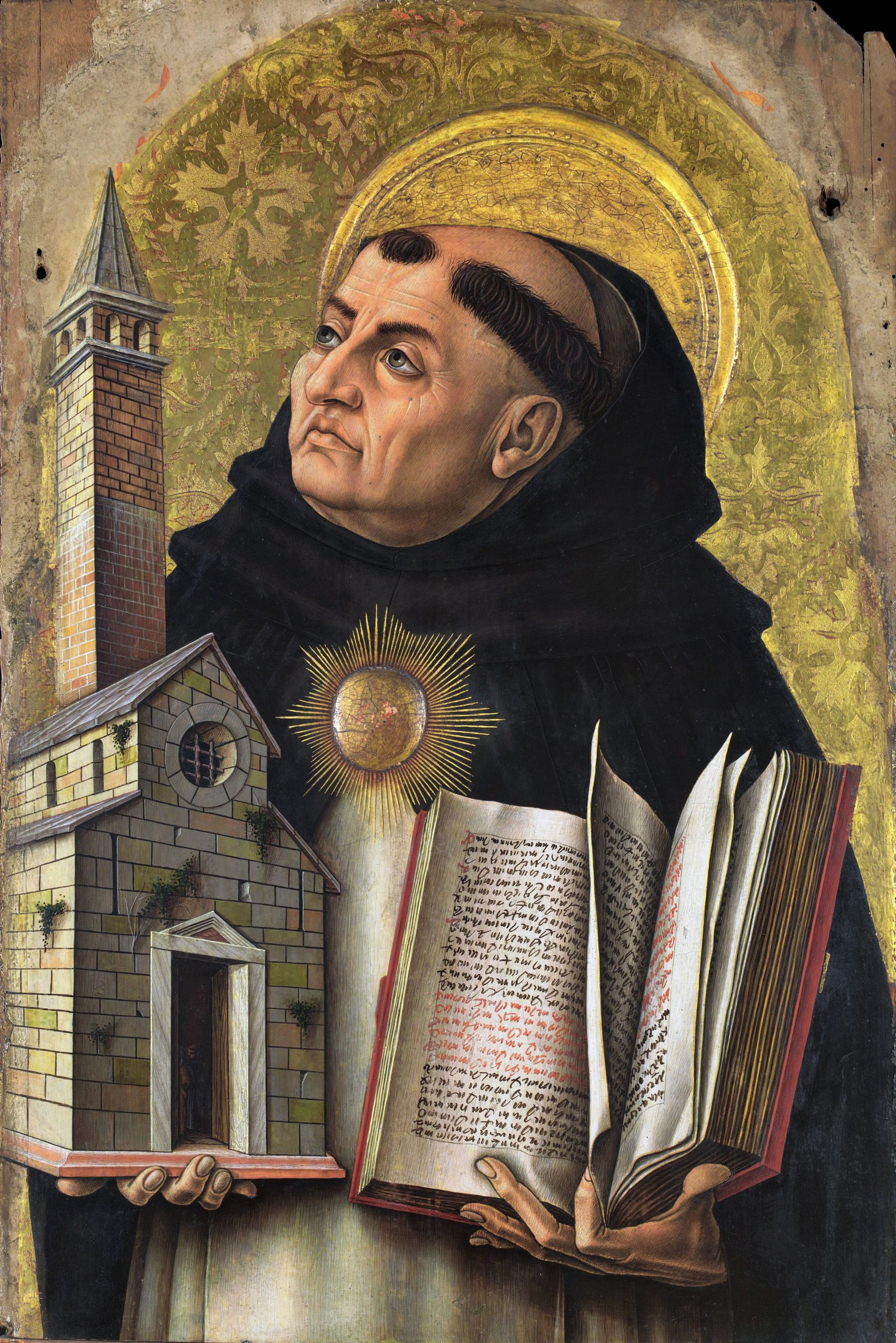
Augustine wrote against a pacifist current in the early church while Rome was collapsing around him; Alaric had sacked the city in 410, and The City of God was completed around 426. His position was that killing in a public capacity, ordered by legitimate authority and undertaken without hatred, differs from murder, though he refused to call any war good.2
Aquinas gave the doctrine its scholastic form in the second part of the Summa Theologiae, written between 1265 and 1274. His three conditions were procedural as much as moral: private persons cannot declare war, the enemy must deserve the attack by reason of some fault, and the belligerent must intend the advancement of good or the avoidance of evil rather than plunder or cruelty.3
The doctrine’s next expansion came from Spain. Vitoria, lecturing at Salamanca in 1539, applied it to the Spanish conquest of the Americas and concluded that the Indians held genuine dominion over their lands, that discovery conferred no title, and that difference of religion was no just cause of war. Suarez developed the analysis further at Coimbra. Grotius, a Dutch Protestant lawyer writing amid the Thirty Years War, then detached the framework from theological premises in 1625, arguing that its rules would hold even on the impious hypothesis that God did not exist.4
Modern practice codified fragments of the tradition: the Lieber Code of 1863, the Hague Conventions of 1899 and 1907, the Geneva Conventions of 1949 and their Additional Protocols of 1977. Michael Walzer’s Just and Unjust Wars, published in 1977 in the shadow of Vietnam, revived the philosophical argument for a secular age and remains the standard modern treatment.
The Conservative Position
Conservatives accept the framework because it matches their estimate of human nature. Men are not perfectible, states pursue interests, and force therefore remains a permanent feature of international life rather than a scandal to be abolished by treaty. The tradition’s realism about that fact is what recommends it over pacifism.
The first duty conservatives draw from it is the defence of one’s own people. A government exists in part to protect the citizens who bear its costs, and a statesman who spends their lives on causes remote from their safety has misunderstood his office. This yields a settled scepticism about wars of transformation. Conservatives note that regimes rest on habits, loyalties and religious inheritance that no occupying army can install by schedule, and that the confident timetables offered for such projects have a consistent record of failure.
The second duty is proportion and discrimination in the fighting. Conservatives resist the utilitarian argument that a sufficiently good end licenses the deliberate killing of non-combatants. Elizabeth Anscombe made the case against President Truman’s honorary degree at Oxford in 1956 on exactly this ground, and her position has been influential on the religious right ever since: choosing the death of the innocent as a means remains murder whatever the strategic accounting says.
The third is reasonable prospect of success. A war that cannot be won imposes suffering without redemption, which is why conservatives treat the question of achievable ends as a moral criterion rather than a technical one. Prudence here is not timidity. It is the recognition that intentions do not govern outcomes and that a statesman answers for both.
Differing Positions
Realists in the tradition of Hans Morgenthau and E. H. Carr hold that the theory dresses up decisions taken on other grounds. States act on interest; moral vocabulary supplies the press release afterwards. The criteria are elastic enough, they argue, that any government can satisfy them on paper, which makes the doctrine a licence rather than a limit.
Pacifists press the opposite complaint. Every modern war has been declared just by both sides, and the framework has functioned historically as a permission slip. Christian pacifists such as John Howard Yoder argued that the church’s task is witness rather than statecraft, and that Augustine’s compromise with empire was a mistake at the root.
A third line comes from within the theory. Revisionist philosophers, including Jeff McMahan, reject the moral equality of combatants and argue that soldiers fighting an unjust war cannot acquire a right to kill merely by putting on a uniform. That position is more demanding than the conventional account, and it unsettles the practical division of labour between ad bellum and in bello on which the laws of war are built.
References
- Michael Walzer, Just and Unjust Wars: A Moral Argument with Historical Illustrations (Basic Books, 1977).
- Augustine of Hippo, The City of God (c. 426).
- Thomas Aquinas, Summa Theologiae, II-II, q. 40 (c. 1265-1274).
- Hugo Grotius, De Jure Belli ac Pacis (1625).
- Philosophical Conservatism: A Research Plan
- Just war theory - Wikipedia, accessed May 25, 2025, https://en.wikipedia.org/wiki/Just_war_theory
- Jus ad bellum - Wikipedia, accessed May 25, 2025, https://en.wikipedia.org/wiki/Jus_ad_bellum
- Jus in bello - Wikipedia, accessed May 25, 2025, https://en.wikipedia.org/wiki/Jus_in_bello
- Pacifism - Stanford Encyclopedia of Philosophy, accessed May 25, 2025, https://plato.stanford.edu/entries/pacifism/
- Political realism - Wikipedia, accessed May 25, 2025, https://en.wikipedia.org/wiki/Political_realism
- Liberal internationalism - Wikipedia, accessed May 25, 2025, https://en.wikipedia.org/wiki/Liberal_internationalism
You've read articles over the past year
Will you support conservative education?
A gift of any amount helps keep unique explanatory journalism free for all, and
supports our mission to help everyone understand the world, regardless of their
ability to pay.One-time contributors join our community of givers and will be kept
up to date on the journalism that you help keep free.

Westernization
Westernization is the adoption by non-Western societies of institutions, technologies, laws, manners and habits of mind that originated in Western Europe and its colonial offshoots....
War Crime
A war crime is a serious violation of the law of armed conflict for which an individual bears personal criminal responsibility. The category covers the...

Voter ID Laws
Voter identification laws require a person presenting to vote to prove who they are, usually by producing a government-issued document. The requirement is unremarkable across...

Voter Fraud
Voter fraud is the deliberate corruption of an election by unlawful means: impersonating another voter, casting ballots in the name of the dead or the...