
Print
Cite
Feedback
Share
Key Takeaways
- Keynesian economics is an economic theory which asserts the need for increased government spending during an economic crisis.
- Conservatives argue for limiting government intervention in the economy, emphasizing the need for a responsible fiscal policy, and having faith in free-market mechanisms.
Introduction
Keynesian economics is an economic theory and policy approach, which argues that in times of economic crises, increased government spending is essential to encourage economic growth. Additionally, during times of economic prosperity, Keynesian economics calls for a reduction in government spending. Developed in response to the economic challenges of the Great Depression, Keynesian economics fundamentally departs from classical economic thought.
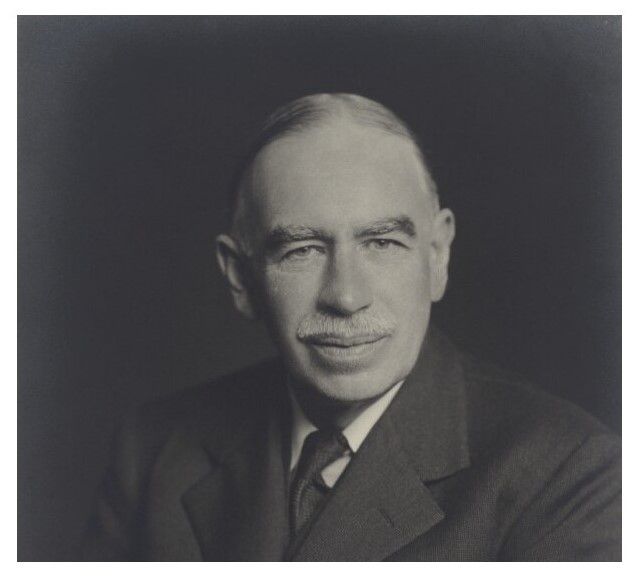
The theory is named after the British economist John Maynard Keynes and gained widespread acceptance with the publication of Keynes’ influential work, “The General Theory of Employment, Interest, and Money” in 1936. Keynesian principles influenced economic policies globally, particularly in the post-World War II era.[1]
Keynesian economics asserts that in times of economic downturns, characterized by high unemployment and underutilized resources, government intervention is crucial to stimulate demand and restore economic equilibrium. It also emphasizes the role of total demand in shaping economic activity. The central idea is that during recessions or periods of economic stagnation, individuals and businesses may reduce spending, leading to a decline in overall demand. In such situations, Keynesians advocate for government intervention through fiscal policies, such as increased government spending or tax cuts, to boost demand and stimulate economic growth.
A recent example of its use is in the United States during the financial crisis of 2008, where the federal government bailed out several companies in multiple industries in an effort to prevent total economic collapse and stimulate the economy.
Conservative Perspective
There are four main points to consider when it comes to the conservative view on Keynesian economics. First, conservatives argue for limiting government intervention in the economy. Second, conservatives express concerns about excessive government spending and the accumulation of debt. Third, conservatives emphasize the importance of free-market principles.
Limited Government Intervention
Conservatives are skeptical of extensive government intervention in the economy, which is a cornerstone of Keynesian economics. Conservatives argue for a more limited role for the state, with the belief that market forces should primarily determine economic outcomes, expressing skepticism of Keynesian policies that involve significant government spending. Conservatives assert that such interventions not only distort market forces, but also lead to unintended consequences, like changing the behavior of consumers and investors.[2] Many conservatives accept that certain government investments in the economy is advantageous, especially when competing with other countries, but are generally more hesitant about any government involvement in the economy.
Concerns about Fiscal Responsibility
Conservatives express concerns about the excessive government spending while implementing Keynesian policies, emphasizing the importance of fiscal responsibility and balanced budgets to ensure the long-term stability of the economy. Moreover, conservatives assert that sustained government deficits can lead to increased debt and interest payments, which are factors that lead to economic instability.
Faith in Market Forces
Conservatives maintain a strong belief in the efficiency of free-market mechanisms, arguing that allowing markets to naturally adjust to economic conditions is more effective than government attempts to manipulate demand through fiscal policies. Conservatives assert that successful and resilient companies shouldn’t be relying on government handouts. An example of this is how Apple managed to weather the 2008 financial crisis without any government aid and increased its workforce by 30%.[3]
- [1] Jahan, Sarwat, Ahmed Saber Mahmud, and Chris Papageorgiou. 2014. “What Is Keynesian Economics?” IMF. International Monetary Fund. September.
- [2] Wright, David McCord. 1945. “The Future of Keynesian Economics.” The American Economic Review 35 (3): 284–307. https://www.jstor.org/stable/1811442.
- [3] Marshall, M.G., and P. Arestis. 1991. “The Myths and Realities of Conservative Economic Policy-Making in the US.” Review of Social Economy 49 (2): 218–41. https://www.jstor.org/stable/29769550.
You've read articles over the past year
Will you support conservative education?
A gift of any amount helps keep unique explanatory journalism free for all, and
supports our mission to help everyone understand the world, regardless of their
ability to pay.One-time contributors join our community of givers and will be kept
up to date on the journalism that you help keep free.

The Housing Crisis (Canada)
Canada has the physical space, the timber, the labour force, and the capital to house its people, and it has failed to do so. Between...

Poverty
Poverty is the condition of lacking the material resources a society treats as a minimum for decent life, but conservatives have long argued that how...

Hierarchy
In conservative political thought, hierarchy refers to a structured ordering of social functions, authority, and obligation that arises from the natural differences of human capacity,...

Traditionalist Conservatism
Traditionalist conservatism is a strand of conservative political thought that grounds political legitimacy in inherited cultural, religious, and institutional traditions rather than in abstract first...