
Print
Cite
Feedback
Share
Tax is the compulsory transfer of private resources to the state. Conservatives accept it as the price of the functions government alone can perform — defence, courts, policing, the enforcement of contract — and judge every extension beyond those functions by what it costs in liberty, growth, and the incentive to work. The disagreement with the left is rarely about whether taxation is legitimate. It is about how much, on what base, at what rates, and with what visibility to the person paying.
The conservative test is Adam Smith’s. A tax should be proportioned to ability, certain rather than arbitrary, convenient to pay, and cheap to collect.1 Measured against those four maxims, most modern tax codes fail the second and fourth badly.
Key Takeaways
- William Pitt the Younger introduced the British income tax in 1799 to finance the war against France; it was repealed in 1816 and reintroduced by Robert Peel in 1842.
- The United States ratified the Sixteenth Amendment in 1913, authorising a federal income tax without apportionment among the states.
- Canada’s Income War Tax Act of 1917 was presented as a temporary wartime measure.4
- Conservatives favour a broad base with low rates, lighter taxation of saving and investment than of consumption, and visibility of the burden to the taxpayer.
- The American Tax Reform Act of 1986 is the model case: the top individual rate fell from 50 to 28 per cent while deductions and shelters were stripped out.
History And Context
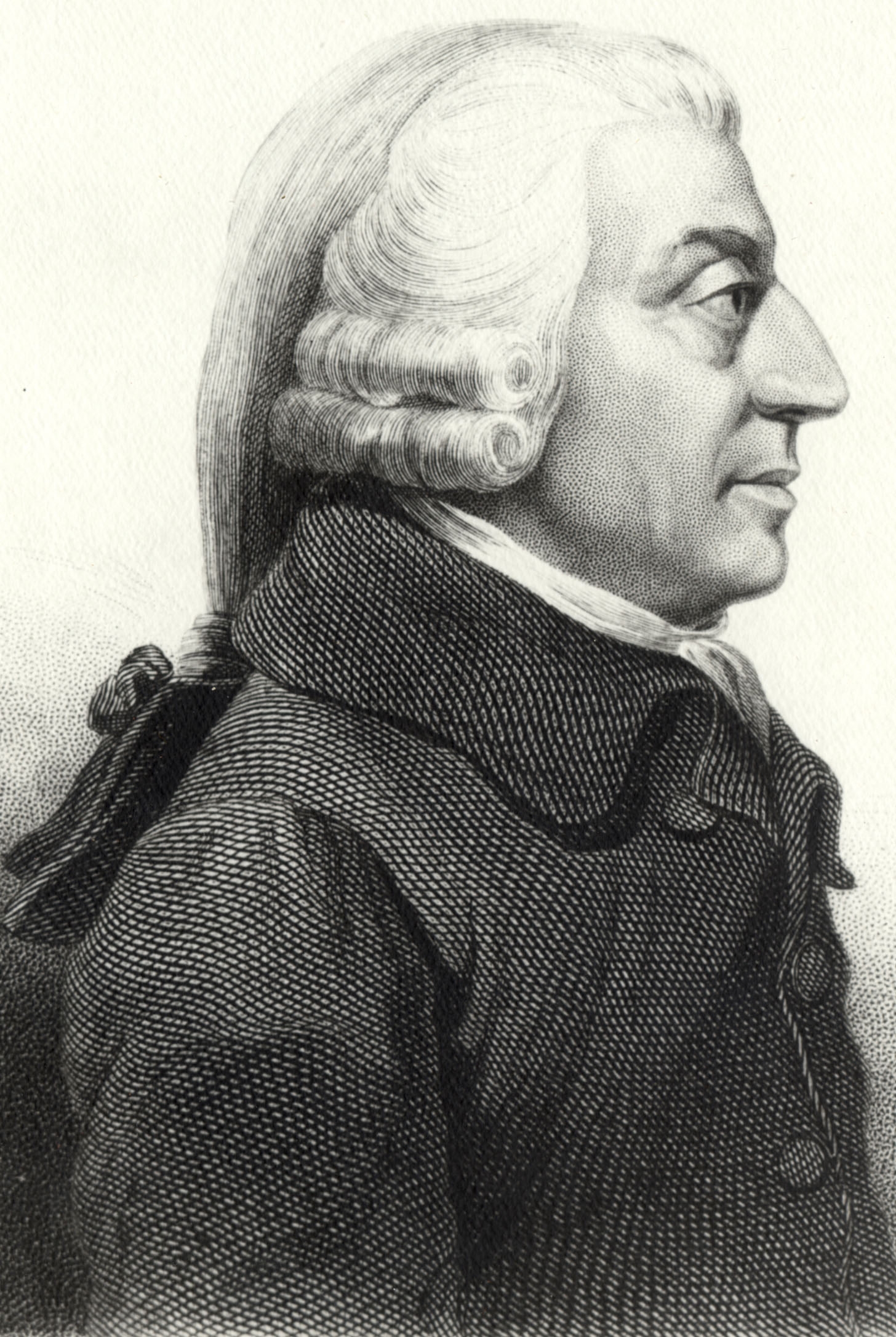
Pre-modern states financed themselves from land, customs, tithes, and the monarch’s own estates. Regular taxation of income is a creature of war. Pitt’s income tax of 1799, levied at up to two shillings in the pound, was a response to the cost of fighting revolutionary France. Parliament repealed it in 1816 and ordered the records burned. Peel brought it back in 1842 as a temporary expedient to cover the deficit, and it never left.
The pattern repeated elsewhere. The United States taxed incomes during the Civil War, lost the power when the Supreme Court struck the 1894 statute down in Pollock v. Farmers’ Loan and Trust Co. (1895), and recovered it by constitutional amendment in 1913. Canada followed in 1917 under the pressure of the same conflict.4
Rates then rose to levels that would now be thought confiscatory. The top American marginal rate reached 94 per cent in 1944 and stood at 91 per cent through the 1950s, though the effective rate paid was far lower because the code was riddled with shelters. Britain’s top combined rate on investment income touched 98 per cent in the 1970s.
The reversal came in the 1980s. The Economic Recovery Tax Act of 1981 and the Tax Reform Act of 1986 cut American rates and broadened the base. Nigel Lawson’s 1988 budget reduced the British top rate to 40 per cent. Consumption taxes spread in parallel: the United Kingdom adopted value-added tax in 1973 on joining the European Communities, and Canada replaced the manufacturers’ sales tax with the Goods and Services Tax in 1991, a change that contributed to the near-destruction of the governing Progressive Conservatives at the 1993 election.
The Conservative Position
Conservatives argue for four things.
Broad base, low rates. Every exemption creates a constituency, invites lobbying, and forces higher rates on whatever remains taxable. A code with fewer carve-outs raises the same revenue with less distortion and less compliance cost, which is Smith’s fourth maxim applied.1
Light taxation of capital formation. Income saved and invested is taxed at the point it is earned, again on the return it generates, and again at death. Conservatives treat this stacking as a penalty on deferred consumption — on precisely the behaviour that builds the capital stock on which wages depend. Friedman’s preference for a flat-rate income tax with a large personal allowance and few deductions rests on the same reasoning.2
Visibility. Payroll withholding, introduced in the United States in 1943 and in Britain as PAYE in 1944, made collection efficient and the burden invisible. Conservatives regard the resulting fiscal illusion as a structural bias toward higher spending, since a cost that is not felt is not resisted. The same objection applies to inflation as an unlegislated tax and to corporate taxes whose incidence falls on workers and shareholders without appearing on any payslip.
Restraint by design. Since taxation follows spending, conservatives look to balanced-budget rules, supermajority requirements for rate increases, and tax expenditure limits — instruments that constrain the political incentive to buy present support with future revenue.
Behind the technical arguments sits a claim about ownership. Earnings are the taxpayer’s before they are the state’s, and each pound taken requires justification. That premise, rather than any particular rate, separates the conservative position from the view that all income is at society’s disposal and the individual’s share is whatever policy leaves behind.
Differing Positions
The case for steeply progressive taxation rests on diminishing marginal utility and on ability to pay: a dollar taken from a high earner costs less in welfare than a dollar taken from a low earner, so the same revenue does less damage when raised from the top. Peter Diamond and Emmanuel Saez put the revenue-maximising top marginal rate on American earnings at about 73 per cent once behavioural responses are accounted for.3
Thomas Piketty’s work on wealth concentration extends the argument to capital, holding that returns on capital exceeding growth produce a rising share of inherited wealth that only taxation of capital can check. On this view, light taxation of investment entrenches advantage across generations rather than encouraging thrift.
Defenders of higher taxation also dispute the growth claim. Cross-country comparisons show high-tax economies in Scandinavia sustaining employment rates and productivity levels comparable to lower-tax peers, which they read as evidence that the composition of spending matters more than the level of the take.
References
- Adam Smith, An Inquiry into the Nature and Causes of the Wealth of Nations (1776), bk. V, ch. 2, pt. II.
- Milton Friedman, Capitalism and Freedom (University of Chicago Press, 1962), ch. 10, “The Distribution of Income.”
- Peter Diamond and Emmanuel Saez, “The Case for a Progressive Tax: From Basic Research to Policy Recommendations,” Journal of Economic Perspectives 25, no. 4 (2011): 165-190.
- Canada, Income War Tax Act, S.C. 1917, c. 28.
- Shipman, Alan. 2022. "Conservative leadership election: why tax cuts are an economic gamble." The Conversation. July 15. https://theconversation.com/conservative-leadership-election-why-tax-cuts-are-an-economic-gamble-186846.
- Walsh, Marieke. 2023. "Pierre Poilievre calls for tax cuts, end to deficit spending in coming budget." The Globe and Mail. March 12. https://www.theglobeandmail.com/politics/article-cut-taxes-and-cut-spending-in-upcoming-budget-says-poilievre/.
You've read articles over the past year
Will you support conservative education?
A gift of any amount helps keep unique explanatory journalism free for all, and
supports our mission to help everyone understand the world, regardless of their
ability to pay.One-time contributors join our community of givers and will be kept
up to date on the journalism that you help keep free.

Westernization
Westernization is the adoption by non-Western societies of institutions, technologies, laws, manners and habits of mind that originated in Western Europe and its colonial offshoots....
War Crime
A war crime is a serious violation of the law of armed conflict for which an individual bears personal criminal responsibility. The category covers the...

Voter ID Laws
Voter identification laws require a person presenting to vote to prove who they are, usually by producing a government-issued document. The requirement is unremarkable across...

Voter Fraud
Voter fraud is the deliberate corruption of an election by unlawful means: impersonating another voter, casting ballots in the name of the dead or the...