
Print
Cite
Feedback
Share
A lobbyist is paid to persuade officials to act. The activity sits on a constitutional right — the right to petition government, secured in England by the Bill of Rights of 1689 and in the United States by the First Amendment of 1791 — and it produces some of the ugliest outcomes in modern politics. Conservatives hold both facts at once, and the position that follows is unpopular with reformers on either flank: lobbying is a symptom, and the disease is the discretionary reach of the administrative state.
Where government allocates by rule, there is little to lobby for. Where government allocates by discretion — a subsidy here, a tariff exemption there, a licence, a waiver, a carve-out in a 900-page bill — the return on a well-connected advocate becomes enormous, and firms would be behaving irrationally not to hire one. The lobby is priced off the size of the prize.
Key Takeaways
- The right to petition predates lobbying as a trade: Magna Carta in 1215, the English Bill of Rights in 1689, the First Amendment in 1791.
- Public-choice economists explained the structural incentive: concentrated benefits and dispersed costs reward organised minorities over the diffuse public.12
- Anne Krueger named the behaviour rent-seeking in 1974; Gordon Tullock had reached the same analysis independently in 1967.3
- The conservative remedy is narrower discretion and simpler law rather than tighter speech restrictions on petitioners.
- Statutory regimes exist — the Federal Regulation of Lobbying Act 1946, the Lobbying Disclosure Act 1995, Canada’s Lobbyists Registration Act of 1988 — and have not reduced spending on influence.
History And Context
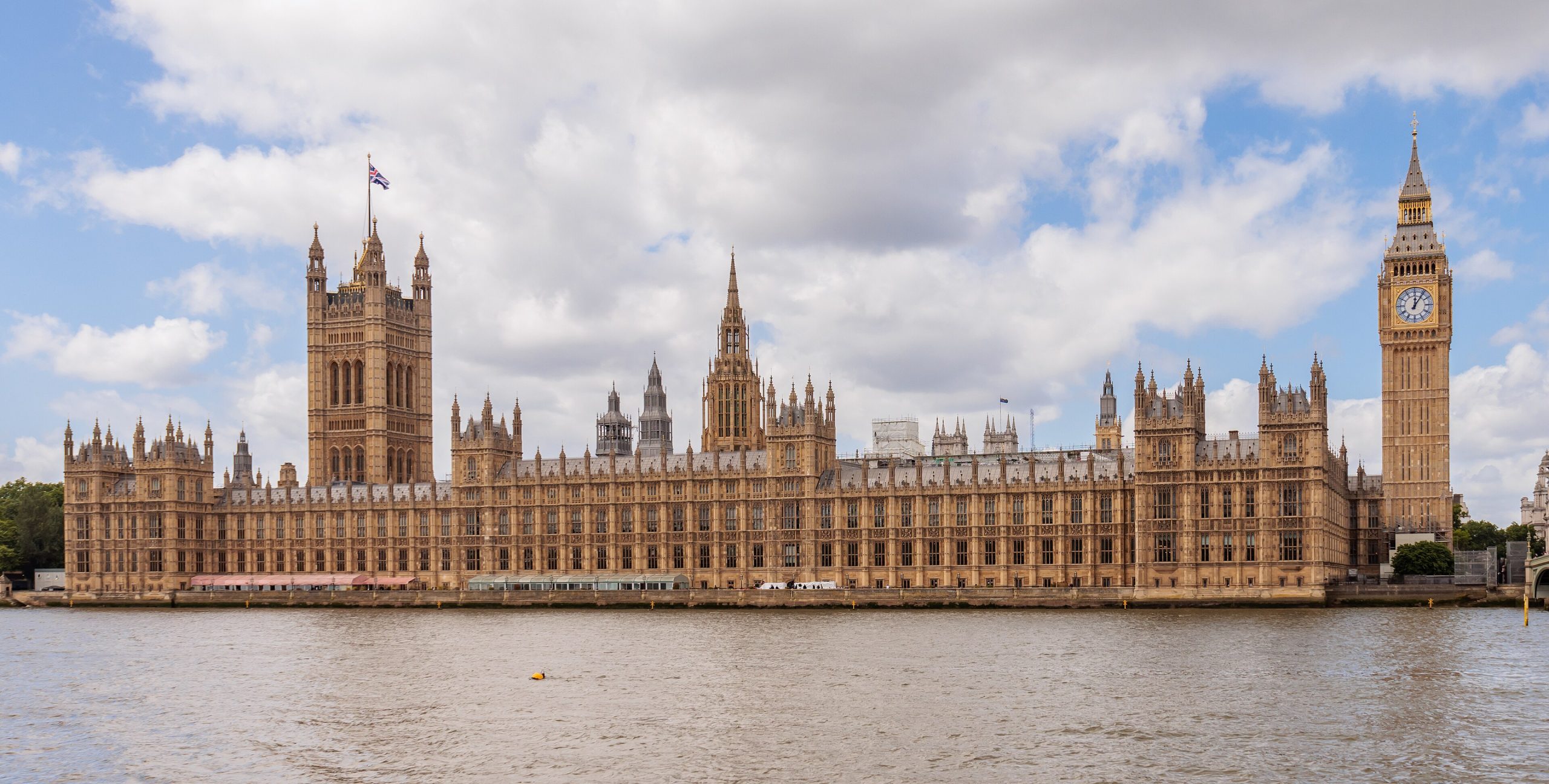
Petitioning is older than parliaments. Clause 61 of Magna Carta in 1215 gave barons a mechanism to demand redress; medieval English parliaments spent much of their time processing private petitions. The word lobby attaches to the practice through architecture: the lobbies of the Palace of Westminster, and later the corridors of the United States Capitol, were where people who wanted something waited for legislators who could grant it.
The professional emerged with the spoils. Samuel Ward, known in 1870s Washington as the King of the Lobby, ran his business on dinners and claret rather than argument. The Gilded Age scandals — the Crédit Mobilier affair exposed in 1872, the sugar and railroad lobbies of the 1890s — established the modern caricature.
Regulation followed slowly and worked poorly. The Federal Regulation of Lobbying Act of 1946 required registration but was gutted by definitional loopholes and by United States v. Harriss in 1954, which narrowed its reach on First Amendment grounds. The Lobbying Disclosure Act of 1995 tightened definitions; the Honest Leadership and Open Government Act of 2007 added reporting and cooling-off periods after the Jack Abramoff convictions. Canada created a federal registry through the Lobbyists Registration Act, passed in 1988 and in force from 30 September 1989, renamed the Lobbying Act in 2008, with a Commissioner of Lobbying reporting to Parliament. Through all of it, reported federal lobbying spending in Washington has stayed above US$3 billion annually since 2008. The regimes changed the paperwork, not the incentive.
The theoretical account arrived in the same period. Mancur Olson showed in 1965 why small groups with concentrated stakes organise and large groups with diffuse stakes do not.1 James Buchanan and Gordon Tullock had already modelled legislative logrolling as an exchange rather than a search for the common good.2 Tullock’s 1967 paper and Krueger’s 1974 article gave the phenomenon its name and its cost accounting.3
The Conservative Position
Conservatives start by refusing the censorship remedy. A church that petitions on assisted dying, a trade association that petitions on a tariff, and a landowners’ group that petitions on expropriation are all doing the same constitutionally protected thing. Restricting who may petition, or how much they may spend saying so, hands the state the power to decide which citizens count — which is why Citizens United v. FEC in 2010, whatever its practical consequences, tracked a genuine conservative principle about speech.
The conservative diagnosis is structural. Friedrich Hayek’s objection to discretionary government was that rules known in advance let people plan, while administrative discretion makes outcomes turn on who decides.4 Every grant of discretion is a standing invitation to the lobby. The Tax Reform Act of 1986, which stripped out hundreds of preferences and cut rates, did more to reduce tax lobbying than any disclosure statute; the preferences then grew back, because the discretion did.
The second conservative theme is capture. George Stigler’s 1971 account of economic regulation showed that regulated industries acquire their regulators, because the industry supplies the expertise, the personnel and the political cover.5 Occupational licensing is the everyday case: cosmetology boards and taxi commissions exist as they do because incumbents lobbied for barriers, and the cost falls on entrants who have no association.
Thomas Sowell’s contribution is to note who pays. Diffuse costs land on people without a lobbyist — consumers of protected sugar, tenants under exclusionary zoning, immigrants blocked by a licensing board.6 The remedy conservatives propose is dull and hard: fewer discretionary programmes, sunset clauses, single-subject bills, plain statutory language, and a smaller universe of things worth buying.
Differing Positions
Progressive critics reject the symptom framing. Lawrence Lessig argues that the dependence of legislators on private funding corrupts the institution regardless of programme size, and that the causation runs from money to policy rather than the other way.7 On that account, shrinking government would simply move the auction to whatever remains.
The best empirical challenge comes from Frank Baumgartner and colleagues, who tracked 98 randomly selected policy issues in Washington and found that lobbying resources predicted outcomes far more weakly than the caricature suggests; the strongest force was inertia, with the status quo prevailing most of the time.8 If that is right, both the reformers who expect disclosure to fix policy and the conservatives who treat lobbying as the main channel of rent extraction are overstating its power. A third objection is simply distributional: whatever the theory, the corporate share of registered lobbying spending dwarfs that of unions and public-interest groups, and pretending both sides merely petition ignores who can afford the retainer.
References
- Mancur Olson, The Logic of Collective Action: Public Goods and the Theory of Groups (Harvard University Press, 1965).
- James M. Buchanan and Gordon Tullock, The Calculus of Consent: Logical Foundations of Constitutional Democracy (University of Michigan Press, 1962).
- Anne O. Krueger, “The Political Economy of the Rent-Seeking Society,” American Economic Review 64, no. 3 (1974), 291–303; Gordon Tullock, “The Welfare Costs of Tariffs, Monopolies, and Theft,” Western Economic Journal 5, no. 3 (1967), 224–232.
- F. A. Hayek, The Road to Serfdom (Routledge, 1944).
- George J. Stigler, “The Theory of Economic Regulation,” Bell Journal of Economics and Management Science 2, no. 1 (1971).
- Thomas Sowell, Basic Economics: A Common Sense Guide to the Economy, 5th ed. (Basic Books, 2014).
- Lawrence Lessig, Republic, Lost: How Money Corrupts Congress — and a Plan to Stop It (Twelve, 2011).
- Frank R. Baumgartner, Jeffrey M. Berry, Marie Hojnacki, David C. Kimball and Beth L. Leech, Lobbying and Policy Change: Who Wins, Who Loses, and Why (University of Chicago Press, 2009).
You've read articles over the past year
Will you support conservative education?
A gift of any amount helps keep unique explanatory journalism free for all, and
supports our mission to help everyone understand the world, regardless of their
ability to pay.One-time contributors join our community of givers and will be kept
up to date on the journalism that you help keep free.
Westernization
Westernization is the adoption by non-Western societies of institutions, technologies, laws, manners and habits of mind that originated in Western Europe and its colonial offshoots....
War Crime
A war crime is a serious violation of the law of armed conflict for which an individual bears personal criminal responsibility. The category covers the...

Voter ID Laws
Voter identification laws require a person presenting to vote to prove who they are, usually by producing a government-issued document. The requirement is unremarkable across...

Voter Fraud
Voter fraud is the deliberate corruption of an election by unlawful means: impersonating another voter, casting ballots in the name of the dead or the...