
Print
Cite
Feedback
Share
Local government is the tier of administration closest to the household: the council, the township, the parish, the school board. Conservatives treat it as the natural home of most public decisions, not because small bodies govern more cleverly than large ones, but because they govern under the eyes of the people paying for the results. A councillor who approves a bad road meets the drivers at church.
The principle behind that preference has a name. Subsidiarity holds that a decision belongs at the lowest level competent to make it, and that higher authority intervenes only where the lower cannot act. Pius XI stated it as Catholic social doctrine in Quadragesimo Anno in 1931, and it entered European law through the Maastricht Treaty in 1992.1 The instinct is older than the doctrine, and in the English-speaking world it runs through the parish vestry, the New England town meeting and the Canadian municipal charter.
Key Takeaways
- Subsidiarity, formalised in Quadragesimo Anno in 1931, holds that authority belongs at the lowest competent level.
- Edmund Burke’s little platoon is the founding image of the conservative case: attachment begins with what is near and extends outward.2
- Alexis de Tocqueville treated the New England township as the school in which Americans learned self-government.3
- Robert Nisbet argued that centralisation destroys intermediate associations and leaves the individual facing the state alone.4
- Legally, municipalities are creatures of higher government: Dillon’s Rule in the United States from 1868, and section 92(8) of Canada’s Constitution Act, 1867.
History And Context
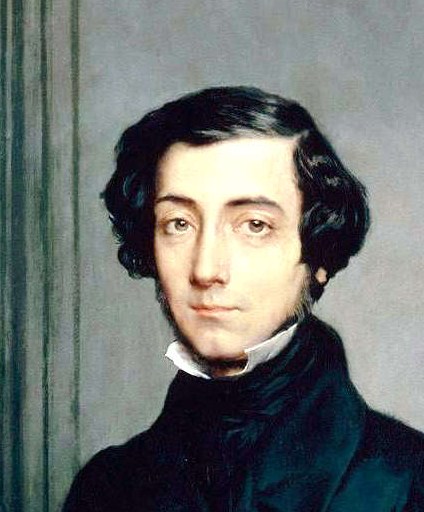
English local government grew from the manor, the parish and the county rather than from any design. The parish vestry administered poor relief under the Elizabethan Poor Law of 1601, and justices of the peace, appointed locally and unpaid, ran county business for centuries. The Municipal Corporations Act of 1835 replaced closed self-appointing borough oligarchies with elected councils, and the Local Government Act of 1888 created county councils.
The North American line begins with the town meeting. Massachusetts settlements from the 1630s governed themselves through assemblies of freemen who set rates, hired ministers and appointed selectmen. Alexis de Tocqueville, travelling in America in 1831 and 1832, singled out this arrangement as the mechanism by which democratic habits were formed. He argued that municipal institutions gave citizens the taste for freedom and the practice of exercising it, and that a nation could establish a free government without them but not keep one.3
In Canada the founding statute is the Baldwin Act of 1849, which established elected municipal councils across Upper Canada with powers of taxation and by-law. The Constitution Act, 1867 then placed municipal institutions under provincial jurisdiction in section 92(8), which is why Canadian cities have no constitutional standing of their own — a point made unmistakable in 2018 when Ontario cut the size of Toronto’s council mid-election and the Supreme Court of Canada upheld the province’s authority in 2021.
American doctrine hardened along the same line. Judge John Forrest Dillon of Iowa held in 1868 that municipal corporations owe their existence entirely to the legislature, which may create or destroy them at will. Home-rule provisions in state constitutions have loosened Dillon’s Rule since, but the underlying subordination remains, and state pre-emption of city ordinances has grown sharply since 2010.
The Conservative Position
Burke supplied the moral core. Writing against the abstract universalism of the French revolutionaries, he argued that attachment to the little platoon we belong to in society is the first principle of public affections and the germ of any wider loyalty.2 Patriotism on this account is built up from the particular, not handed down from the general. A man who cares nothing for his street will not be improved by being told to care about humanity.
Robert Nisbet gave the argument its twentieth-century form. In The Quest for Community in 1953 he traced how the modern state gained power by absorbing the functions of family, guild, parish and locality, and argued that the isolated individual who results is the natural raw material of mass politics.4 Local government matters in this account as one of the last load-bearing intermediate institutions.
The practical conservative arguments are three. First, accountability: rate-payers can identify who set the levy and can remove them without a national campaign. Second, competition and information — Charles Tiebout’s 1956 model of local expenditure showed that mobile households sort among jurisdictions offering different bundles of tax and service, which disciplines councils in a way no ministry faces.5 Third, error containment: fifty jurisdictions trying different approaches to policing or schooling produce evidence, and a mistake made in one county does not become a mistake made everywhere. Centralisation converts a local misjudgement into a national one.
Conservatives also make a fiscal demand of localism: the body that spends should raise. Transfers from higher tiers sever the link between the tax bill and the service, which is the mechanism by which local accountability actually operates.
Differing Positions
The strongest objection is that localism protects local injustice. In the American South after Brown v. Board of Education in 1954, local control was the instrument of massive resistance — school boards and county officials closed or defunded schools rather than integrate them, and it took federal courts and the Civil Rights Act of 1964 to break the pattern. Where the local majority is the source of the wrong, the higher tier is the only remedy.
The second objection is capacity and equity. Property-tax funding produces school districts of radically unequal wealth, and small councils lack the technical staff to handle water systems, contaminated sites or pension liabilities. Studies of municipal fragmentation find duplicated administration and gaps in regional planning.
The third objection concerns housing. William Fischel’s homevoter model describes local government as a body dominated by residents protecting the value of their principal asset, which explains both careful stewardship of neighbourhood amenity and systematic exclusion of new supply.6 Every serious analysis of the housing shortage in Canada, the United States and the United Kingdom identifies municipal zoning and permitting as a binding constraint. Conservatives who defend local autonomy and also want houses built have to say which one gives way.
References
- Pius XI, Quadragesimo Anno (1931), §§79–80.
- Edmund Burke, Reflections on the Revolution in France (J. Dodsley, 1790).
- Alexis de Tocqueville, Democracy in America, vol. 1 (1835), bk. 1, ch. 5.
- Robert Nisbet, The Quest for Community (Oxford University Press, 1953).
- Charles M. Tiebout, “A Pure Theory of Local Expenditures,” Journal of Political Economy 64, no. 5 (1956).
- William A. Fischel, The Homevoter Hypothesis (Harvard University Press, 2001).
You've read articles over the past year
Will you support conservative education?
A gift of any amount helps keep unique explanatory journalism free for all, and
supports our mission to help everyone understand the world, regardless of their
ability to pay.One-time contributors join our community of givers and will be kept
up to date on the journalism that you help keep free.

Westernization
Westernization is the adoption by non-Western societies of institutions, technologies, laws, manners and habits of mind that originated in Western Europe and its colonial offshoots....
War Crime
A war crime is a serious violation of the law of armed conflict for which an individual bears personal criminal responsibility. The category covers the...

Voter ID Laws
Voter identification laws require a person presenting to vote to prove who they are, usually by producing a government-issued document. The requirement is unremarkable across...

Voter Fraud
Voter fraud is the deliberate corruption of an election by unlawful means: impersonating another voter, casting ballots in the name of the dead or the...