
Print
Cite
Feedback
Share
Marxist international relations theory holds that the relations between states are secondary phenomena, and that the real structure of world politics is the global organisation of capital. Where realists see sovereign states pursuing security in anarchy, and liberals see interdependence tempering conflict, the Marxist tradition sees a single world economy divided into an exploiting core and an exploited periphery, with states functioning as instruments of the class that owns the productive assets.
Conservatives reject the framework on both descriptive and moral grounds. The descriptive objection is that nations behave as nations: Vietnam and China fought a war in 1979 despite shared ideology, and the Soviet bloc fractured along lines of national feeling rather than class. The moral objection is that the theory supplies a permanent explanation for poverty which relieves poor countries’ own governments of responsibility for it.
Key Takeaways
- Lenin’s Imperialism, the Highest Stage of Capitalism, written in 1916 and published in Petrograd in 1917, is the founding text, explaining Western workers’ quiescence by colonial super-profits.
- Dependency theory, developed by Raúl Prebisch at the UN Economic Commission for Latin America from 1949 and by Andre Gunder Frank in the 1960s, argued that peripheral poverty is produced by core wealth.
- Immanuel Wallerstein’s world-systems analysis, beginning with The Modern World-System (1974), divides the globe into core, semi-periphery and periphery.
- Neo-Gramscian writing after Robert Cox’s 1981 essay shifted attention to hegemony as consent rather than coercion.
- The theory predicted that import-substitution and delinking would produce development; the East Asian export economies did the opposite and grew.
History And Context
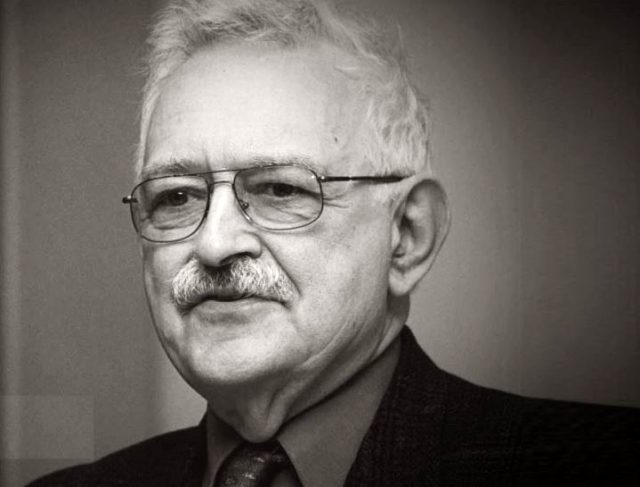
Marx wrote little systematic work on international politics. The tradition begins in earnest with Lenin, whose pamphlet, drafted in Zurich exile in 1916 and published the following year, drew on the English liberal J. A. Hobson’s Imperialism: A Study (1902) and on Rudolf Hilferding’s Finance Capital (1910). Lenin’s argument was that competition had produced monopoly, monopoly had produced surplus capital that could not be profitably invested at home, and the export of that capital had produced the partition of the globe and the war then being fought. Colonial profits, he added, funded a labour aristocracy in the imperial countries, which explained why European socialist parties had voted for war credits in August 1914.4
The second wave came from Latin America. Raúl Prebisch, an Argentine economist directing the UN commission in Santiago, argued from 1949 that the terms of trade moved secularly against primary commodity exporters, so that a country selling copper and buying machinery would fall behind however hard it worked. Andre Gunder Frank radicalised this into the claim that underdevelopment was actively manufactured — his phrase was the development of underdevelopment — rather than a starting condition. Governments across Latin America adopted import-substituting industrialisation on this reasoning through the 1950s and 1960s.
Immanuel Wallerstein, an American sociologist trained on African decolonisation, published the first volume of The Modern World-System in 1974, dating the capitalist world economy to the long sixteenth century and treating states as positions within a single division of labour rather than as independent units.1 Robert Cox’s 1981 article in Millennium opened a further line, drawing on Antonio Gramsci to argue that dominance in world order rests on manufactured consent expressed through institutions, ideas and prevailing common sense.
The Conservative Position
Conservatives begin with the evidence. If core wealth requires peripheral poverty, then countries that integrated most deeply with Western markets should have fared worst. South Korea in 1960 had a lower income per head than Ghana. Taiwan, Singapore, Hong Kong and later coastal China chose export-led growth, foreign investment and integration, and multiplied their real incomes many times over within two generations. The Latin American economies that delinked and substituted imports accumulated debt and inflation and were overtaken. Whatever explains development, it is not distance from world markets.
The second objection concerns the treatment of institutions. Conservative and classical-liberal scholarship locates the origins of prosperity in secure property rights, enforceable contracts, the rule of law, honest courts and stable money — inheritances built over centuries and difficult to transplant. P. T. Bauer spent his career arguing against the aid-and-dependency consensus, holding that transfers from Western governments to Third World governments strengthened the political class at the expense of the trader and the farmer.2 Where the Marxist account sees extraction, the conservative account sees the absence of the legal furniture that makes investment worth undertaking.
The third objection is about nations. Marxist theory treats national loyalty as false consciousness masking class interest. The twentieth century supplied a long test and the result went the other way. Socialist parties voted for their national war budgets in 1914. Communist Yugoslavia broke with Moscow in 1948, China with Moscow by 1961, and Vietnam invaded Cambodia in 1978 while China invaded Vietnam in 1979 — four Marxist-Leninist states fighting along national lines. Roger Scruton argued that attachment to a particular place, language and inheritance is a real human good rather than an illusion, and that theories treating it as epiphenomenal misdescribe the political world.3
Conservatives add a moral point. A theory holding that poverty in the periphery is caused elsewhere hands the governments of poor countries a permanent alibi. Corruption, expropriation, currency destruction and the suppression of markets become symptoms of the world system rather than choices made by identifiable men.
Differing Positions
Defenders of the tradition answer that the East Asian success stories were not laissez-faire cases at all: the Korean and Taiwanese states directed credit, protected infant industries and disciplined firms by export performance, and both enjoyed exceptional Cold War access to American markets and aid. That, they argue, is a story about state capacity and geopolitics rather than a vindication of open markets.
They also point to genuine asymmetries the conservative account underweights. Commodity dependence is real, capital flight from developing economies is real, and the historical record of extraction — the Congo under Leopold, the Bengal famines, the slave trade financing Atlantic commerce — is not a theoretical construct. Neo-Gramscian writers argue that the rules of trade, finance and intellectual property were written by the strong and that agenda-setting power does not require conspiracy to operate.
The conservative reply is that historical injustice is compatible with the claim that present policy determines present outcomes. Countries with near-identical colonial histories have diverged enormously since independence, and the variable that tracks the divergence is domestic institutions rather than position in a world system.
References
- Immanuel Wallerstein, The Modern World-System I (Academic Press, 1974).
- P. T. Bauer, Dissent on Development (Weidenfeld & Nicolson, 1971).
- Roger Scruton, The Need for Nations (Civitas, 2004).
- V. I. Lenin, Imperialism, the Highest Stage of Capitalism (Zhizn i Znanie, Petrograd, 1917).
You've read articles over the past year
Will you support conservative education?
A gift of any amount helps keep unique explanatory journalism free for all, and
supports our mission to help everyone understand the world, regardless of their
ability to pay.One-time contributors join our community of givers and will be kept
up to date on the journalism that you help keep free.
Westernization
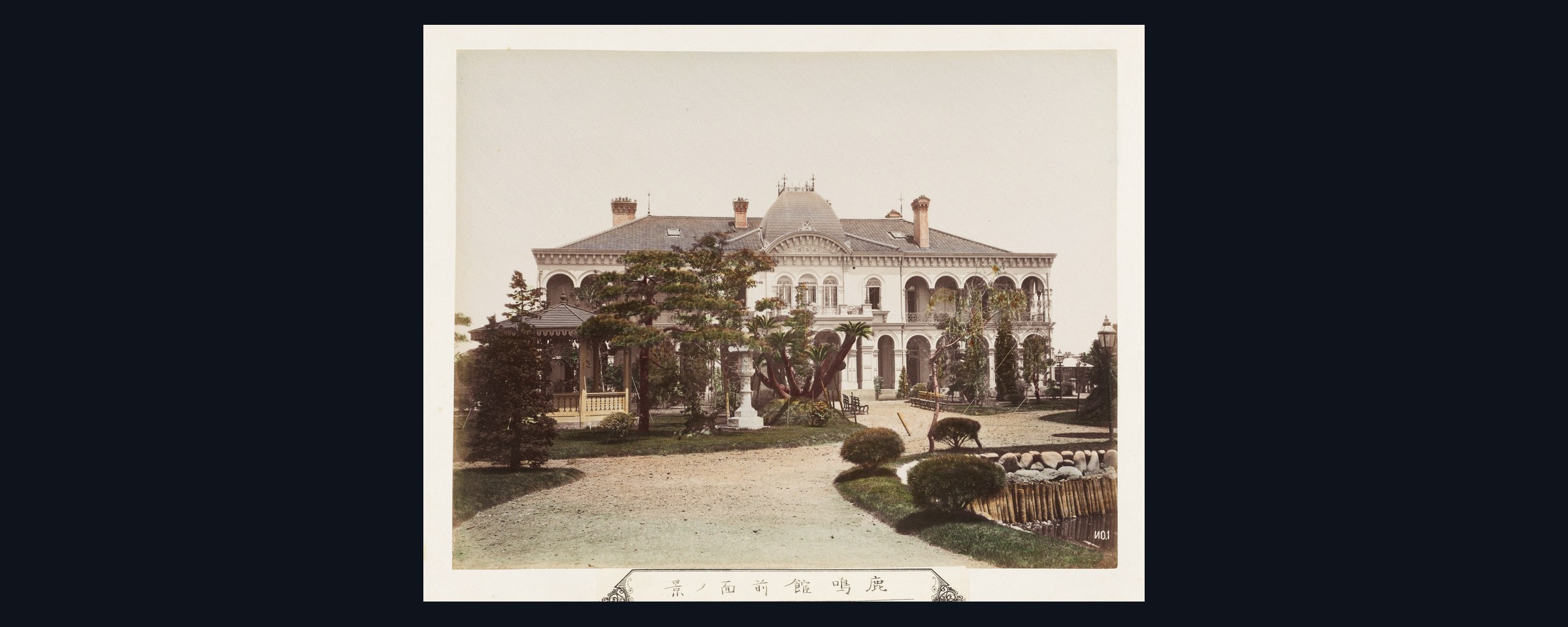
Westernization is the adoption by non-Western societies of institutions, technologies, laws, manners and habits of mind that originated in Western Europe and its colonial offshoots....
War Crime
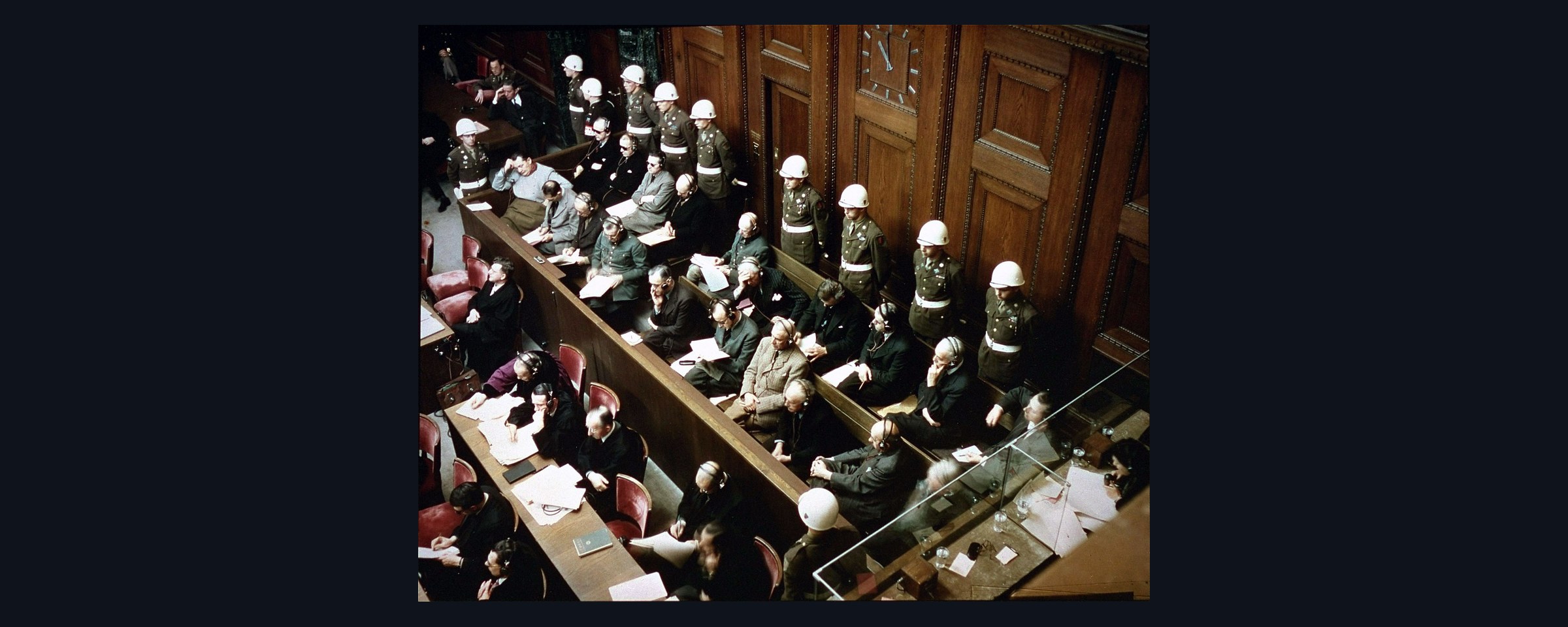
A war crime is a serious violation of the law of armed conflict for which an individual bears personal criminal responsibility. The category covers the...

Voter ID Laws
Voter identification laws require a person presenting to vote to prove who they are, usually by producing a government-issued document. The requirement is unremarkable across...

Voter Fraud
Voter fraud is the deliberate corruption of an election by unlawful means: impersonating another voter, casting ballots in the name of the dead or the...