
Print
Cite
Feedback
Share
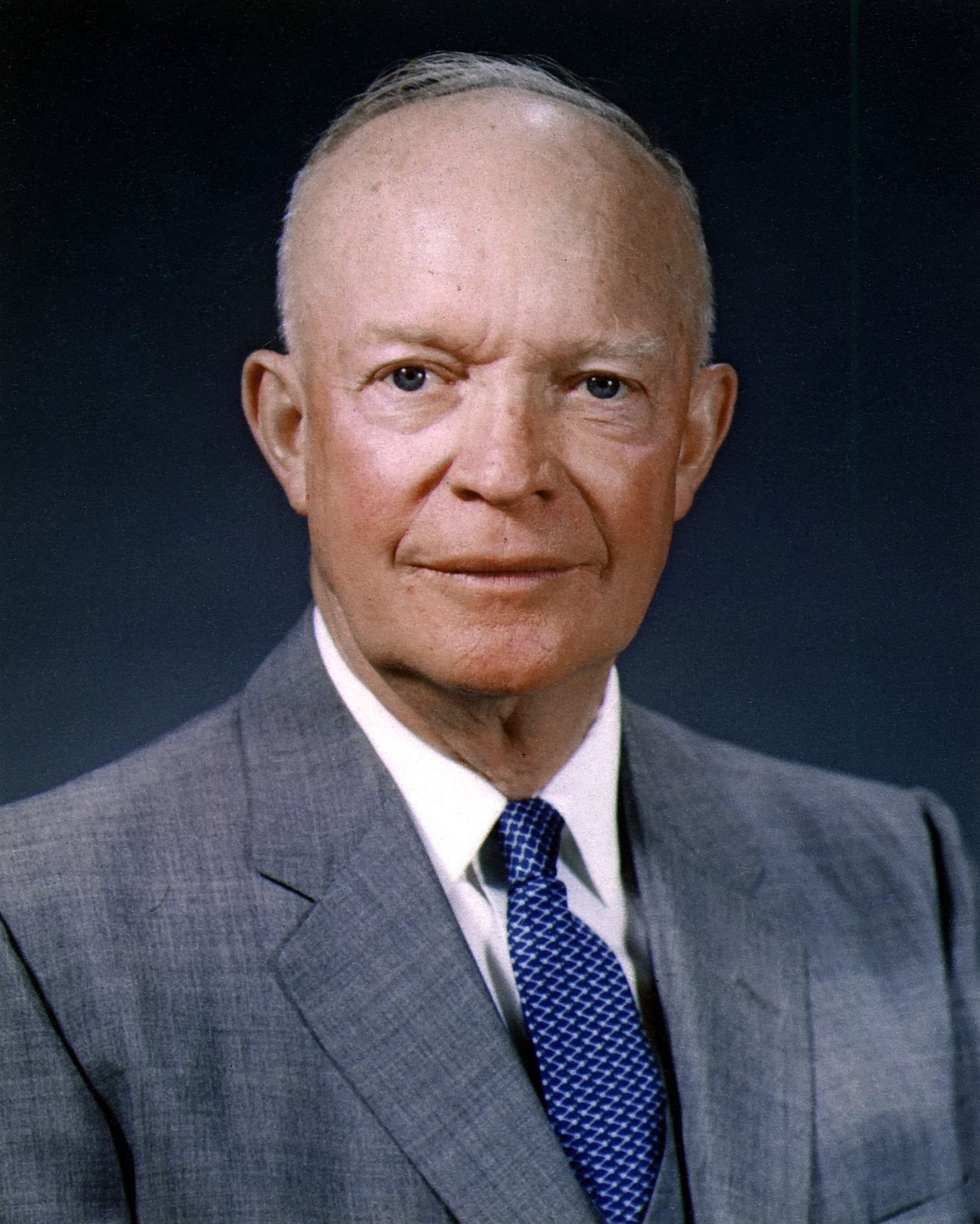
The phrase entered political language on 17 January 1961, when Dwight Eisenhower — five-star general, supreme commander of the Normandy invasion, two-term Republican president — used his farewell address from the Oval Office to warn Americans against the unwarranted influence of a permanent armaments industry joined to a permanent military establishment. Three days later he handed the presidency to John Kennedy and went home to a farm in Gettysburg.
Conservatives have never been comfortable with the phrase, because the left adopted it and because it can be used to argue for unilateral disarmament. But the warning came from the right, and it rests on a thoroughly conservative premise: concentrated power corrupts, standing establishments acquire interests of their own, and a republic that keeps a large permanent military in peacetime has created something the founders deliberately tried to avoid.
Key Takeaways
- Eisenhower’s speechwriters Malcolm Moos and Ralph E. Williams worked on the address from May 1959, roughly eighteen months before delivery.
- The United States had no large peacetime arms industry before 1940; the complex was a product of the Second World War and the Cold War that followed.
- The structural problem is the iron triangle: contractors, service branches and the legislators whose districts hold the plants.
- Conservative critics from Robert Taft to Robert Higgs have argued that permanent mobilisation enlarges the state at home as well as abroad.
- The counter-argument is that deterrence is cheaper than war, and that the industrial base cannot be summoned at short notice.
History And Context
Before 1940 the United States built weapons in government arsenals and navy yards, and expanded through private industry only in wartime. The army numbered under 200,000 men in 1939. Mobilisation changed the scale permanently: by 1945 the country had built roughly 300,000 aircraft, and the atomic programme at Los Alamos, Oak Ridge and Hanford had created an entire scientific-industrial apparatus under federal direction.
Demobilisation was reversed within five years. NSC-68, drafted in 1950, argued for sustained rearmament; the Korean War made the argument academic. Defence spending settled at roughly a tenth of national output through the 1950s, and stayed near that level for a decade. Aircraft firms that had been building airliners in 1938 were building bombers and missiles for a single customer.
Eisenhower watched this from an unusual vantage. He had commanded Allied forces in Europe, then served as army chief of staff, then as the first supreme commander of NATO, then as president through eight years of missile-gap politics. He had spent his presidency resisting service demands for larger budgets, arguing that unlimited defence spending would bankrupt the country it was meant to defend. The farewell address, delivered on television from the Oval Office, was the summary of that fight. It contained a second warning, quoted less often: that public policy could become the captive of a scientific-technological elite dependent on federal funding.1
The mechanism observers identified afterwards became known as the iron triangle. Contractors want orders. Service branches want capability and budget share. Members of Congress want the plant in their district and the jobs attached to it. Each leg reinforces the others, and none has an interest in cancelling a programme. Subcontracting a single aircraft across dozens of states makes cancellation politically expensive by design.
The Conservative Position
The traditional conservative case against standing military establishments is older than the phrase. The English Whig tradition treated a standing army as the instrument by which the Stuarts had threatened parliamentary liberty, and the American founders inherited the suspicion — hence the constitutional limit of two years on army appropriations. Robert Taft, the Ohio senator known as Mr. Republican, opposed permanent overseas commitments and conscription after 1945 on the ground that a garrison state would change the character of the American republic.
Robert Higgs developed the economic version of the argument. Wars produce emergency powers, and emergency powers are never fully returned; each crisis leaves a permanently enlarged state, with new agencies, new taxes and new precedents that the next crisis builds upon.2 Conservatives who apply market reasoning to domestic policy point out that defence procurement violates every condition of a functioning market: one buyer, few sellers, cost-plus contracting, classified accounting, and a revolving door between the purchasing officers and the firms they later join.
There is a fiscal argument too. Programmes justified on threat assessments outlive the threat. Weapons systems continue in production because the political cost of stopping them exceeds the budgetary cost of continuing. Conservatives who campaign against agricultural subsidies and urban renewal schemes have difficulty exempting a two-hundred-billion-dollar procurement account from the same scrutiny.
The strongest conservative statement of the case is Eisenhower’s own, and it is not pacifist. He argued that the establishment was necessary, that the danger lay in its unchecked growth, and that the remedy was an alert and knowledgeable citizenry holding it to account. That is a Burkean position: not abolition, but the subordination of a powerful institution to constitutional restraint.3
Differing Positions
Defence hawks answer that the complex is the price of deterrence, and a low price. American defence spending fell from about nine per cent of national output in the early 1960s to roughly three per cent by the 2020s, while the alliance system it underwrote coincided with the longest period without war between great powers in the modern record. The industrial base, they add, cannot be reconstituted on demand: shipyards, submarine welders and solid rocket motor lines take decades to build and months to lose, as European stockpile shortages after 2022 demonstrated.
A second answer holds that the iron triangle description applies to every large area of federal spending. Agriculture, medicine and higher education all show the same pattern of concentrated benefits and dispersed costs. Singling out defence, on this view, reflects political preference rather than analysis.
Critics on the left take the argument in the opposite direction, holding that the complex does not merely distort procurement but drives foreign policy — that interventions are chosen because there is an apparatus wanting employment. Conservatives resist that inference, noting that the wars of the past eighty years were begun by elected politicians answering public alarm, and that treating contractors as the authors of national strategy removes responsibility from the officials who actually decided.4
References
- Dwight D. Eisenhower, “Farewell Address to the Nation,” 17 January 1961.
- Robert Higgs, Crisis and Leviathan: Critical Episodes in the Growth of American Government (Oxford University Press, 1987).
- Edmund Burke, Reflections on the Revolution in France (J. Dodsley, 1790).
- Seymour Melman, Pentagon Capitalism: The Political Economy of War (McGraw-Hill, 1970).
You've read articles over the past year
Will you support conservative education?
A gift of any amount helps keep unique explanatory journalism free for all, and
supports our mission to help everyone understand the world, regardless of their
ability to pay.One-time contributors join our community of givers and will be kept
up to date on the journalism that you help keep free.
Westernization
Westernization is the adoption by non-Western societies of institutions, technologies, laws, manners and habits of mind that originated in Western Europe and its colonial offshoots....
War Crime
A war crime is a serious violation of the law of armed conflict for which an individual bears personal criminal responsibility. The category covers the...

Voter ID Laws
Voter identification laws require a person presenting to vote to prove who they are, usually by producing a government-issued document. The requirement is unremarkable across...

Voter Fraud
Voter fraud is the deliberate corruption of an election by unlawful means: impersonating another voter, casting ballots in the name of the dead or the...