
Print
Cite
Feedback
Share
Nordic socialism is the name given in Anglo-American political argument to the economic arrangements of Denmark, Sweden, Norway, Finland, and Iceland: high taxation, universal public services, wage-setting by collective bargaining rather than statute, and low measured inequality. The label has become a standard reference point in debates over healthcare, tuition, and taxation in the United States and Britain, where it is presented as proof that a large state and a prosperous economy sit together comfortably.
The conservative reply is not that the Nordic countries are poor or badly governed. It is that the label misdescribes them. These are open market economies with secure property rights, free trade, light business regulation, no statutory minimum wage, and, in Sweden’s case, no inheritance tax since 2004 and no wealth tax since 2007. Denmark’s prime minister told an audience at Harvard’s Kennedy School in October 2015 that his country was a market economy and not a socialist one. The interesting question is not whether the Nordic model works but which parts of it are doing the work.
Key Takeaways
- The Nordic economies combine large welfare states with open trade, secure property rights, and flexible labour markets.
- Sweden grew rich between 1870 and 1936 under low taxes and small government, before the welfare state expanded.
- Sweden’s tax burden peaked around 50 per cent of GDP near 1990 and the economy contracted through the 1990 to 1993 banking and currency crisis.
- The reforms that followed cut spending, reformed pensions, introduced school vouchers in 1992, and imposed a fiscal surplus rule.
- None of the five countries sets a statutory minimum wage; pay is fixed by collective agreement between unions and employers.
History And Context
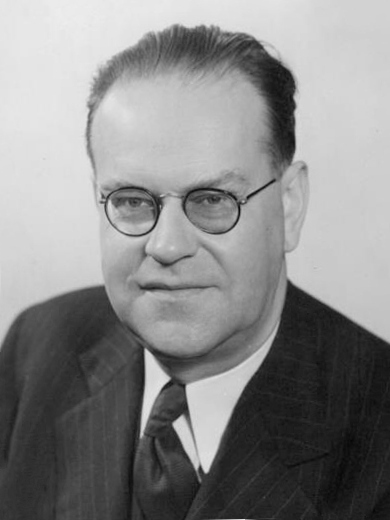
Sweden was one of Europe’s poorest countries in 1870. Between 1870 and 1936 it recorded the highest growth rate in the industrialised world, under a state that took a small share of national income, a legal system that protected contract, and an export sector built on timber, iron ore, and engineering. Roughly 1.3 million Swedes emigrated to North America between 1850 and 1930, close to a quarter of the population, which is the clearest measure of how poor the country then was.
The institutional settlement came in 1938, when the trade union confederation LO and the employers’ federation SAF signed the Saltsjöbaden Agreement, establishing that wages and disputes would be handled by the two sides without legislation. Social democratic government ran from 1932 to 1976 with one brief interruption, under Per Albin Hansson and then Tage Erlander, who held the premiership from 1946 to 1969. The large expansion of public employment and transfers came after 1970, not before.
The results arrived in the following two decades. Sweden fell from fourth in the OECD income rankings in 1970 to around fourteenth by 1993. Marginal tax rates reached levels that produced the celebrated case of Astrid Lindgren’s 102 per cent liability in 1976. A property and banking bubble burst in 1990; the Riksbank raised its overnight lending rate to 500 per cent on 16 September 1992 in defence of the krona peg and abandoned the peg on 19 November. Unemployment moved from under 2 per cent to above 8 per cent.
The correction was substantial. The Lindbeck Commission reported in 1993 with a programme of institutional reform.1 Sweden introduced independent free schools funded by vouchers in 1992, legislated a notional defined-contribution pension system in 1998, adopted an expenditure ceiling and a surplus target, and abolished the wealth tax in 2007. Andreas Bergh’s account describes the period as the revival of a capitalist welfare state rather than its abandonment.2 Nima Sanandaji’s study makes the parallel cultural argument, noting that Americans of Nordic descent record higher incomes and lower poverty rates than the populations of the countries their ancestors left.3
The Conservative Position
Conservatives make four claims.
First, sequence matters. Prosperity in these countries preceded the welfare state and paid for it. A poor country that adopts Swedish spending ratios before it has Swedish output does not become Sweden; it becomes indebted.
Second, the tax base is broad, not narrow. Nordic revenue comes from value-added taxes above 20 per cent and from income taxes that reach the middle of the earnings distribution, not from a small number of rich people. Denmark’s top personal rate applies at roughly 1.3 times the average wage. The Anglo-American proposal to fund similar spending by taxing the top 1 per cent has no Nordic precedent.
Third, the supply side is liberal. These states redistribute income while leaving prices, hiring, and firing largely alone. Denmark’s flexicurity model pairs generous unemployment insurance with employment protection weaker than France’s or Italy’s. Sweden runs school choice on a voucher basis of a kind Milton Friedman proposed in 1962 and which American teaching unions still resist.4
Fourth, social trust does the quiet work. Small, historically homogeneous populations with high institutional trust and strong norms around work and honesty administer a large welfare state at low cost, because fraud is rare and compliance is high. Conservatives treat this as cultural capital accumulated over centuries, which explains why the model has travelled poorly.
Differing Positions
Social democratic economists reject the framing. Jonas Pontusson’s comparative work argues that the Nordic countries achieve both equality and growth through coordinated bargaining, active labour market policy, and public investment in skills, and that the conservative account quietly credits the market for outcomes produced by institutions the market did not build.5 Torben Iversen and David Soskice make a related case that advanced capitalism and democratic redistribution reinforce each other rather than trading off.6
On this reading, the pre-1970 growth story proves less than conservatives claim, since almost every Western economy grew quickly in that period, and the 1990s crisis was a currency and banking failure of a kind that struck Britain and the United States too. The homogeneity argument draws the sharpest response: Sweden took in large numbers of refugees after 2015 without the welfare state collapsing, and Denmark’s high-trust institutions were built rather than inherited.
There is also a fair objection to the terminology. Nobody in Copenhagen or Stockholm calls the system socialism. The word is an American import, and both camps in the Anglo-American argument are using foreign countries as counters in a domestic dispute.
References
- Assar Lindbeck et al., Turning Sweden Around (MIT Press, 1994).
- Andreas Bergh, Sweden and the Revival of the Capitalist Welfare State (Edward Elgar, 2014).
- Nima Sanandaji, Scandinavian Unexceptionalism (Institute of Economic Affairs, 2015).
- Milton Friedman, Capitalism and Freedom (University of Chicago Press, 1962).
- Jonas Pontusson, Inequality and Prosperity: Social Europe vs. Liberal America (Cornell University Press, 2005).
- Torben Iversen and David Soskice, Democracy and Prosperity (Princeton University Press, 2019).
You've read articles over the past year
Will you support conservative education?
A gift of any amount helps keep unique explanatory journalism free for all, and
supports our mission to help everyone understand the world, regardless of their
ability to pay.One-time contributors join our community of givers and will be kept
up to date on the journalism that you help keep free.

Westernization
Westernization is the adoption by non-Western societies of institutions, technologies, laws, manners and habits of mind that originated in Western Europe and its colonial offshoots....
War Crime
A war crime is a serious violation of the law of armed conflict for which an individual bears personal criminal responsibility. The category covers the...

Voter ID Laws
Voter identification laws require a person presenting to vote to prove who they are, usually by producing a government-issued document. The requirement is unremarkable across...

Voter Fraud
Voter fraud is the deliberate corruption of an election by unlawful means: impersonating another voter, casting ballots in the name of the dead or the...