
Print
Cite
Feedback
Share
Nuclear nonproliferation is the effort to stop the spread of nuclear weapons to states that do not possess them, while managing the arsenals of those that do. Its legal centre is the Treaty on the Non-Proliferation of Nuclear Weapons, opened for signature on 1 July 1968 and in force since 5 March 1970, which now binds 191 parties and stands as the most widely adhered-to arms control agreement in history.1
Conservatives approach the subject with two commitments that sit in tension. Nuclear weapons in the hands of hostile or unstable regimes are the gravest physical threat a nation faces, so restraining their spread is a first-order national interest. But treaties do not enforce themselves, and the record shows that what has actually contained proliferation is the credible power of states, not the text of agreements.
Key Takeaways
- The NPT rests on a bargain: non-weapons states forgo nuclear arms and accept IAEA safeguards; the five recognised weapons states pursue disarmament in good faith; all parties get access to civil nuclear technology.
- Four states hold nuclear weapons outside the treaty framework: India, Pakistan, Israel, and North Korea, which announced withdrawal in January 2003.
- In March 1963 President Kennedy warned that by 1975 there could be 15 to 25 nuclear-armed states. The figure today is nine.
- Extended deterrence — the American guarantee to allies — has prevented more proliferation than any inspection regime, by removing the reason for Japan, South Korea, Germany, and others to build their own.
- The hardest cases, Iraq, Libya, Syria, North Korea, and Iran, were addressed by intelligence, sanctions, interdiction, and force, not by treaty compliance.
History And Context
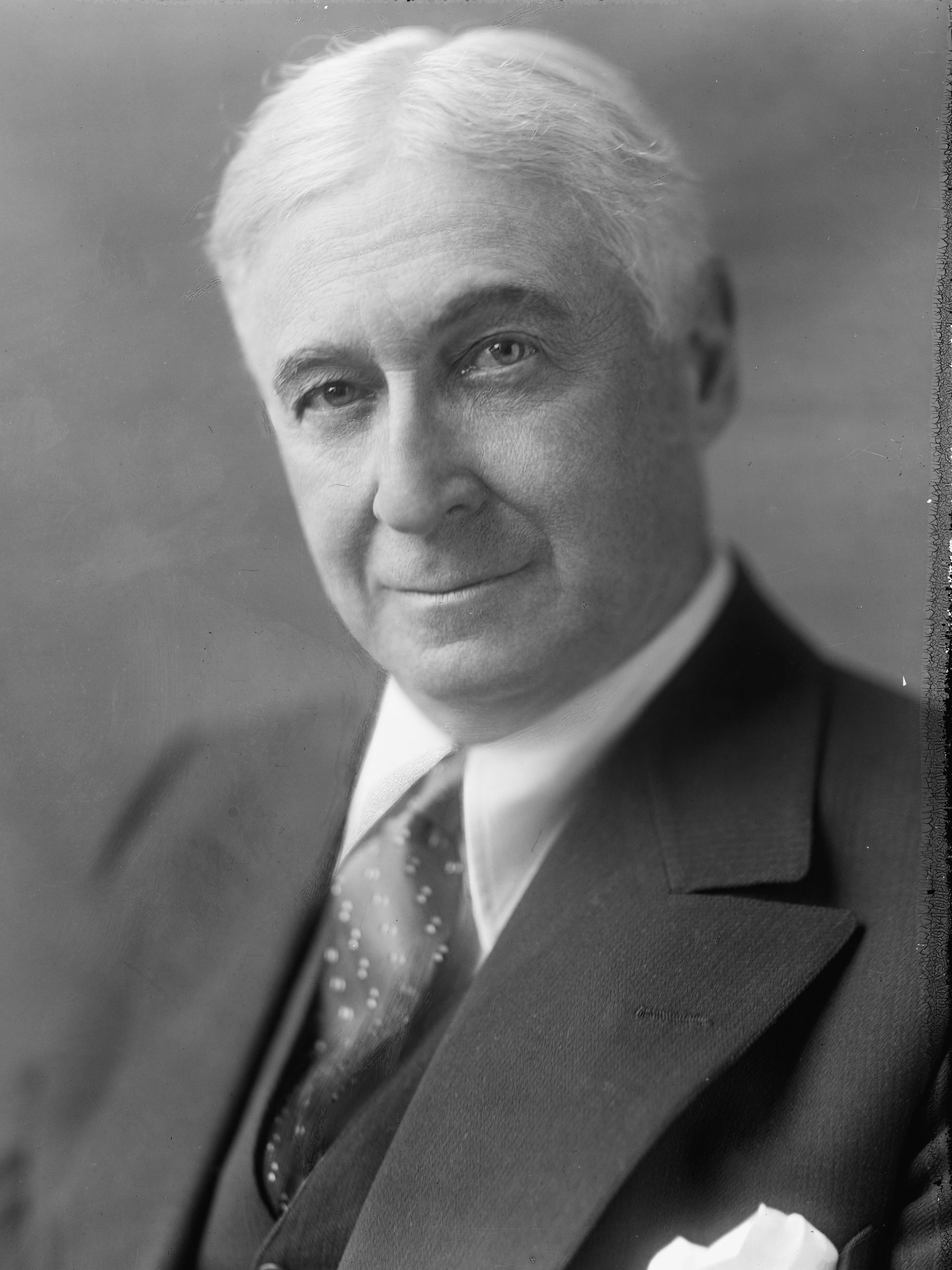
The first control proposal came before the second bomb had cooled. The Acheson-Lilienthal report of March 1946, and the Baruch Plan presented to the United Nations that June, proposed placing all fissile material under an international authority. The Soviet Union rejected it, tested its first device in August 1949, and the moment passed.
Britain tested in 1952, France in 1960, China in October 1964. Ireland began pressing for a nonproliferation treaty at the United Nations in 1958, and the Irish resolutions of 1959 and 1961 established the principle. Negotiations ran through the Eighteen Nation Disarmament Committee in Geneva. The United States and the Soviet Union tabled separate but identical drafts in August 1967 and a joint text in January 1968. The treaty was opened for signature on 1 July 1968.
Its architecture is unequal by design. Article IX defines a nuclear-weapon state as one that manufactured and detonated a device before 1 January 1967, which fixes membership at five: the United States, the Soviet Union, Britain, France, and China. Article II binds everyone else never to acquire such weapons. Article III requires safeguards agreements with the International Atomic Energy Agency, founded in 1957. Article VI commits all parties to negotiate in good faith toward disarmament. Article IV guarantees access to peaceful nuclear technology, a clause later used by Iran to justify enrichment.
South Africa built six devices in the 1980s, dismantled them, and acceded to the treaty in 1991 — the only state to have given up an indigenous arsenal. Ukraine, Belarus, and Kazakhstan transferred Soviet warheads to Russia after 1991, Ukraine doing so under the Budapest Memorandum of December 1994, in exchange for security assurances that Russia disregarded in 2014 and again in 2022. The treaty was extended indefinitely at the 1995 Review Conference.
The Conservative Position
Conservatives support nonproliferation and doubt the instruments usually proposed to achieve it.
The first argument is that deterrence, not disarmament, has kept the peace among great powers since 1945. No two states possessing nuclear weapons have fought a full war against each other. Conservatives read this as evidence that stable arsenals under reliable command are a source of order, and that reducing them below the threshold of credibility would invite the conventional wars that nuclear weapons have suppressed. Article VI’s disarmament clause, pressed to its conclusion, would remove the mechanism that has done the work.
The second concerns verification. A treaty regime is only as good as its capacity to detect cheating, and detection has repeatedly failed. Iraq’s covert programme was uncovered after the 1991 war, not by the safeguards then in force. Libya’s was surrendered in December 2003 after the interdiction of the BBC China and the exposure of the A. Q. Khan network. North Korea signed the treaty in 1985, accepted safeguards, and tested a weapon in October 2006. The pattern is that inspectors find what states have already decided to reveal, a record Henry Sokolski traces across five decades of American counter-proliferation policy.4
The third concerns alliances. The strongest nonproliferation instrument the United States possesses is the security guarantee. Japan, South Korea, Germany, and Taiwan all have the technical capacity to build weapons within a short period. They have not, because American protection made it unnecessary. Conservatives argue that any weakening of that guarantee produces proliferation faster than any treaty can restrain it, and that alliance credibility is therefore an arms control policy in its own right.
The fourth concerns the character of regimes. Conservatives reject the premise that a weapon is equally dangerous in every hand. A British or French warhead is not equivalent to a North Korean one, because the political systems differ in their accountability, their command arrangements, and their willingness to sell technology. Policy should discriminate between regimes rather than pursue numerical equality.
Differing Positions
Advocates of disarmament argue that the recognised weapons states have not honoured Article VI, and that this failure corrodes the treaty’s legitimacy. Their case is that a permanent two-tier order cannot hold: states asked to accept inspection while the arsenals of the powerful grow more sophisticated will eventually defect. The Treaty on the Prohibition of Nuclear Weapons, adopted in July 2017 and in force since January 2021, was drafted on this reasoning. No nuclear-armed state has joined it.
A second position, associated with Kenneth Waltz, accepts deterrence logic and extends it: if nuclear weapons make war between their possessors unthinkable, controlled spread would stabilise volatile regions rather than destabilise them. Waltz argued in 2012 that an Iranian bomb would restore balance in the Middle East. Most conservatives reject this, holding that the argument assumes rational command structures, secure custody, and no risk of transfer to non-state actors — assumptions that hold for mature states and not for the regimes most likely to acquire weapons next.2
A third line, argued by Scott Sagan, focuses on organisational failure rather than intent: accidents, false alarms, and unauthorised action scale with the number of arsenals, independently of whether any government wants war.3
References
- Treaty on the Non-Proliferation of Nuclear Weapons, opened for signature 1 July 1968, entered into force 5 March 1970, 729 UNTS 161.
- Kenneth N. Waltz, “Why Iran Should Get the Bomb,” Foreign Affairs, July/August 2012.
- Scott D. Sagan and Kenneth N. Waltz, The Spread of Nuclear Weapons: A Debate Renewed (W. W. Norton, 2003).
- Henry D. Sokolski, Best of Intentions: America’s Campaign Against Strategic Weapons Proliferation (Praeger, 2001).
You've read articles over the past year
Will you support conservative education?
A gift of any amount helps keep unique explanatory journalism free for all, and
supports our mission to help everyone understand the world, regardless of their
ability to pay.One-time contributors join our community of givers and will be kept
up to date on the journalism that you help keep free.

Westernization
Westernization is the adoption by non-Western societies of institutions, technologies, laws, manners and habits of mind that originated in Western Europe and its colonial offshoots....
War Crime
A war crime is a serious violation of the law of armed conflict for which an individual bears personal criminal responsibility. The category covers the...

Voter ID Laws
Voter identification laws require a person presenting to vote to prove who they are, usually by producing a government-issued document. The requirement is unremarkable across...

Voter Fraud
Voter fraud is the deliberate corruption of an election by unlawful means: impersonating another voter, casting ballots in the name of the dead or the...