
Print
Cite
Feedback
Share
Oil and natural gas supply roughly fifty-five per cent of world primary energy and underwrite the material conditions of modern life: fertiliser, plastics, pharmaceuticals, asphalt, steel, shipping, aviation, and the electricity that runs the grid when the wind drops. Conservatives treat hydrocarbon production as a question of national strength before it is a question of climate policy, because a country that cannot heat its homes or move its goods has no capacity to pursue any other objective.
The conservative case is not that fossil fuels are permanent. It is that the transition away from them must be governed by engineering and price rather than by target dates set in advance, and that the countries which legislated ahead of the technology have paid for it in industrial capacity, household bills, and strategic exposure.
Key Takeaways
- Hydraulic fracturing combined with horizontal drilling turned the United States from the world’s largest oil importer into its largest producer; crude output rose from about 5 million barrels a day in 2008 to an annual average near 12.9 million in 2023, with monthly output above 13.3 million by that December.
- Europe’s dependence on Russian pipeline gas — about forty per cent of imports before 2022 — became a strategic liability when Russia invaded Ukraine in February 2022.
- Natural gas emits roughly half the carbon dioxide of coal per unit of electricity, which is why American emissions fell while output grew: coal was displaced by gas, not by policy.
- Canada holds the third-largest proven oil reserves in the world, concentrated in the Alberta oil sands, and has spent two decades unable to build export pipelines to tidewater.
- Petroleum is a chemical feedstock as well as a fuel; wind turbines, solar panels, and electric vehicles are all manufactured using it.
History And Context
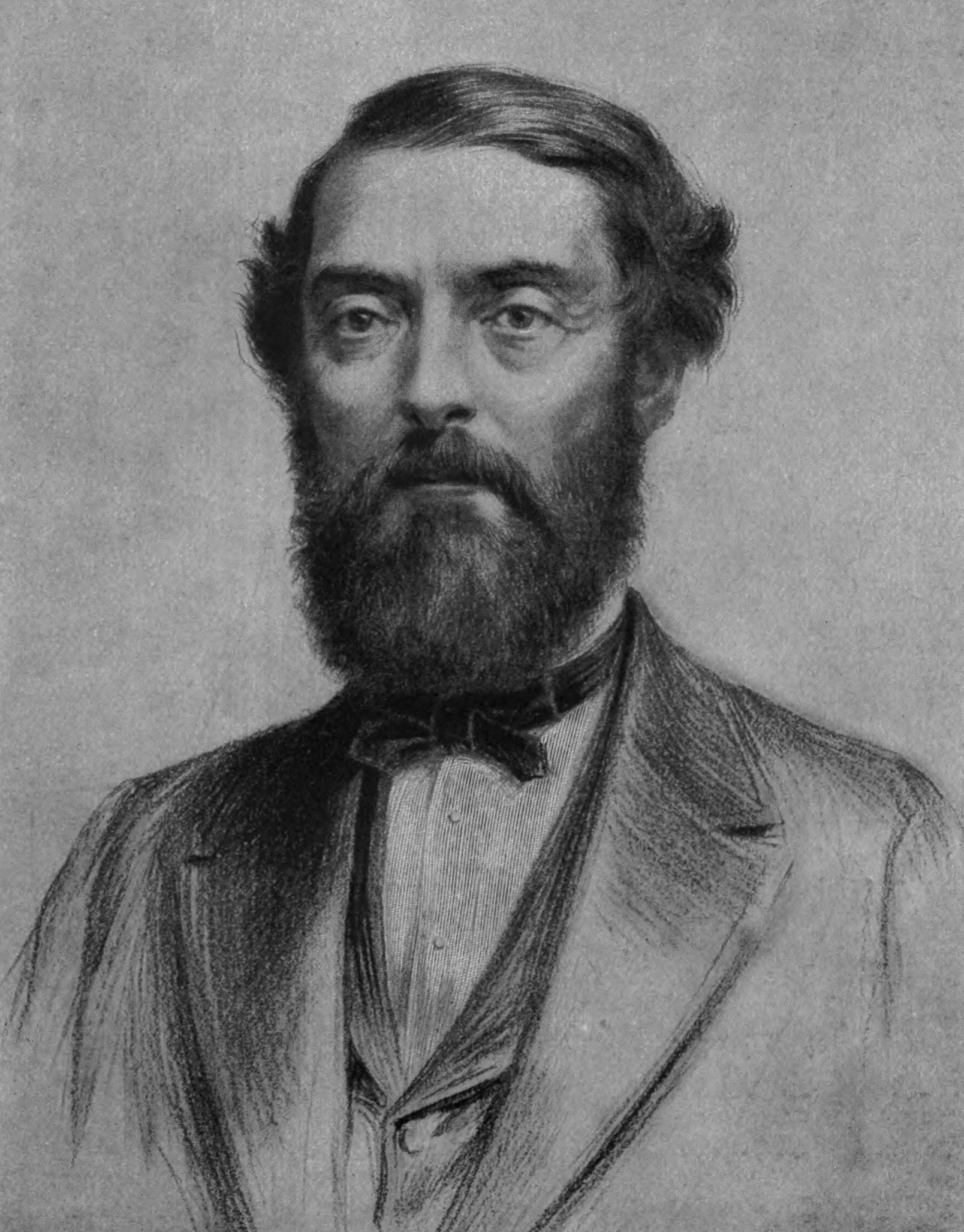
The commercial industry began at Titusville, Pennsylvania, on 27 August 1859, when Edwin Drake struck oil at sixty-nine feet. John D. Rockefeller founded Standard Oil in 1870 and controlled about ninety per cent of American refining by 1880, until the Supreme Court ordered its breakup in 1911. The Spindletop gusher in Texas in January 1901 opened the age of cheap abundance.
Strategic dependence arrived with the navy. In 1911 Winston Churchill, as First Lord of the Admiralty, decided to convert the Royal Navy from Welsh coal to oil, trading domestic supply for foreign speed. Britain bought a controlling stake in the Anglo-Persian Oil Company in 1914. Every subsequent great-power conflict has turned partly on access to petroleum: the German drive toward Baku in 1942, the American submarine campaign against Japanese tankers, the Allied bombing of Ploiești.1
OPEC was founded in Baghdad in September 1960 by Iran, Iraq, Kuwait, Saudi Arabia, and Venezuela. Its embargo of October 1973, in response to Western support for Israel in the Yom Kippur War, quadrupled crude prices within months and produced petrol queues, rationing, and a decade of stagflation in the industrialised world. The 1979 Iranian revolution repeated the shock.
The reversal came from technology rather than policy. George Mitchell spent seventeen years and roughly a quarter of a billion dollars perfecting slickwater fracturing in the Barnett Shale of north Texas, achieving commercial results in 1998. Combined with horizontal drilling, the method unlocked the Bakken, Eagle Ford, and Permian formations. By 2018 the United States had passed Saudi Arabia and Russia in crude production, and in 2017 it became a net exporter of natural gas for the first time since 1957.2
The Conservative Position
Conservatives argue first from security. Energy independence is not an economic preference but a precondition of an independent foreign policy. Germany’s decision to close its nuclear plants while expanding Nord Stream capacity left it, by 2021, dependent on a hostile power for the fuel that ran its industry. When that supply was cut, German electricity prices rose to levels that pushed chemical and metals production offshore. The lesson conservatives draw is that supply chains for energy should run through allies or through domestic geology, and that this consideration outranks marginal differences in cost.
The second argument is about the poor. Energy costs are regressive: heating, cooking, and commuting take a far larger share of a low income than a high one. Carbon taxes, renewable levies, and vehicle mandates fall hardest on rural households, tradesmen, and pensioners, while the professional class that designs them absorbs the cost easily. Conservatives regard the political backlashes of the last decade — the French gilets jaunes protests from November 2018, the Dutch farmer revolt, the reversal of net-zero deadlines in Britain — as predictable responses to policies whose costs were concentrated on people who were not consulted.
The third argument concerns physical realism. Wind and solar are intermittent, and the storage required to firm them at national scale does not exist at economic cost. Every grid that has pushed intermittent share high has retained gas or nuclear as backup, and paid for both. The engineering objection is not to renewables but to the accounting that treats nameplate capacity as though it were dispatchable power. Vaclav Smil’s history of energy transitions makes the scale of the substitution explicit: no previous shift in the primary energy mix has taken less than two generations.3
The fourth is procedural. Conservatives object to policy set by regulatory agencies, international conferences, and financial disclosure rules rather than by legislatures answerable to voters. Pressure applied through banks and asset managers to restrict lending to producers achieves by private arrangement what could not pass a parliament. That, in the conservative view, is a defect of legitimacy independent of the merits of the goal.
Differing Positions
The environmental case rests on the physical claim that accumulated carbon dioxide raises global mean temperature, and that continued combustion at current rates commits the world to warming with severe consequences for agriculture, coastlines, and water. On this reading, market prices do not reflect the damage because the damage falls on people who were never party to the transaction, and correcting that omission through carbon pricing is a market-completing measure rather than an intervention against markets. Economists including William Nordhaus, who received the Nobel Memorial Prize in 2018, built their work on this argument.4
A second position accepts the security argument and reaches the opposite conclusion: since oil is priced globally, domestic production does not insulate a country from price shocks originating anywhere, whereas electrification and domestic generation do. Wind, solar, and nuclear cannot be embargoed.
A third holds that the transition is now an industrial race rather than a moral one. Whoever manufactures batteries, grid equipment, and reactors will hold the commanding position of the next century, and countries that defend incumbent industries will find themselves buying the replacements from abroad. The conservative reply is that the argument is sound and points toward nuclear and domestic manufacturing rather than toward restricting hydrocarbon supply before the replacements are in place.
References
- Daniel Yergin, The Prize: The Epic Quest for Oil, Money, and Power (Simon & Schuster, 1991).
- Daniel Yergin, The New Map: Energy, Climate, and the Clash of Nations (Penguin Press, 2020).
- Vaclav Smil, Energy and Civilization: A History (MIT Press, 2017).
- William D. Nordhaus, The Climate Casino: Risk, Uncertainty, and Economics for a Warming World (Yale University Press, 2013).
You've read articles over the past year
Will you support conservative education?
A gift of any amount helps keep unique explanatory journalism free for all, and
supports our mission to help everyone understand the world, regardless of their
ability to pay.One-time contributors join our community of givers and will be kept
up to date on the journalism that you help keep free.

Westernization
Westernization is the adoption by non-Western societies of institutions, technologies, laws, manners and habits of mind that originated in Western Europe and its colonial offshoots....
War Crime
A war crime is a serious violation of the law of armed conflict for which an individual bears personal criminal responsibility. The category covers the...

Voter ID Laws
Voter identification laws require a person presenting to vote to prove who they are, usually by producing a government-issued document. The requirement is unremarkable across...

Voter Fraud
Voter fraud is the deliberate corruption of an election by unlawful means: impersonating another voter, casting ballots in the name of the dead or the...