
Print
Cite
Feedback
Share
Open borders is the position that people should be free to cross national frontiers to live and work, subject at most to screening for criminality and contagious disease. It exists in a strong form, which treats immigration restriction as a violation of individual liberty comparable to restricting internal movement, and a weaker form, which accepts borders in principle while opposing nearly every enforcement measure in practice.
Conservatives reject both. The objection is not to immigrants and not to immigration; conservative parties in Canada, Britain, and the United States have historically supported substantial legal inflows. The objection is to the premise that a political community has no authority to decide its own membership. A country whose people cannot determine who joins them is not self-governing in any sense that matters.
Key Takeaways
- The strong case for open borders rests on economics: models by Michael Clemens and others estimate that removing all migration barriers would raise world output by somewhere between fifty and one hundred and fifty per cent.
- Conservatives answer that output is not the only measure — a policy can enrich the world while dissolving the institutions that made particular countries prosperous.
- Free movement inside the European Union and the Schengen Area, established by the 1985 agreement and the 1990 convention, is the largest working experiment; it operates among states with comparable legal systems and an external frontier that is policed.
- The welfare state and open entry are difficult to combine: Milton Friedman argued that free immigration is compatible with a limited state but not with universal benefits.
- Assimilation, not admission, is the conservative test. The question is whether newcomers become participants in an inherited political order or remain a parallel population.
History And Context
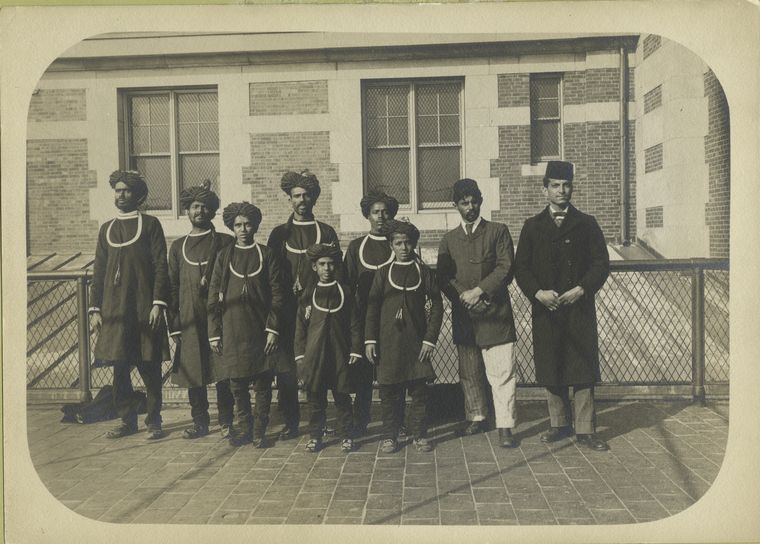
Passport control is recent. Before 1914 a traveller could cross most of Europe and enter the United States without documents; the Cunard and White Star liners carried millions who were processed at Ellis Island, opened in January 1892, and turned away at a rate of about two per cent. The First World War introduced systematic passport requirements as a security measure, and they were never removed.
The American restriction era began with the Chinese Exclusion Act of 1882 and hardened in the Emergency Quota Act of 1921 and the Johnson-Reed Act of 1924, which fixed national-origin quotas at two per cent of each group’s 1890 population. Annual immigration fell from over a million to under two hundred thousand. The Hart-Celler Act of October 1965 abolished the quotas, substituted family reunification and skills, and reoriented flows from Europe toward Latin America and Asia. Its sponsors told Congress the demographic composition of the country would not change substantially; it changed substantially.
The European settlement went the other way. The Treaty of Rome in 1957 established free movement of workers among the six founding members. The Schengen Agreement of June 1985 abolished internal checks, and the 1990 implementing convention pooled the external frontier. The 2004 enlargement to ten new members, eight of them post-communist, triggered movements far larger than forecast: a study commissioned by the Home Office projected annual net inflows to Britain of 5,000 to 13,000, and the actual figure ran into the hundreds of thousands within a few years. That gap between projection and outcome did more to produce the Brexit referendum result of 23 June 2016 than any other single factor.
The migration crisis of 2015, in which over a million people reached Europe by sea, tested the system to its limit and produced the reimposition of internal controls by several Schengen members.
The Conservative Position
Conservatives begin with the nature of a political community. A nation is not a hotel. Roger Scruton argued that the loyalty which makes democratic government possible — the willingness of citizens to accept laws made by strangers, to pay taxes that benefit others, and to be outvoted without reaching for a weapon — depends on a prior sense of shared membership.1 That membership is territorial and inherited. Remove the boundary and the loyalty has no object.
The second argument concerns the welfare state. Milton Friedman observed that free immigration and a universal entitlement system pull against each other: if entry is unrestricted and benefits are automatic, the fiscal burden becomes unbounded.2 The point applies with more force to countries such as Canada and the Nordic states, whose systems assume a high-trust population paying in over a lifetime. A country facing this constraint has three options — restrict entry, restrict benefits, or accept fiscal deterioration — and open borders removes the first.
The third concerns distributional effects at home. Large inflows of labour at the lower end of the skill distribution push down wages and bid up housing for the people already competing there. George Borjas has argued that the gains from immigration accrue mainly to employers and to the migrants themselves, while the costs fall on native workers without a degree.3 Conservatives treat the resentment this produces as a rational response rather than a failure of education.
The fourth concerns culture and law. Political institutions are not free-standing machinery; they rest on habits, expectations, and settled beliefs about authority, sex, religion, and speech. A rate of arrival that exceeds the receiving society’s capacity to transmit those habits produces parallel communities. Conservatives point to the difference between the United States after 1924, which had a forty-year pause during which assimilation proceeded, and European states which have had no comparable interval.
The fifth is procedural. Where enforcement is abandoned in practice while restriction remains on the books, the law is discredited and the public concludes that the system is administered against its expressed wishes. Conservatives hold that visible control of the frontier is the precondition of public consent to any level of legal immigration.
Differing Positions
The libertarian case, argued most fully by Bryan Caplan, treats a border as a restriction on the freedom of contract between a willing employer and a willing worker, and holds that no other regulation destroys comparable value.4 On this reading the accident of birthplace is morally arbitrary, and using state force to keep a Haitian labourer out of a job an American employer wants to offer requires justification that restrictionists have not supplied. Caplan’s answer to the welfare objection is to restrict benefits for new arrivals rather than restrict the arrivals.
The humanitarian case rests on obligation rather than efficiency: people fleeing persecution or destitution have a claim that does not depend on the receiving country’s convenience, recognised in the 1951 Refugee Convention and its 1967 Protocol.
A third argument is demographic. Almost every developed country now has fertility below replacement — Canada at roughly 1.3 births per woman, Italy and South Korea lower still — and pension systems built on a growing working-age base. Without substantial immigration the arithmetic does not resolve. Conservatives who accept this reasoning respond that it argues for selective, high-skill, assimilable immigration set by a legislature, which is a different policy from open borders and depends on the state retaining exactly the authority open borders would deny it.
References
- Roger Scruton, The Need for Nations (Civitas, 2004).
- Milton Friedman, remarks on immigration and the welfare state, public lectures and interviews, late 1970s and 1980s.
- George J. Borjas, We Wanted Workers: Unraveling the Immigration Narrative (W. W. Norton, 2016).
- Bryan Caplan and Zach Weinersmith, Open Borders: The Science and Ethics of Immigration (First Second, 2019).
You've read articles over the past year
Will you support conservative education?
A gift of any amount helps keep unique explanatory journalism free for all, and
supports our mission to help everyone understand the world, regardless of their
ability to pay.One-time contributors join our community of givers and will be kept
up to date on the journalism that you help keep free.

Westernization
Westernization is the adoption by non-Western societies of institutions, technologies, laws, manners and habits of mind that originated in Western Europe and its colonial offshoots....
War Crime
A war crime is a serious violation of the law of armed conflict for which an individual bears personal criminal responsibility. The category covers the...

Voter ID Laws
Voter identification laws require a person presenting to vote to prove who they are, usually by producing a government-issued document. The requirement is unremarkable across...

Voter Fraud
Voter fraud is the deliberate corruption of an election by unlawful means: impersonating another voter, casting ballots in the name of the dead or the...