
Print
Cite
Feedback
Share
A patent is a limited monopoly granted by the state over the commercial use of an invention, in exchange for publishing how the invention works. The bargain is explicit: the inventor receives a period of exclusivity, usually twenty years from filing, and the public receives a disclosure that enters the common stock of knowledge when the term expires. Without the grant, the rational course for an inventor is secrecy.
Conservatives approach patents as a question about property and about the limits of state-created privilege at the same time. The right to the fruit of one’s labour is a foundational conservative commitment, and invention is labour. But a patent is not a natural property right in the way a field or a house is; it is a statutory monopoly, created by legislation, defined by legislation, and capable of being extended until it obstructs the very activity it was meant to encourage.
Key Takeaways
- The Venetian Senate enacted the first general patent statute on 19 March 1474, granting ten years of exclusivity to inventors who registered new devices.
- England’s Statute of Monopolies of 1624 abolished royal grants of monopoly over ordinary trades while preserving a fourteen-year term for genuine new manufactures.
- The United States Constitution authorises Congress to secure exclusive rights to inventors for limited times, tying the grant to the promotion of useful arts rather than to a natural right.
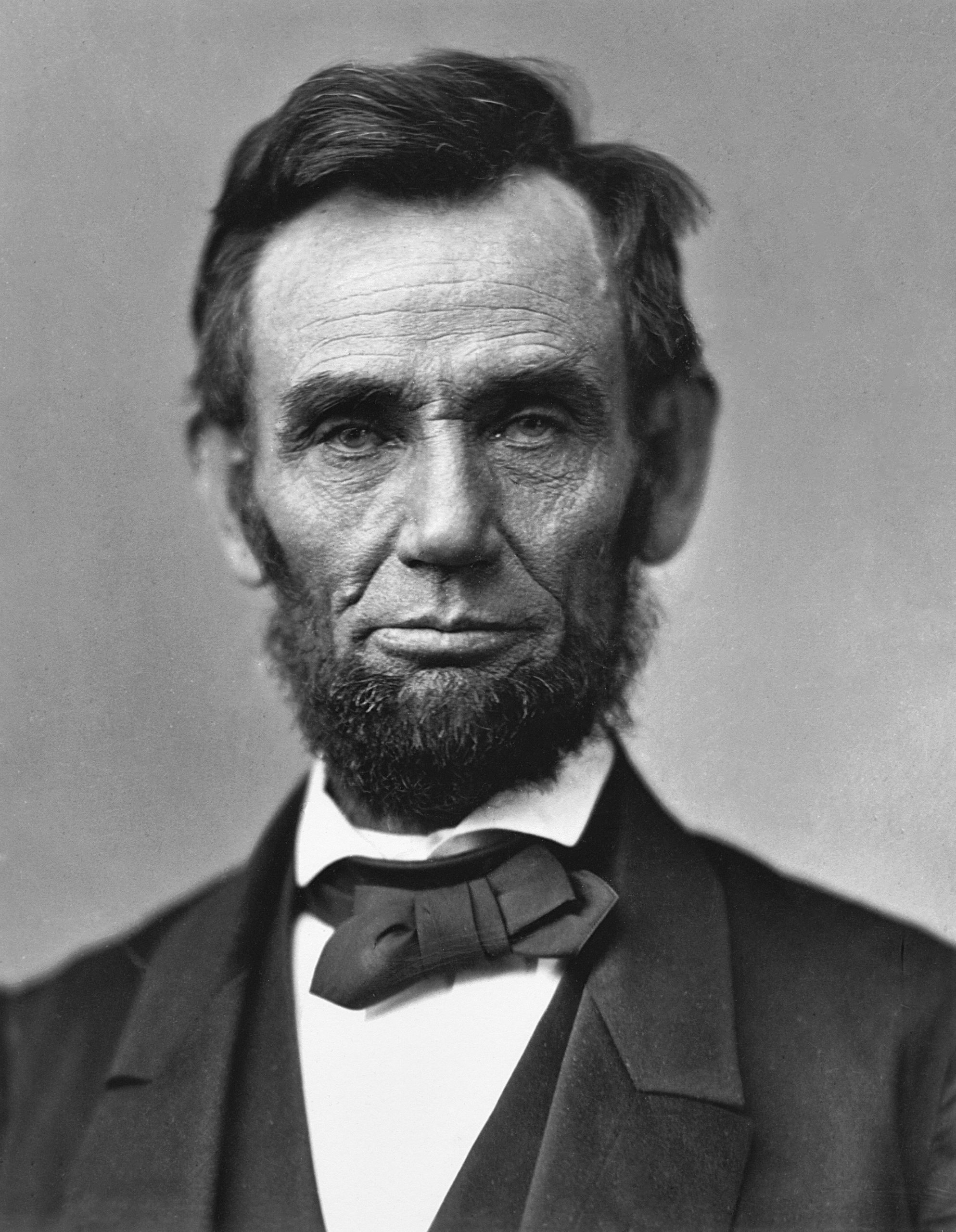
- Abraham Lincoln remains the only American president to hold a patent: number 6469, granted in May 1849, for a device to lift boats over shoals.
- The modern criticism is not of patents but of their proliferation: broad software claims, non-practising entities that litigate rather than produce, and pharmaceutical thickets that extend exclusivity past the intended term.
History And Context
The Venetian statute of 1474 is the origin. Venice depended on glassmaking, shipbuilding, and instrument work, and it lost craftsmen to rival cities. The law offered ten years of protection to anyone who built a new and useful device in the republic and registered it, while reserving the right of the state itself to use the invention. The design has survived largely intact: registration, a term, disclosure, and a remedy against copying.
England took a different route. The Tudor and early Stuart crowns sold monopolies over salt, soap, starch, playing cards, and other established goods as a means of raising revenue outside Parliament. The result was higher prices with no new invention whatsoever. Parliament responded with the Statute of Monopolies in 1624, which voided such grants and preserved an exception for the first inventor of a new manufacture, limited to fourteen years — the length of two seven-year apprenticeships, on the reasoning that two intakes of craftsmen could be trained inside the term.1 This is the origin of the modern rule and a conservative document in its own right: a legislature curbing an executive practice of selling privileges.
The Americans wrote the principle into the founding text. Article I, Section 8, Clause 8 empowers Congress to promote the progress of science and useful arts by securing to authors and inventors, for limited times, exclusive right to their writings and discoveries.2 The wording is careful. The power is granted for a purpose, the term is bounded, and the right is secured by statute rather than recognised as pre-existing. Congress acted with the Patent Act of April 1790, which vested examination in a three-member board comprising the Secretary of State, the Secretary of War, and the Attorney General; Thomas Jefferson, then Secretary of State, did most of the work.
The subsequent history is one of expansion. The term moved to seventeen years from grant, then to twenty years from filing under the 1994 Uruguay Round agreements. Subject matter expanded to living organisms after Diamond v. Chakrabarty in 1980, to business methods after State Street in 1998, and to software through a sequence of decisions the Supreme Court partially reversed in Alice Corp. v. CLS Bank in 2014. The Bayh-Dole Act of 1980 allowed universities to patent federally funded research, which transformed academic science into a licensing business.
The Conservative Position
The first argument is that invention is labour and deserves protection. A pharmaceutical compound costs upward of a billion dollars to bring through trials and can be copied for the price of the chemistry. Without exclusivity the second entrant undercuts the first, the first never recovers its outlay, and the research is not undertaken. Conservatives take this as a straightforward application of the principle that a man is entitled to what he has made.
The second argument concerns disclosure. The alternative to patents is trade secrecy, which conservatives regard as the worse regime for a free society. Secret processes die with their holders, cannot be improved by others, and produce industries built on concealment. A patent trades a bounded period of exclusion for permanent publication. The Venetian and English drafters understood the trade precisely.
The third argument is a caution against overreach. Conservatives who take Hayek seriously note that he treated intellectual property as a case where the analogy to physical property breaks down: an idea, unlike a field, can be used by many people at once without diminishing anyone’s use of it, so exclusion is a policy choice rather than a fact about scarcity. Hayek argued in his 1948 essay “Free Enterprise and Competitive Order” that applying the concept of property to patents, copyrights, and trade marks without regard to their differences had done a great deal to foster the growth of monopoly.6 This is a conservative argument for restraint, not for abolition.
The fourth concerns litigation. Non-practising entities acquire portfolios of vague claims and extract settlements from firms that make things, because the cost of defence exceeds the cost of paying. Conservatives regard this as rent-seeking dressed as property enforcement, and as evidence that a poorly drafted grant becomes a tax on production. The remedies proposed are procedural: stricter standards for what counts as a claimed invention, fee-shifting against meritless suits, and faster invalidation of bad patents.
The fifth is national. Patent systems are territorial, and a country whose inventions are appropriated abroad without remedy is transferring capital to competitors. Conservatives treat forced technology transfer and industrial espionage as trade and security matters rather than as commercial disputes.
Differing Positions
The abolitionist case is argued by Michele Boldrin and David Levine, who hold that patents are unnecessary for innovation and harmful in practice.3 Their evidence includes historical industries that flourished without protection, the observation that first-mover advantage and manufacturing capability supply their own returns, and the record of patents being used to suppress competing improvements rather than to reward invention. They point to James Watt’s steam engine patents, which they argue retarded the development of the high-pressure engine by about sixteen years.
A second position accepts patents in principle and rejects the present system’s calibration. Fritz Machlup, in a 1958 study for the United States Senate, concluded that the economic evidence did not establish whether the system produced net benefit, and that no responsible economist could recommend either adopting or abolishing it on the evidence then available.4 Sixty years of empirical work has not resolved the question, and the answer differs sharply by industry: pharmaceuticals depend on patents, software largely does not.
A third position is redistributive. Patents on essential medicines price them beyond reach in poor countries, and the compulsory licensing provisions of the 2001 Doha Declaration were a response to that. The conservative reply distinguishes the moral claim from the mechanism: transfers to the poor can be funded openly rather than by weakening the exclusivity that financed the drug’s existence.
Legal historians including Adam Mossoff have complicated the standard account by showing that nineteenth-century American courts treated patents as property rights with the full protections that entailed, rather than as mere regulatory privileges — which cuts against the assumption that the utilitarian reading is the original one.5
References
- Statute of Monopolies 1624, 21 Jas. 1 c. 3 (England).
- Constitution of the United States, Article I, Section 8, Clause 8.
- Michele Boldrin and David K. Levine, Against Intellectual Monopoly (Cambridge University Press, 2008).
- Fritz Machlup, An Economic Review of the Patent System, Study No. 15 of the Subcommittee on Patents, Trademarks, and Copyrights, United States Senate (Government Printing Office, 1958).
- Adam Mossoff, “Who Cares What Thomas Jefferson Thought About Patents? Reevaluating the Patent Privilege in Historical Context,” Cornell Law Review 92 (2007), 953.
- F. A. Hayek, “Free Enterprise and Competitive Order,” in Individualism and Economic Order (University of Chicago Press, 1948), pp. 113-14.
You've read articles over the past year
Will you support conservative education?
A gift of any amount helps keep unique explanatory journalism free for all, and
supports our mission to help everyone understand the world, regardless of their
ability to pay.One-time contributors join our community of givers and will be kept
up to date on the journalism that you help keep free.
Westernization
Westernization is the adoption by non-Western societies of institutions, technologies, laws, manners and habits of mind that originated in Western Europe and its colonial offshoots....
War Crime
A war crime is a serious violation of the law of armed conflict for which an individual bears personal criminal responsibility. The category covers the...

Voter ID Laws
Voter identification laws require a person presenting to vote to prove who they are, usually by producing a government-issued document. The requirement is unremarkable across...

Voter Fraud
Voter fraud is the deliberate corruption of an election by unlawful means: impersonating another voter, casting ballots in the name of the dead or the...