
Print
Cite
Feedback
Share
Political accountability is the requirement that those who exercise public power answer for its use to someone with the standing to remove them. Conservatives treat it as the working test of any constitution: not whether power is well intentioned, but whether a named person can be identified, questioned and dismissed when it is misused.
The conservative complaint about modern government is not that it does too much in principle. It is that responsibility has been dispersed across agencies, tribunals, arm’s-length bodies and international secretariats until no one can be held to account for anything in particular.
Key Takeaways
- Accountability requires an identifiable office-holder, a public record of decisions, and a mechanism of removal.
- Edmund Burke’s 1774 address to the electors of Bristol set the enduring distinction between a representative who answers for his judgement and a delegate who merely transmits instructions.1
- Ministerial responsibility, the Westminster convention that a minister answers to Parliament for a department, is the classic institutional form.
- Conservatives argue that delegating power to permanent agencies severs the line between decision and consequence.
- Critics reply that complex states require expert bodies insulated from short-term electoral pressure.
History And Context
The English constitutional settlement built accountability out of impeachment and the power of the purse before it built it out of elections. The Commons impeached the Earl of Strafford in 1640 and Warren Hastings in 1787, in both cases asserting that servants of the Crown answer to Parliament for the use of delegated authority. The 1689 Bill of Rights fixed the more durable instrument: no revenue without parliamentary grant, which made every executive ambition dependent on an annual account.
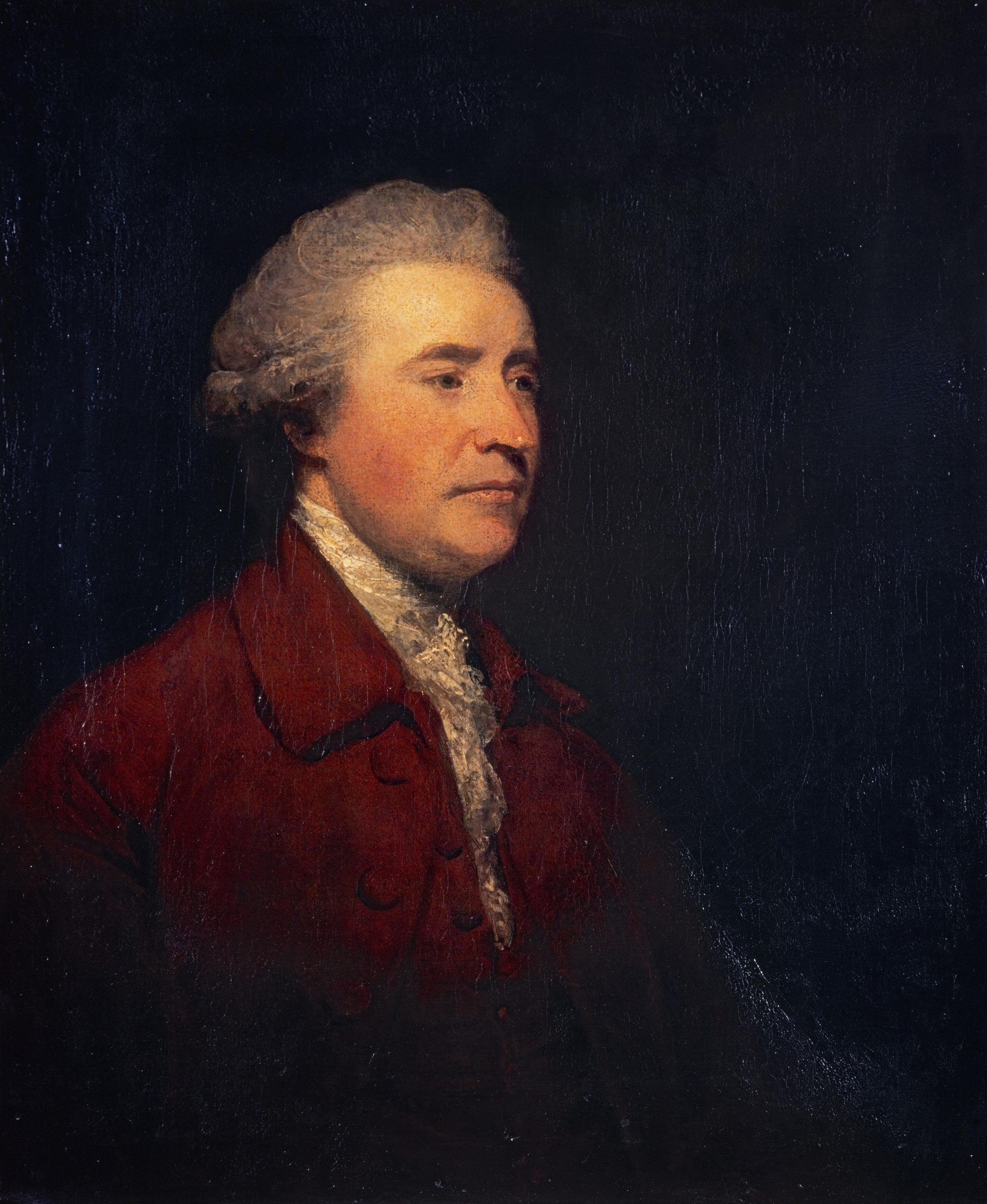
Edmund Burke gave the idea its classic statement on 3 November 1774, after his election at Bristol. A member of Parliament, he told the electors, owes his constituents his industry and his judgement, and betrays rather than serves them if he sacrifices judgement to their instructions. Parliament is a deliberative assembly of one nation, not a congress of ambassadors from competing interests. The bargain is exacting on both sides: the representative decides for himself, and answers for those decisions at the next election.1 Bristol exacted its half. Facing certain defeat over his positions on Irish trade and Catholic relief, Burke declined the poll on 9 September 1780 and left the seat.
Nineteenth-century Britain converted the principle into the convention of individual ministerial responsibility, under which a minister answers in the House for everything done in his department. Walter Bagehot described the resulting arrangement in 1867 as a fusion of executive and legislature that concentrates responsibility in a cabinet the Commons can dismiss on any afternoon.2 The American design solved the same problem differently, by splitting power between branches so each could check the others, on Madison’s reasoning in Federalist 51 that ambition must be made to counteract ambition.3
The twentieth century complicated both models. Regulatory commissions, central banks, public inquiries, human-rights tribunals and treaty bodies each removed a class of decisions from the ordinary chain of answerability, usually on the argument that the subject matter was too technical or too important to leave with politicians.
The Conservative Position
Conservatives hold that accountability is prior to competence. A government that decides wrongly and can be removed will correct itself; a government that decides well and cannot be removed has no reason to keep deciding well. The mechanism, not the intention, is what protects the governed.
From this follows the conservative preference for concentrated, visible authority over diffuse expert authority. A cabinet minister who can be named, questioned at the despatch box and sacked is more constrained than a commission of appointed specialists with a statutory mandate and a fifteen-year term, even when the specialists know more. Michael Oakeshott’s distinction between the state as a civil association governed by known rules and the state as an enterprise pursuing a substantive goal maps onto this directly: enterprise government needs discretion, and discretion is what accountability erodes.4
Conservatives also insist that accountability requires a defined jurisdiction. Power transferred upward to treaty bodies or outward to arm’s-length agencies does not disappear; it moves to a place where the electorate cannot reach it. This is the constitutional core of the argument for national sovereignty and for local government: a decision made close to the governed can be reversed by them.
Subsidiarity carries the same logic downward. Municipal councils, school boards and parish authorities are answerable in a way that national ministries are not, because the people affected know who made the decision and meet them at the shops.
Finally, conservatives resist the substitution of process for answerability. Consultations, impact assessments, audits and published strategies create documentation without creating consequences. A public inquiry that reports six years after the event, naming systems rather than persons, satisfies the appearance of accountability while dissolving its substance.
Differing Positions
The technocratic reply is that some decisions are ruined by answerability. Monetary policy is the standard case: governments that control interest rates face a standing temptation to loosen before an election, and independent central banks exist because that temptation proved stronger than the discipline of the ballot. On this view, insulation from removal is what makes credible commitment possible.
A second objection holds that ministerial responsibility was already fiction by the mid-twentieth century. Departments employing tens of thousands cannot in fact be supervised by one politician, and pretending otherwise substitutes ritual resignation for real oversight. Better, the argument runs, to build direct statutory duties, independent regulators and judicial review than to maintain a convention nobody honours.
A third comes from the left: electoral accountability is thin when campaign finance, media ownership and safe seats limit real electoral competition. Answerability to voters means little if the choice on offer is narrow, and rights entrenched against majorities protect citizens whom the ballot box does not.
References
- Edmund Burke, Speech to the Electors of Bristol (3 November 1774), in The Works of the Right Honourable Edmund Burke, vol. II.
- Walter Bagehot, The English Constitution (Chapman and Hall, 1867), ch. 1.
- James Madison, Federalist No. 51 (1788).
- Michael Oakeshott, On Human Conduct (Clarendon Press, 1975), Essay II, “On the Civil Condition”.
You've read articles over the past year
Will you support conservative education?
A gift of any amount helps keep unique explanatory journalism free for all, and
supports our mission to help everyone understand the world, regardless of their
ability to pay.One-time contributors join our community of givers and will be kept
up to date on the journalism that you help keep free.

Westernization
Westernization is the adoption by non-Western societies of institutions, technologies, laws, manners and habits of mind that originated in Western Europe and its colonial offshoots....
War Crime
A war crime is a serious violation of the law of armed conflict for which an individual bears personal criminal responsibility. The category covers the...

Voter ID Laws
Voter identification laws require a person presenting to vote to prove who they are, usually by producing a government-issued document. The requirement is unremarkable across...

Voter Fraud
Voter fraud is the deliberate corruption of an election by unlawful means: impersonating another voter, casting ballots in the name of the dead or the...