
Print
Cite
Feedback
Share
Political bias is the systematic tilt that a person or institution brings to the selection, framing and evaluation of political facts. Conservatives are less interested in bias as a personal failing than as an institutional pattern: when the people who staff newsrooms, universities, foundations and civil services are drawn from one side of the political spectrum, their shared assumptions stop looking like assumptions and start looking like neutrality.
The conservative argument is not that impartiality is impossible. It is that impartiality is a discipline, and a discipline decays when nobody in the room disagrees.
Key Takeaways
- Bias operates through story selection and framing as much as through explicit editorial judgement.
- Walter Lippmann argued in 1922 that citizens act on mental pictures supplied by media rather than on direct knowledge, which makes the supplier’s assumptions politically decisive.1
- William F. Buckley Jr. founded National Review in 1955 on the premise that the American press treated one political outlook as the default.
- Surveys of American journalists and academics have recorded party identification skewed toward the left for decades, which supports a structural rather than conspiratorial explanation.
- Critics argue conservatives conflate accurate reporting they dislike with bias, and that market incentives now produce partisanship on all sides.
History And Context
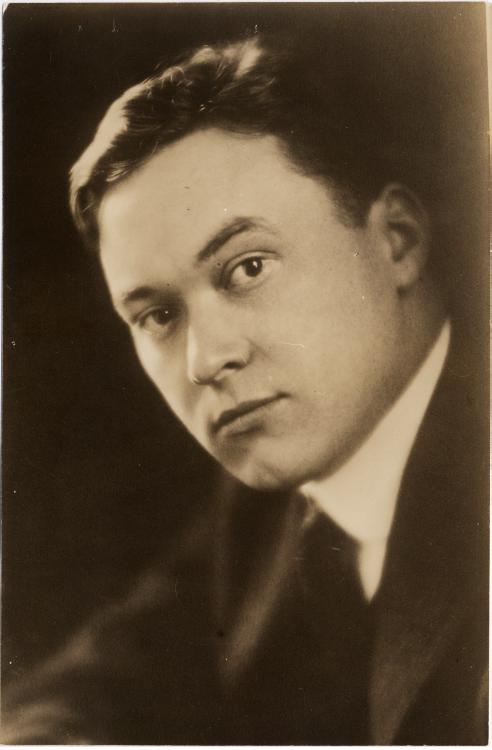
The idea that news is manufactured rather than merely reported entered political theory with Walter Lippmann’s Public Opinion in 1922. Lippmann, then among the most influential American journalists of his generation, argued that the world citizens act upon is too large and too fast to be known directly. What people carry in their heads is a picture assembled from other people’s accounts, and that picture governs their behaviour. The consequence he drew was uncomfortable for democratic theory: if the pictures are supplied by a small professional class, the assumptions of that class shape what the public treats as reality.1
American journalism responded by adopting objectivity as a professional standard between the 1920s and the 1950s, formalised in codes of ethics and the separation of news from comment. Conservatives argue that the standard produced a particular kind of blindness. When a profession recruits from similar universities and similar cities, the shared outlook is invisible to those inside it, and departures from it register as departures from neutrality.
William F. Buckley Jr. founded National Review in November 1955 on exactly that reading, arguing that the outlets that set the American agenda treated liberal premises as background rather than as one position among several, and that the remedy was an openly stated alternative rather than a demand for balance.2 Spiro Agnew’s 1969 attack on network commentators moved the complaint into electoral politics; talk radio after the Federal Communications Commission abandoned the Fairness Doctrine in 1987, cable news after 1996, and online media after 2005 each built businesses on it.
The survey evidence is contested but consistent in direction. The American Journalist studies, begun by John Johnstone in 1971 and carried on at Indiana University from 1982, have recorded Democratic identification above Republican identification in every wave, with the largest single group calling itself independent: by the 2013 survey, 50 per cent independent against 28 per cent Democrat and 7 per cent Republican.3 Separate studies of American faculty have found left-leaning identification across the humanities and social sciences at ratios above seven to one, with wider gaps in some disciplines.
The Conservative Position
Conservatives argue that political bias is best understood as a consequence of homogeneity rather than of intent. Nobody in a newsroom decides to suppress a story. What happens is that a story does not occur to anyone as a story, because everyone present already shares the premise it would test. Thomas Sowell described this as the vision of the anointed: a settled account of society, held by a class credentialled to interpret it, whose evidence is rarely examined because the vision itself supplies the standard of relevance.4
Three practical claims follow. First, selection outweighs falsification. A report can be factually unimpeachable and still misleading if the events chosen for coverage are drawn from one side of a dispute. Second, the framing of a subject decides the argument before it begins: whether a policy is described as a tax cut for working families or a giveaway to the wealthy fixes the reader’s position more effectively than any editorial. Third, expertise launders opinion. Once a contested political judgement is presented as a scientific or professional consensus, disagreement becomes ignorance rather than dissent.
The conservative remedy is institutional rather than regulatory. Because bias comes from uniformity, the cure is competition and viewpoint diversity: multiple outlets with declared positions, endowments and universities that hire across the spectrum, and open disclosure in place of a claim to neutrality nobody can verify. Conservatives are consistently hostile to state remedies here. A government body empowered to certify balance acquires precisely the power over public argument that the complaint was about.
Conservatives extend the analysis beyond media to any institution that produces authoritative accounts of society: statistical agencies, textbook publishers, professional associations, grant committees and the human resources apparatus of large firms.
Differing Positions
The most substantial reply is that conservatives conflate bias with disagreeable accuracy. If reporting on a policy is unfavourable because the policy performs badly, describing that reporting as biased converts an empirical dispute into a procedural one. On this view, treating every unwelcome finding as evidence of institutional tilt is a way of avoiding argument.
A second reply notes that the composition of newsrooms is a poor proxy for output. Editorial standards, legal exposure, ownership and the preferences of the audience shape coverage more than the private voting habits of reporters, and the largest media companies are owned by people with conservative fiscal interests.
A third argues that the diagnosis is stale. In a fragmented market, partisan media on all sides are commercially rational, and audiences self-select into confirming environments. The problem has shifted from a uniform establishment to a set of sealed ideological ecosystems, and viewpoint diversity within any single outlet does not fix it.
References
- Walter Lippmann, Public Opinion (Harcourt, Brace, 1922), Part I.
- William F. Buckley Jr., “Our Mission Statement”, National Review, 19 November 1955.
- Lars Willnat and David H. Weaver, The American Journalist in the Digital Age: Key Findings (Indiana University School of Journalism, 2014).
- Thomas Sowell, The Vision of the Anointed (Basic Books, 1995), ch. 1.
You've read articles over the past year
Will you support conservative education?
A gift of any amount helps keep unique explanatory journalism free for all, and
supports our mission to help everyone understand the world, regardless of their
ability to pay.One-time contributors join our community of givers and will be kept
up to date on the journalism that you help keep free.

Westernization
Westernization is the adoption by non-Western societies of institutions, technologies, laws, manners and habits of mind that originated in Western Europe and its colonial offshoots....
War Crime
A war crime is a serious violation of the law of armed conflict for which an individual bears personal criminal responsibility. The category covers the...

Voter ID Laws
Voter identification laws require a person presenting to vote to prove who they are, usually by producing a government-issued document. The requirement is unremarkable across...

Voter Fraud
Voter fraud is the deliberate corruption of an election by unlawful means: impersonating another voter, casting ballots in the name of the dead or the...