
Print
Cite
Feedback
Share
Pollution is the introduction of harmful contaminants into air, water, or soil. The conservative position treats it as a genuine wrong — a trespass against persons and property — and disputes only the remedy. Where the environmental left reaches for centralised regulation, conservatives reach for property rights, liability, common-law nuisance, and priced incentives, on the grounds that people protect what they own and answer for what they damage.
Stewardship is not a concession to the left but a conservative instinct in its own right. Roger Scruton grounded environmental care in oikophilia, the love of home: settled communities defend their own places, and the worst despoliation in modern history occurred where ownership and local attachment had been abolished.3
Key Takeaways
- Conservatives treat pollution as an uncompensated harm to others, actionable in principle like any other trespass or nuisance.
- Ronald Coase reframed pollution as a problem of transaction costs and reciprocal claims, shifting analysis from prohibition toward bargaining, liability, and clear entitlements.
- The environmental record of the socialist bloc — from Lake Baikal’s effluent to the Aral Sea’s disappearance — is cited as proof that state ownership, not markets, produced history’s worst despoliation.
- Market instruments such as the 1990 US sulphur-dioxide trading programme cut emissions faster and cheaper than command-and-control rules.
History And Context
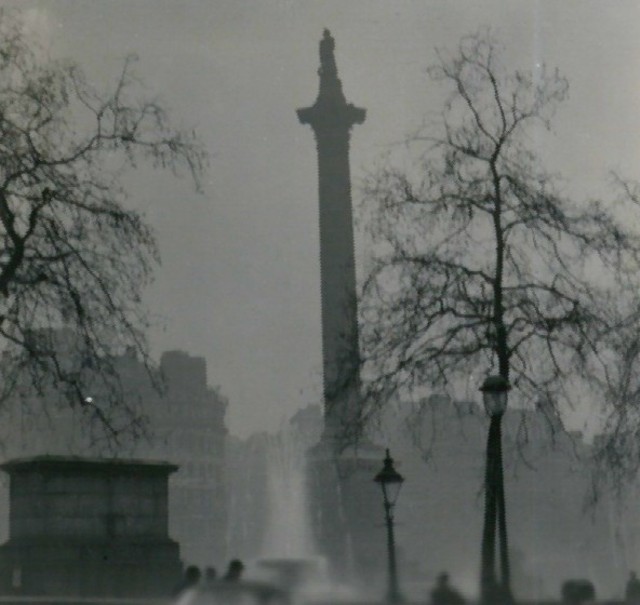
Industrial pollution first became a mass political fact in nineteenth-century Britain, where courts heard smoke and effluent claims under the common law of nuisance and statutes such as the Alkali Act of 1863 followed. The Great Smog of London in December 1952, which killed thousands in under a week, produced the Clean Air Act of 1956 under a Conservative government. In the United States, the environmental decade arrived under Richard Nixon: the National Environmental Policy Act (1970), the Environmental Protection Agency (1970), and the Clean Air Act of 1970.
The theoretical furniture of the modern debate was built in the same era. Ronald Coase’s “The Problem of Social Cost” (1960) showed that pollution disputes involve reciprocal claims on a scarce resource, and that with clear entitlements and low transaction costs parties can bargain toward efficient outcomes — while high transaction costs make the initial assignment of rights decisive.1 Garrett Hardin’s “The Tragedy of the Commons” (1968) explained why unowned resources are overused, an argument conservatives read as a case for extending ownership rather than abolishing it.2 The collapse of the Soviet bloc after 1989 exposed the alternative’s record: Murray Feshbach and Alfred Friendly documented poisoned rivers, dead lakes, and industrial cities with life expectancies years below the Western norm.4
The Conservative Position
The first principle is liability: a firm that dumps its costs on neighbours’ lungs or land is not engaged in free enterprise but in cost-shifting, and conservatives who defend property must defend it against polluters too. The polluter-pays rule is a property rule.
Second, instruments matter. Command-and-control regulation fixes technologies and freezes them; priced instruments fix outcomes and let firms find the cheapest path. The sulphur-dioxide allowance market created by the 1990 Clean Air Act amendments cut acid-rain emissions ahead of schedule at a fraction of projected cost, and stands as the standard conservative exhibit for incentive-based policy.
Third, scale and subsidiarity. Pollution is mostly local — a river basin, an airshed — and is best governed by those who live with it. Distant bureaucracies drift toward rules that entrench incumbent firms able to bear compliance costs while small competitors cannot. Scruton’s argument runs deeper: environmental care lasts when it is rooted in attachment to particular places, inherited and passed on, rather than in abstract global campaigns administered from above.3
Differing Positions
Environmentalists reply that the property-rights framework fails precisely where the stakes are highest. Diffuse, long-lived pollutants — greenhouse gases above all — have millions of emitters, billions of victims, and no forum in which Coasean bargaining could occur; transaction costs are not an imperfection of the case but its essence. They note that measurable air-quality gains in the West followed statutory regulation, not litigation, and that nuisance suits systematically undercompensate harms that are cumulative, delayed, or scientifically contested. Irreversible losses — extinct species, destabilised climate systems — have no market price that could ration them sensibly. On this view the state is not an intruder in environmental protection but the only agent matching the scale of the problem. The conservative rejoinder is that this argument justifies well-designed pricing, such as emissions trading, better than it justifies administrative command, and that the worst environmental outcomes on record belong to states freed from both property and price.
References
- R. H. Coase, “The Problem of Social Cost,” Journal of Law and Economics 3 (1960).
- Garrett Hardin, “The Tragedy of the Commons,” Science 162 (1968).
- Roger Scruton, Green Philosophy: How to Think Seriously About the Planet (Atlantic Books, 2012).
- Murray Feshbach and Alfred Friendly Jr., Ecocide in the USSR: Health and Nature Under Siege (Basic Books, 1992).
You've read articles over the past year
Will you support conservative education?
A gift of any amount helps keep unique explanatory journalism free for all, and
supports our mission to help everyone understand the world, regardless of their
ability to pay.One-time contributors join our community of givers and will be kept
up to date on the journalism that you help keep free.

Westernization
Westernization is the adoption by non-Western societies of institutions, technologies, laws, manners and habits of mind that originated in Western Europe and its colonial offshoots....
War Crime
A war crime is a serious violation of the law of armed conflict for which an individual bears personal criminal responsibility. The category covers the...

Voter ID Laws
Voter identification laws require a person presenting to vote to prove who they are, usually by producing a government-issued document. The requirement is unremarkable across...

Voter Fraud
Voter fraud is the deliberate corruption of an election by unlawful means: impersonating another voter, casting ballots in the name of the dead or the...