
Print
Cite
Feedback
Share
Privacy is the claim of individuals, families and associations to a sphere of life that is not subject to inspection by the state, by employers, or by strangers. Conservatives treat it as a precondition of every other liberty: a man who is watched at all times cannot form independent judgments, keep confidences, or hold property in any meaningful sense.
The conservative case for privacy rests less on a right to be left alone than on the older idea that authority is limited by its proper sphere. The household, the confessional, the doctor’s consulting room and the ballot box each carry protections because the goods they serve collapse under observation.
Key Takeaways
- English law protected the home against arbitrary search long before any written constitution: Entick v Carrington (1765) rejected the general warrant.
- The Fourth Amendment to the United States Constitution, ratified in 1791, made that protection explicit against federal power.
- Samuel Warren and Louis Brandeis published “The Right to Privacy” in the Harvard Law Review in December 1890, arguing for a legal remedy against press intrusion.
- Conservatives distinguish privacy from secrecy: privacy protects the ordinary conduct of life, not the concealment of wrongdoing.
- Commercial data collection now rivals state surveillance in reach, which divides free-market and traditionalist conservatives.
History And Context
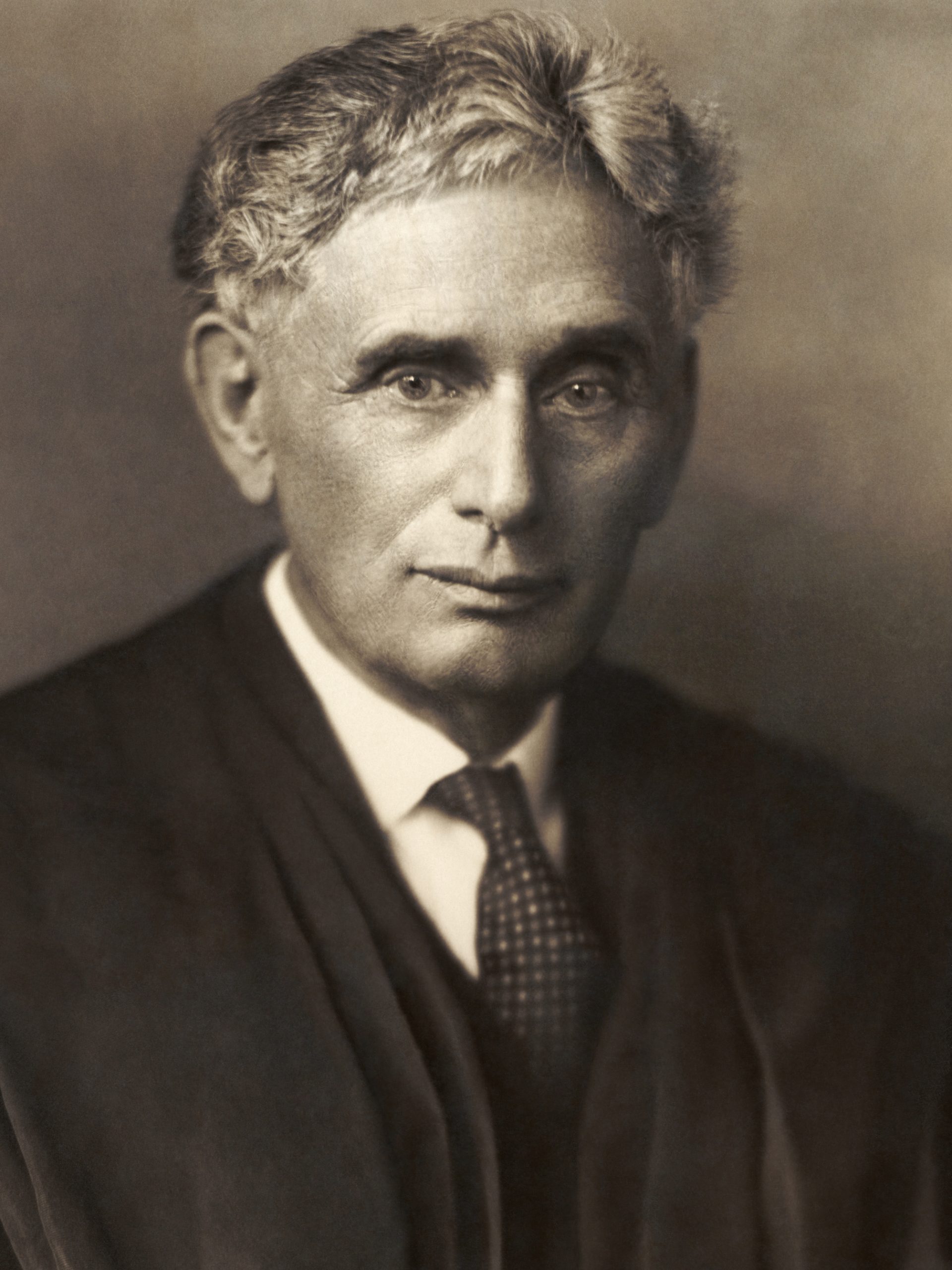
The English tradition treated the dwelling as a limit on royal power. Sir Edward Coke’s report in Semayne’s Case (1604) established that a man’s house is his castle for purposes of defence against unlawful entry, and the principle hardened over the following century. In 1765 the Court of Common Pleas decided Entick v Carrington, holding that the Secretary of State had no lawful authority to issue a general warrant permitting the ransacking of a printer’s papers. The judgment reasoned that if the power existed it would be found in the law books, and it was not.1
William Pitt the Elder gave the doctrine its popular form in a Commons speech, describing the poorest man’s cottage as a place the King of England could not enter without leave. The American framers absorbed both the case and the sentiment. Writs of assistance, the colonial general warrants that let customs officers search at will, were argued against by James Otis in Boston in 1761, and the Fourth Amendment followed thirty years later.
Technology forced the next stage. The portable camera and the mass-circulation newspaper prompted Warren and Brandeis to argue in 1890 that the common law should recognise an interest in being let alone.2 Brandeis returned to the theme as a Supreme Court justice in his dissent in Olmstead v United States (1928), which concerned warrantless wiretapping; the Court adopted his position four decades later in Katz v United States (1967).
The Conservative Position
Conservatives ground privacy in the reality of intermediate institutions. Robert Nisbet argued that the modern state expands by absorbing the functions of family, church and locality, and that a population stripped of these associations stands defenceless before central authority.3 Surveillance accelerates that process, because an institution whose internal life is transparent to the state has already lost its independence. A family that must justify its child-rearing to an inspector is no longer governing itself.
The second argument is about the character of power. Friedrich Hayek’s objection to central planning was epistemic: the planner cannot possess the dispersed local knowledge that individuals act upon.4 Mass data collection is an attempt to overcome that limit by acquiring the knowledge directly. Conservatives are sceptical that it succeeds, and more sceptical of what a state does with the attempt. The records exist permanently, the officials change, and the standards of the present administration bind nobody in the next.
Third, privacy protects the space where character is formed. Conduct performed under observation is performance. Virtue requires the possibility of acting well unseen, and a regime of total visibility replaces conscience with reputation management. This is the point Scruton pressed against the therapeutic and administrative culture: the self that is constantly audited becomes shallow.5
Conservatives accept limits. Warrants, probable cause, judicial oversight and time limits on retention are the traditional instruments. The demand is procedural rather than absolute: the state must show cause to a court before it looks.
Differing Positions
Security-minded critics argue the balance has shifted. Terrorism, organised crime and child exploitation move through encrypted channels, and warrant procedures designed for physical searches fit poorly. On this view, insisting on nineteenth-century thresholds while criminals use twenty-first-century tools protects wrongdoing rather than liberty.
Progressive critics attack from another direction. They argue that conservative privacy talk stops at the state and ignores the private firms holding the largest behavioural datasets ever assembled. A doctrine that resists a search warrant while permitting unlimited commercial collection, they say, protects corporate power rather than the household. The European Union’s General Data Protection Regulation, applicable since May 2018, embodies that answer.
Some libertarians reject the framing entirely, holding that data voluntarily surrendered in exchange for a service raises no rights question at all, and that regulation here entrenches incumbent firms able to absorb compliance costs. Traditionalist conservatives reply that consent extracted through a terms-of-service dialogue nobody reads is a thin thing to rest a liberty on.
References
- Entick v Carrington (1765) 19 St Tr 1029, Court of Common Pleas.
- Samuel D. Warren and Louis D. Brandeis, “The Right to Privacy,” Harvard Law Review 4, no. 5 (1890).
- Robert Nisbet, The Quest for Community (Oxford University Press, 1953).
- Friedrich A. Hayek, “The Use of Knowledge in Society,” American Economic Review 35, no. 4 (1945).
- Roger Scruton, The Meaning of Conservatism (Penguin, 1980).
You've read articles over the past year
Will you support conservative education?
A gift of any amount helps keep unique explanatory journalism free for all, and
supports our mission to help everyone understand the world, regardless of their
ability to pay.One-time contributors join our community of givers and will be kept
up to date on the journalism that you help keep free.

Westernization
Westernization is the adoption by non-Western societies of institutions, technologies, laws, manners and habits of mind that originated in Western Europe and its colonial offshoots....
War Crime
A war crime is a serious violation of the law of armed conflict for which an individual bears personal criminal responsibility. The category covers the...

Voter ID Laws
Voter identification laws require a person presenting to vote to prove who they are, usually by producing a government-issued document. The requirement is unremarkable across...

Voter Fraud
Voter fraud is the deliberate corruption of an election by unlawful means: impersonating another voter, casting ballots in the name of the dead or the...