
Print
Cite
Feedback
Share
Progressivism is the political tradition that treats social arrangements as problems awaiting expert solution. It emerged in the United States and Britain in the 1890s, holding that industrial society had outgrown the institutions inherited from an agrarian past, and that trained administrators working through an enlarged state could correct what markets, families and local custom had failed to correct. Conservatives regard it as the most consequential rival they face, precisely because it is not revolutionary. It does not abolish the constitution; it reinterprets it. It does not seize the economy; it regulates it. And it advances by consensus among the credentialed rather than by force.
Key Takeaways
- The American Progressive Era ran roughly from 1890 to 1920 and produced the Interstate Commerce Commission, the Federal Reserve, the federal income tax and the direct election of senators.
- Its intellectual core is the claim that politics and administration are separable, and that administration belongs to experts insulated from elections.
- Conservatives object on constitutional grounds (delegation without accountability) and on epistemic grounds (planners cannot possess the dispersed knowledge they would need).
- Thomas Sowell’s distinction between the constrained and unconstrained visions maps the disagreement more cleanly than any left-right axis.
- The tradition’s early record includes Prohibition and compulsory sterilisation, which its defenders concede and its critics treat as diagnostic.
History And Context
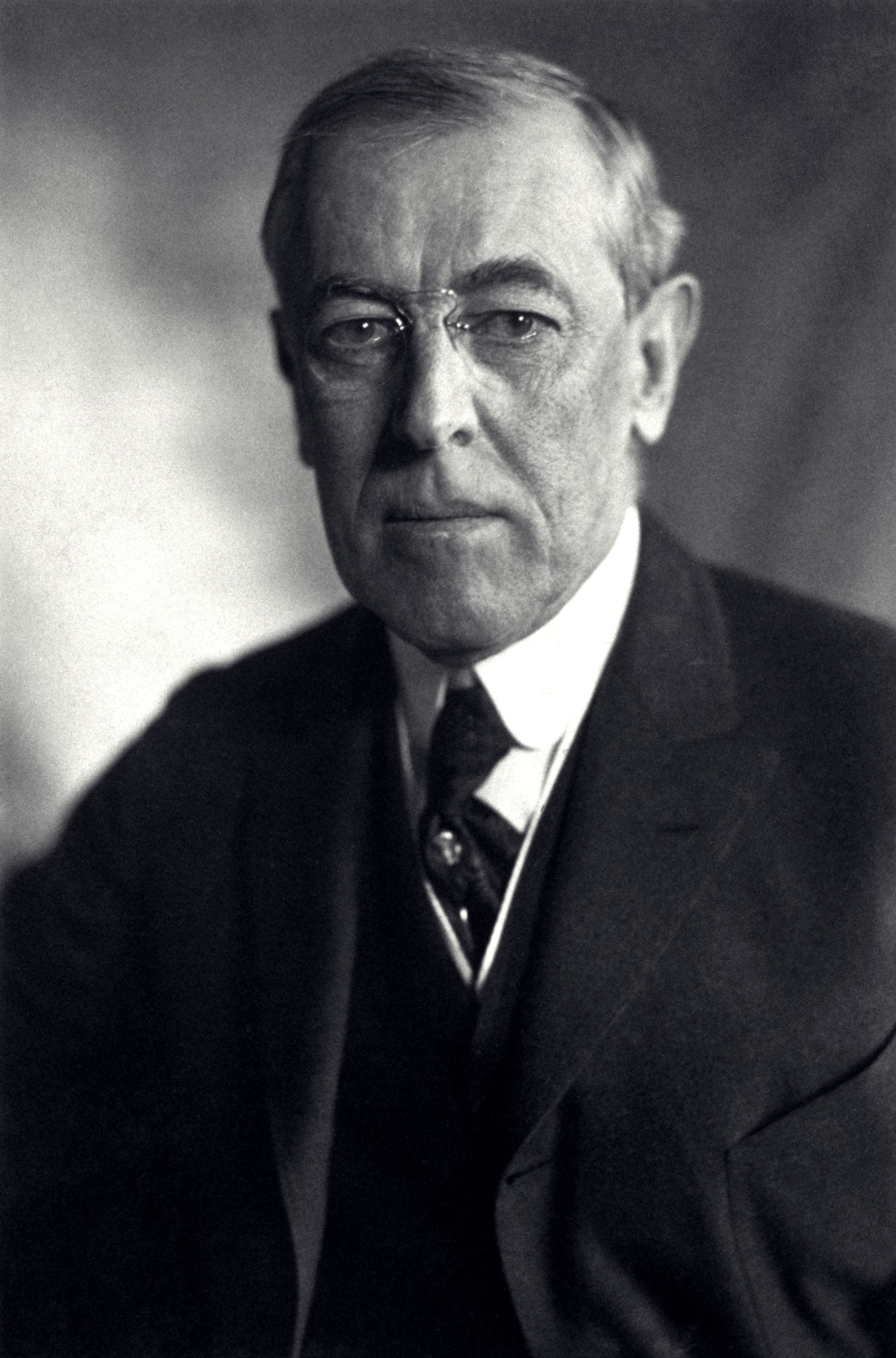
The word arrived with the machinery. Between 1870 and 1900 American railway mileage quadrupled, cities absorbed millions of migrants, and firms grew larger than the state governments meant to supervise them. Reformers concluded that eighteenth-century institutions built to restrain power now merely fragmented it.
Woodrow Wilson made the theoretical case first. His 1887 essay “The Study of Administration” argued that the business of government had become too technical for legislatures, and that a professional administrative apparatus should be shielded from the ordinary friction of politics. Frank Goodnow extended the argument in Politics and Administration in 1900. Herbert Croly gave it a national programme in The Promise of American Life in 1909, proposing Hamiltonian means, meaning a strong central state, for Jeffersonian ends.1
The legislative record followed. The Interstate Commerce Commission was created in 1887, the Federal Reserve System in 1913 and the Federal Trade Commission in 1914, the Sixteenth Amendment authorising an income tax and the Seventeenth Amendment moving senators to popular election were both ratified in 1913. The Eighteenth Amendment was ratified in January 1919 and national prohibition took effect a year later. The same period produced state eugenic sterilisation laws upheld by the Supreme Court in Buck v. Bell in 1927, a decision written by Oliver Wendell Holmes and never formally overruled.
The New Deal after 1933 institutionalised what the Progressive Era had designed, and the Great Society programmes of 1964 and 1965 extended it into health, housing and education. Britain travelled a parallel road through the Liberal reforms of 1906 to 1911 and the Beveridge Report of 1942.
The Conservative Position
The first objection is structural. When Congress writes a statute instructing an agency to regulate in the public interest, it has transferred lawmaking to officials who cannot be voted out. The result is a body of rules with the force of law, made by people accountable to no electorate, and adjudicated in many cases by tribunals housed inside the same agencies that wrote the rules. Conservatives argue that separation of powers was not a procedural nicety but the mechanism by which ambition was made to check ambition, and that the administrative state routes around it.
The second objection is epistemic and belongs to Hayek. His 1945 paper “The Use of Knowledge in Society” argued that the knowledge relevant to economic decisions exists in dispersed, local, often inarticulate form, held by particular people in particular circumstances, and that no central body can assemble it. Prices transmit it; committees cannot.2 The progressive assumption that a sufficiently trained expert can see the whole board rests on a picture of knowledge that does not describe the world.
The third objection is about human nature, and Sowell put it most usefully in A Conflict of Visions in 1987. The unconstrained vision holds that human limitations are artefacts of bad institutions and can be engineered away. The constrained vision holds that self-interest, partiality and error are permanent features to be channelled, not cured.3 Conservatives hold the constrained view, which is why they prefer procedures to plans and trade-offs to solutions.
Oakeshott added a fourth line in his 1947 essay “Rationalism in Politics”. The rationalist in politics distrusts everything he cannot justify from first principles, and so discards practical knowledge that exists only as habit and craft. He mistakes a cookbook for the ability to cook.4 Whole institutions carrying centuries of accumulated adjustment are dismantled because nobody present can articulate their rationale.
Differing Positions
Progressives answer that the conservative case relies on a sentimental picture of the nineteenth century. Before federal regulation, meatpacking plants sold adulterated product, children worked twelve-hour shifts, and railroads set discriminatory rates that ruined farmers with no legal remedy. Local custom did not restrain the Standard Oil Trust; a federal statute did. On this reading, the administrative state exists because private concentrations of power grew larger than any counterweight except national government, and the choice was never between regulation and liberty but between public accountability and private command.
They further argue that the eugenics record, real and disgraceful, was shared across the political spectrum of that period rather than being a peculiar product of progressive method, and that the tradition corrected itself through the same democratic processes conservatives credit. The strongest version of the case is empirical: life expectancy, child mortality, workplace deaths and air quality all improved sharply under the regulatory regimes conservatives criticise, and the burden of proof lies with those who would dismantle them.
References
- Herbert Croly, The Promise of American Life (Macmillan, 1909).
- F. A. Hayek, “The Use of Knowledge in Society,” American Economic Review 35, no. 4 (September 1945): 519-530.
- Thomas Sowell, A Conflict of Visions (William Morrow, 1987).
- Michael Oakeshott, “Rationalism in Politics,” in Rationalism in Politics and Other Essays (Methuen, 1962).
- [1] Darling, John, and Sven Erik Nordenbo. 2007. “Progressivism.” The Blackwell Guide to the Philosophy of Education, November, 288–308. doi:https://doi.org/10.1002/9780470996294.ch17.
- [2] O’Neill, Johnathan, and Joseph Postell. 2013. “Introduction the Conservative Response to Progressivism.” Palgrave Macmillan US EBooks, January, 1–11. doi:https://doi.org/10.1057/9781137300966_1.
- [3] Halpin, John . 2004. “Progressivism in 2004: Transcending the Liberal-Conservative Divide.” Center for American Progress. January 5. https://www.americanprogress.org/article/progressivism-in-2004-transcending-the-liberal-conservative-divide/.
- [4] Srikanth, H. 2003. “Identity Politics and Its Conservative Critics.” Economic and Political Weekly 38 (24): 2425–27. https://www.jstor.org/stable/4413685.
You've read articles over the past year
Will you support conservative education?
A gift of any amount helps keep unique explanatory journalism free for all, and
supports our mission to help everyone understand the world, regardless of their
ability to pay.One-time contributors join our community of givers and will be kept
up to date on the journalism that you help keep free.
Westernization
Westernization is the adoption by non-Western societies of institutions, technologies, laws, manners and habits of mind that originated in Western Europe and its colonial offshoots....
War Crime
A war crime is a serious violation of the law of armed conflict for which an individual bears personal criminal responsibility. The category covers the...

Voter ID Laws
Voter identification laws require a person presenting to vote to prove who they are, usually by producing a government-issued document. The requirement is unremarkable across...

Voter Fraud
Voter fraud is the deliberate corruption of an election by unlawful means: impersonating another voter, casting ballots in the name of the dead or the...