
Print
Cite
Feedback
Share
Prudence is the intellectual virtue by which moral principles are translated into right action in particular circumstances. To be prudent is to know not merely what should be done but what should be done now, here, by this person, given these constraints. The classical definition, set out in Aristotle’s Nicomachean Ethics and refined in Aquinas, treats prudence as the integrative virtue without which the other virtues do not function: courage without prudence becomes recklessness; justice without prudence becomes cruelty; temperance without prudence becomes paralysis.3
The conservative use of the word is narrower than its everyday English sense. In ordinary speech, “prudence” tends to mean caution or risk-aversion. In the tradition that runs from Aristotle through Burke to Kirk, prudence is something more demanding: a disposition cultivated by experience, rooted in attention to circumstance, and oriented to the good of the political community as it actually exists rather than as it might be redesigned. It is closer to seamanship than to actuarial science.
Key Takeaways
- The practical wisdom by which one discerns the right action in particular circumstances, where general rules do not by themselves decide.
- Not caution but a craft of judgement, rooted in Aristotle’s phronesis3 and named by Burke “the first of all virtues.”1
- The conservative reply to rationalist politics (deduces action from principle) and to decisionism (acts without moral horizon).
History
The doctrine of prudence is older than the conservative tradition that inherits it. Aristotle treated phronesis as the master virtue of the practical intellect, the faculty by which the person of good character deliberates well about what conduces to the human good in particular cases.3 Aquinas, in the Summa Theologiae, integrated this Aristotelian account with Christian moral theology, ranking prudence first among the cardinal virtues because it directs the others.4 Both treatments rejected the idea that ethics could be reduced to a set of rules from which actions could be deduced. The prudent person possesses something that no rulebook can supply: a trained perception of what is required by the case at hand.
Edmund Burke inherited this tradition and applied it to politics. In Reflections on the Revolution in France (1790), he writes that “the lines of morality are not like the ideal lines of mathematics. They are broad and deep as well as long. They admit of exceptions; they demand modifications. These exceptions and modifications are not made by the process of logic, but by the rules of prudence.”1 Burke’s argument against the French revolutionaries was not that their principles were wholly wrong but that they had detached principle from circumstance, treating politics as a branch of geometry. The result was a regime that, in his judgement, would consume itself.
Russell Kirk, writing 163 years later in The Conservative Mind (1953), placed prudence among his six canons of conservative thought, observing that “any public measure ought to be judged by its probable long-run consequences, not merely by temporary advantage or popularity.”2 Kirk’s prudence is recognisably Burke’s: a refusal to mistake the present mood for the permanent good.
Michael Oakeshott’s “Rationalism in Politics” (1947) developed a parallel critique. The rationalist, Oakeshott argued, treats political knowledge as a body of explicit propositions that can be applied by anyone who has read the manual. He misses the practical knowledge that cannot be written down, the inherited skill of the craftsman, the cook, the politician.5 What Oakeshott calls “practical knowledge” is what Aristotle called phronesis and what Burke called prudence.
The Conservative Response
The conservative response to political questions is, characteristically, a prudential one. Where the liberal rationalist asks what principles the situation ought to be made to conform to, and the radical asks what the situation could be transformed into, the conservative asks what the situation actually is, what goods are presently realised in it, what risks attach to disturbing them, and what action is therefore fitting.
Three commitments follow.
First, circumstance is morally weighty. Burke’s claim that “circumstances (which with some gentlemen pass for nothing) give in reality to every political principle its distinguishing colour and discriminating effect”1 is not a relativist concession. It is the recognition that justice is owed to particular persons in particular places, not to humanity in the abstract.
Second, inherited form has presumptive authority. The prudent statesman treats the existing constitution, customs, and institutions of his society not as obstacles to reform but as the accumulated judgement of many generations under conditions he cannot fully reconstruct. The presumption is rebuttable, but it is a presumption.
Third, action under uncertainty is the standard case, not the exception. Politics is not a science with universal laws; it is a practice in which the agent must act before all the evidence is in and revise as consequences unfold. Prudence is the virtue proper to this condition. Roger Scruton, writing in How to Be a Conservative (2014), put the point sharply: “The first principle of conservatism is that the world we have inherited is not, on the whole, a world we have any right to destroy.”6
Differing Responses
Not all political traditions accord prudence the same place. Three contrasts clarify the conservative position.
The Kantian liberal tradition treats prudence with suspicion, because prudential reasoning is consequentialist and thus, on Kant’s view, heteronomous to the moral law. For Kant, the moral worth of an action lies in its conformity to a universalisable principle, not in the agent’s judgement of consequences.7 This produces a politics of rights formally specified in advance, a posture sometimes admirable but, conservatives argue, prone to brittleness when circumstances change.
The Marxist and revolutionary traditions treat prudence as a euphemism for cowardice or class interest. To insist on attention to circumstance, on the weight of inherited form, on caution about consequences, is on this view to defend the status quo. The conservative replies that this conflates two different things: prudence as a virtue and prudential rhetoric as a tactic. Burke himself was not a defender of every status quo; he supported the American colonists, opposed Warren Hastings’s conduct in India, and worked to relieve Catholic disabilities in Ireland.8 What he refused was the idea that the demolition of an existing political order could be justified by the geometric purity of the principles invoked.
The libertarian tradition, particularly in its Rothbardian form, often shares the rationalist’s confidence that politics can be deduced from a small set of axioms about property and consent. Conservatives sympathetic to free markets nonetheless distinguish themselves from this position by insisting that economic order, like political order, depends on prudential judgements about institutional design that no axiom resolves.
Authorial Judgement
The deepest reason prudence sits at the centre of conservative thought is that conservatism rejects the modern hope that politics can be made into a science. If political order depended only on the correct principles, correctly applied, then the prudent statesman would be a hindrance to progress, an obstacle to be overcome by the bureaucrat or the technocrat with a better algorithm. But political order does not work this way. It depends on tacit knowledge, on customary practice, on the moral imagination of citizens, on a thousand judgements made daily by people in offices for which no degree fully prepares them. To remove prudence from politics is not to elevate politics to a higher rationality; it is to deprive it of the only rationality proper to it.
This is also why prudence resists definition by example alone. Each case is, by its nature, particular. What we can say is what the prudent person possesses: a settled character, an attentive perception of circumstance, a willingness to act before certainty arrives, and a memory long enough to recognise that present urgencies are rarely as novel as they appear. These are habits, not propositions. They are formed by experience, by good company, and by the study of those who have acted well before. The conservative recommendation is not that we should invent prudence but that we should preserve the institutions and practices that produce it.
References
- Edmund Burke, Reflections on the Revolution in France (1790), ed. L. G. Mitchell (Oxford: Oxford University Press, 1993), 153, 90. ↩
- Russell Kirk, The Conservative Mind: From Burke to Eliot, 7th rev. ed. (Washington, DC: Regnery, 2001 [1953]), 8. ↩
- Aristotle, Nicomachean Ethics, trans. Terence Irwin, 2nd ed. (Indianapolis: Hackett, 1999), bk. VI, ch. 5–8 (1140a24–1142a30). ↩
- Thomas Aquinas, Summa Theologiae, II-II, q. 47, a. 1–2. ↩
- Michael Oakeshott, “Rationalism in Politics” (1947), in Rationalism in Politics and Other Essays, new and expanded ed. (Indianapolis: Liberty Fund, 1991), 5–42. ↩
- Roger Scruton, How to Be a Conservative (London: Bloomsbury, 2014), vii. ↩
- Immanuel Kant, Groundwork of the Metaphysics of Morals (1785), trans. Mary Gregor (Cambridge: Cambridge University Press, 1997), 4:416–4:419. ↩
- Conor Cruise O’Brien, The Great Melody: A Thematic Biography of Edmund Burke (Chicago: University of Chicago Press, 1992), pt. II–IV. ↩
You've read articles over the past year
Will you support conservative education?
A gift of any amount helps keep unique explanatory journalism free for all, and
supports our mission to help everyone understand the world, regardless of their
ability to pay.One-time contributors join our community of givers and will be kept
up to date on the journalism that you help keep free.
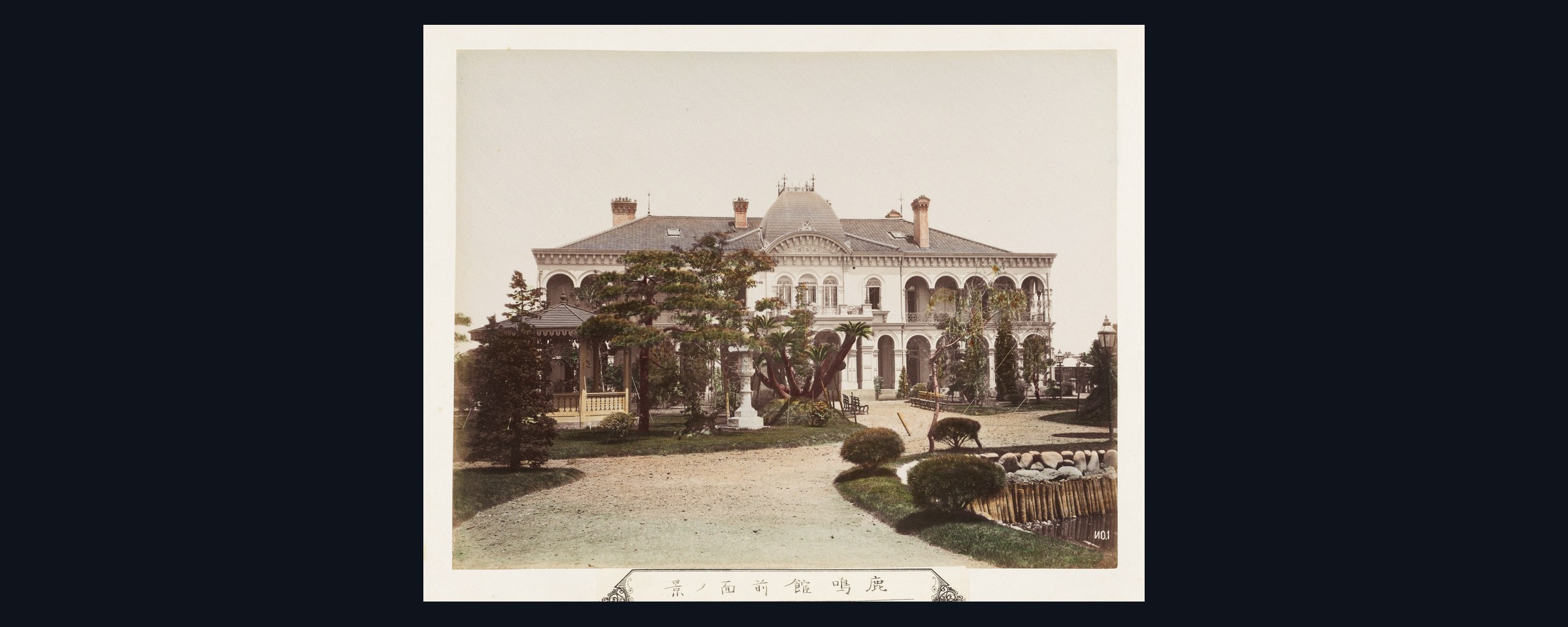
Westernization
Westernization is the adoption by non-Western societies of institutions, technologies, laws, manners and habits of mind that originated in Western Europe and its colonial offshoots....
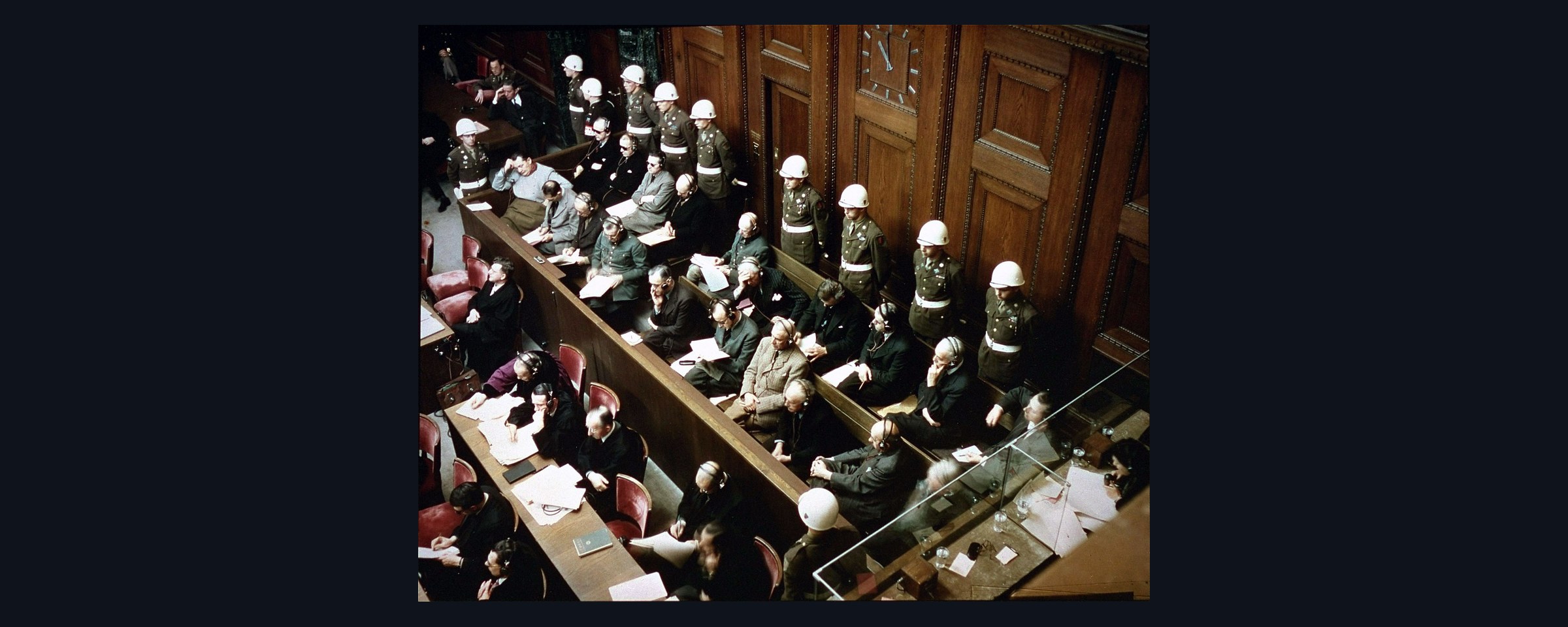
War Crime
A war crime is a serious violation of the law of armed conflict for which an individual bears personal criminal responsibility. The category covers the...

Voter ID Laws
Voter identification laws require a person presenting to vote to prove who they are, usually by producing a government-issued document. The requirement is unremarkable across...

Voter Fraud
Voter fraud is the deliberate corruption of an election by unlawful means: impersonating another voter, casting ballots in the name of the dead or the...