
Print
Cite
Feedback
Share
Public transportation is the movement of people by shared vehicles running on fixed routes and published schedules, paid for through some mixture of fares, local taxation and higher-level subsidy. Conservatives approach it as a question of stewardship rather than ideology: who benefits, who pays, who decides, and whether the service delivered matches the money spent.
The dispute on the right is not whether buses and trains should exist. It is whether transit agencies behave like providers of a service accountable to riders and taxpayers, or like protected monopolies whose costs rise faster than their ridership. Where a system moves large numbers of people at defensible cost — the London Underground, the New York subway, a dense bus grid in a compact city — the conservative case for it is straightforward. Where a light-rail line is built through low-density suburbs on federal money because the money is available, the case collapses.
Key Takeaways
- Shared transport predates the state’s involvement: Blaise Pascal’s carrosses à cinq sols ran in Paris from 1662, and George Shillibeer’s horse omnibus began in London in 1829.
- Most major systems began as private ventures and were taken into public ownership in the twentieth century: London’s in 1933, New York’s with the city purchase of the IRT and BMT in June 1940.
- Conservatives judge transit by cost per rider, farebox recovery and service reliability, not by capital spending announced.
- Order on the vehicle is a precondition for ridership; a system unsafe at night loses the discretionary riders it needs.
- The strongest conservative objection is to capital projects chosen for political visibility over operating budgets that actually move people.
History And Context
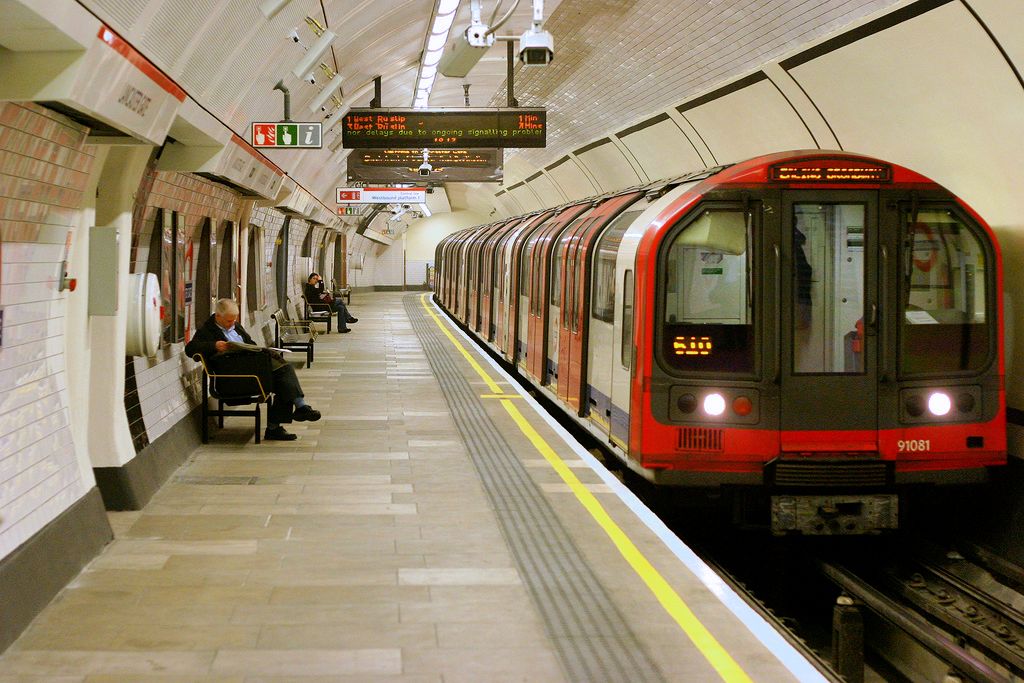
Scheduled shared transport began as private enterprise. Pascal’s five-sol carriages ran in Paris from March 1662 under a royal privilege and survived into the 1670s. George Shillibeer put a horse-drawn omnibus on the Paddington to Bank route in London on 4 July 1829, charging a shilling. The world’s first underground railway, the Metropolitan, opened between Paddington and Farringdon on 10 January 1863, built by a private company. New York’s first subway line, run by the Interborough Rapid Transit Company, opened on 27 October 1904.
Public ownership arrived with the economics of the streetcar era turning against operators. Fares were frozen by franchise agreements while wages and materials rose; the automobile took the profitable riders. The London Passenger Transport Board absorbed the capital’s operators in 1933. New York, which had built and run the Independent Subway System itself since 1932, bought the IRT and BMT in June 1940 and placed operations under the New York City Transit Authority in 1953. In the United States the pattern was completed by the Urban Mass Transportation Act of 1964, which put federal capital money behind municipal takeovers of failing private carriers.1
That legislative history matters to the conservative argument, because it set the incentive structure still in force: federal and provincial money flows readily to construction, less readily to operations. Agencies that want money build things. Agencies that merely run buses well have little to announce.
The Conservative Position
Conservatives begin from the observation that transit is a local good with local knowledge attached to it. A bus network is designed well by people who know which streets fill at seven in the morning. Federalism arguments apply directly: decisions about routes and frequencies belong to the level of government closest to the riders, and money raised locally is spent with more care than money that arrives from a capital city.
The fiscal argument is about operating cost per passenger. Capital projects are financed by debt and celebrated at ribbon-cuttings; the liability appears decades later as deferred maintenance and pension obligations. Conservatives point to the rail projects that opened over budget and under-ridden, and to the bus service cut to pay for them. The test is whether a marginal dollar buys more passenger trips in a bus lane, a signal upgrade, or a new alignment through a district with four hundred people per square kilometre.
The order argument has become central. Transit is a shared civic space, and its usability rests on enforced norms — fare payment, no open drug use, no aggressive behaviour. When enforcement lapses, the riders with alternatives leave first, revenue falls, service is cut, and the system settles into a lower equilibrium serving those with no choice. Conservatives treat fare enforcement and policing as protection of a public asset rather than as punishment of the poor.2
There is also a positive conservative case, made most consistently by traditionalists rather than libertarians. Walkable towns with real transit sustain the street life, small commerce and civic association that suburban arterial development erases. Roger Scruton argued that settlement patterns are part of a culture’s inheritance and that planning decisions carry moral weight rather than being merely technical.3 On that view, defending the tram in a historic town centre is a conservative act.
Differing Positions
Progressive advocates argue that transit is infrastructure in the same sense as roads, and that demanding farebox recovery from buses while funding motorways from general revenue applies a standard to one mode and not the other. Road users do not cover the full cost of the network they use once land, policing and externalities are counted; on that accounting, transit subsidy corrects a distortion rather than creating one.
A second argument is distributive. Transit carries people who cannot drive — the young, the old, the disabled, the poor — and access to work is the mechanism by which they stop needing other transfers. Cutting service to hit a cost-recovery target shifts costs onto welfare budgets and onto the employers who cannot fill shifts.
Libertarians press from the other side, arguing that public monopoly is the problem and that deregulated private operators, jitneys and demand-responsive services would serve riders better. Britain’s bus deregulation outside London under the Transport Act 1985 is the standing test case, and the results — lower costs, falling ridership, unstable networks — are read as vindication by both camps.4
References
- Urban Mass Transportation Act of 1964, Pub. L. 88-365, 78 Stat. 302.
- George L. Kelling and Catherine M. Coles, Fixing Broken Windows (Free Press, 1996).
- Roger Scruton, How to Think Seriously About the Planet: The Case for an Environmental Conservatism (Oxford University Press, 2012).
- Transport Act 1985 (c. 67), United Kingdom.
You've read articles over the past year
Will you support conservative education?
A gift of any amount helps keep unique explanatory journalism free for all, and
supports our mission to help everyone understand the world, regardless of their
ability to pay.One-time contributors join our community of givers and will be kept
up to date on the journalism that you help keep free.

Westernization
Westernization is the adoption by non-Western societies of institutions, technologies, laws, manners and habits of mind that originated in Western Europe and its colonial offshoots....
War Crime
A war crime is a serious violation of the law of armed conflict for which an individual bears personal criminal responsibility. The category covers the...

Voter ID Laws
Voter identification laws require a person presenting to vote to prove who they are, usually by producing a government-issued document. The requirement is unremarkable across...

Voter Fraud
Voter fraud is the deliberate corruption of an election by unlawful means: impersonating another voter, casting ballots in the name of the dead or the...