
Print
Cite
Feedback
Share
Relativism is the claim that truth, or moral judgement, or both, hold only inside a framework, and that no framework can be judged from outside. What counts as knowledge is relative to a culture; what counts as right is relative to a community, an era or a person. Stated carefully it is a serious philosophical position with a long pedigree. Stated as it usually reaches undergraduates and editorial pages, it collapses into the assertion that nobody is entitled to say anyone else is wrong.
Conservatives treat relativism as the solvent that dissolves the inheritance they exist to defend. If moral judgement is merely local preference, then the accumulated custom, law and moral practice of a civilisation has no more standing than a fashion, and the case for conserving anything disappears.
Key Takeaways
- Protagoras stated the position in the fifth century BC; Plato answered it in the Theaetetus with the self-refutation argument still used today.
- Franz Boas and his students made cultural relativism the working method of twentieth-century anthropology, and Ruth Benedict popularised it in Patterns of Culture in 1934.
- The conservative objection is not that relativism is offensive but that it is incoherent: the claim that all truth is relative is itself offered as non-relative.
- C. S. Lewis argued in 1943 that every culture recognises a common core of moral judgement, which he called the Tao, and that debunking it leaves no ground on which to stand.
- Descriptive relativism, the observation that moralities differ, does not entail normative relativism, the claim that none is better.
History And Context
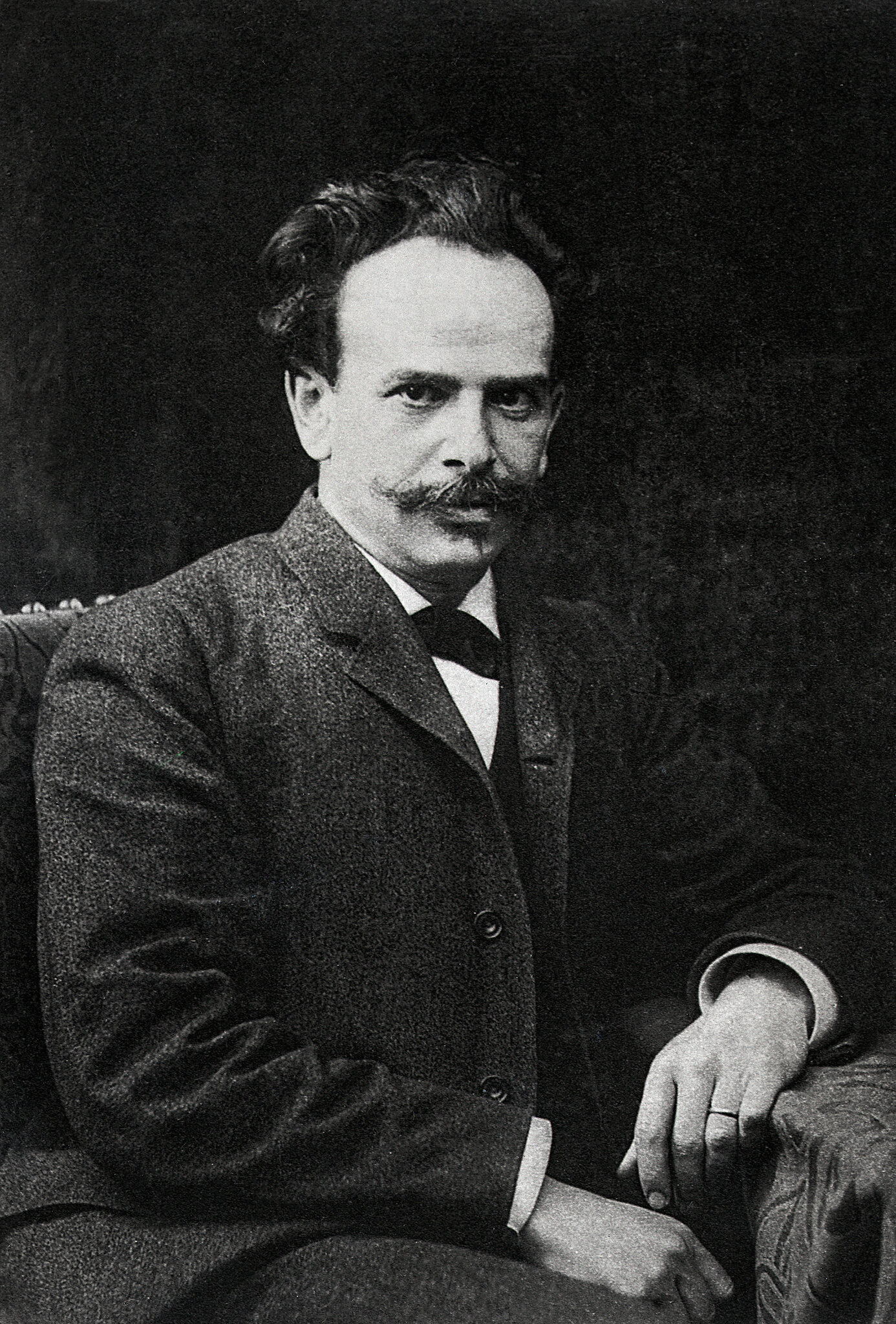
Protagoras of Abdera declared that man is the measure of all things, and Plato spent much of the Theaetetus, written around 369 BC, dismantling it. The counter-argument has not improved since: if every belief is true for the believer, then the belief that relativism is false is true for those who hold it, and the doctrine defeats itself.1
Modern relativism has anthropological rather than philosophical roots. Montaigne’s essay on cannibals in 1580 set the pattern of using a distant society to embarrass European certainty. Herder in the 1770s argued that each nation possesses its own centre of gravity and cannot be ranked on a single scale of progress. The decisive turn came with Franz Boas at Columbia from the 1890s, who insisted that a culture’s practices be understood in their own terms rather than as failed approximations of European ones. Boas developed the method partly as a weapon against the scientific racism of his day, which ranked peoples on a fixed ladder. His students carried it into the mainstream, and Ruth Benedict’s Patterns of Culture in 1934 sold in the hundreds of thousands.2
The postwar decades pushed further. Nietzsche’s genealogical assault on moral certainty entered the anglophone academy through French readings, and Jean-François Lyotard’s The Postmodern Condition in 1979 defined the postmodern as incredulity toward metanarratives. By the 1980s the position had moved from method to creed, and Allan Bloom opened The Closing of the American Mind in 1987 by reporting that almost every student arriving at university already believed truth to be relative and treated the belief as a moral achievement rather than a conclusion.
The Conservative Position
The first line of attack is logical. Universal relativism is self-refuting, and restricted relativism, applied to morals but not to physics, has to explain what makes the two domains different without smuggling in the objective standard it denies.
The second line is anthropological, and it is Lewis’s. In The Abolition of Man, delivered as the Riddell Memorial Lectures at King’s College, Newcastle, then part of the University of Durham, in February 1943, Lewis appended a catalogue of moral precepts drawn from Babylonian, Egyptian, Norse, Hindu, Chinese, Greek and Christian sources, showing convergence on duties of good faith, care for the weak, honesty and obligation to kin. He called this common core the Tao and argued that it is not one value system among others but the source from which all judgements of value are made.3 Those who stand outside it to debunk it have removed the floor they were standing on, and what replaces reason is appetite dressed in institutional authority.
The third line is MacIntyre’s. After Virtue, published in 1981, argues that modern moral language is the wreckage of an older teleological scheme. Once the idea of a human end was abandoned, moral terms lost their reference and survived as expressions of preference. MacIntyre calls the result emotivism: moral disagreement becomes interminable because the disputants have no shared standard to appeal to, and argument gives way to manipulation.4 Contemporary public debate, with its shouting and its stalemates, is the predicted symptom.
Scruton added the political consequence. A society that cannot say why its own arrangements are worth keeping will not defend them, and repudiation of inherited culture leaves a vacuum that harder doctrines fill.
Differing Positions
The defenders of relativism make three replies worth taking seriously.
First, the descriptive and normative claims are distinct. Boas documented that moralities differ; he did not conclude that all are equally good, and he opposed Nazi racial theory with considerable courage. Treating the two claims as one is a straw man.
Second, relativism has historically been an instrument of restraint rather than licence. The doctrine that European practice sets the standard for humanity supplied the moral cover for colonial administration and for the residential school systems of Canada and Australia. Cultural relativism was developed in part to strip that cover away.
Third, Bernard Williams proposed a limited version he called the relativism of distance: moral appraisal of societies remote from us in time makes little practical sense because no real confrontation of options exists, while judgement of contemporaries with whom we share a world remains fully available. That position preserves moral seriousness without demanding a view from nowhere, and it is harder to refute than the undergraduate version conservatives usually attack.
References
- Plato, Theaetetus, 170a-171d.
- Ruth Benedict, Patterns of Culture (Houghton Mifflin, 1934).
- C. S. Lewis, The Abolition of Man (Oxford University Press, 1943), Appendix, “Illustrations of the Tao.”
- Alasdair MacIntyre, After Virtue (University of Notre Dame Press, 1981), ch. 2-3.
- [1] Kelsen, Hans. 1948. “Absolutism and Relativism in Philosophy and Politics.” American Political Science Review 42 (5): 906–14. doi:https://doi.org/10.2307/1950135.
- [2] Baghramian, Maria. 2023. “‘The Politics of Relativism’: An Essay by Maria Baghramian (Keywords: Truth, Rationality; Ideology).” The Philosopher. March 5. https://www.thephilosopher1923.org/post/the-politics-of-relativism.
You've read articles over the past year
Will you support conservative education?
A gift of any amount helps keep unique explanatory journalism free for all, and
supports our mission to help everyone understand the world, regardless of their
ability to pay.One-time contributors join our community of givers and will be kept
up to date on the journalism that you help keep free.

Westernization
Westernization is the adoption by non-Western societies of institutions, technologies, laws, manners and habits of mind that originated in Western Europe and its colonial offshoots....
War Crime
A war crime is a serious violation of the law of armed conflict for which an individual bears personal criminal responsibility. The category covers the...

Voter ID Laws
Voter identification laws require a person presenting to vote to prove who they are, usually by producing a government-issued document. The requirement is unremarkable across...

Voter Fraud
Voter fraud is the deliberate corruption of an election by unlawful means: impersonating another voter, casting ballots in the name of the dead or the...