
Print
Cite
Feedback
Share
The right to property is the claim of a person to acquire, hold, use and dispose of things, and to be secure against their seizure except by law and with compensation. Conservatives treat it as the foundation of every other liberty, on the practical ground that a man who owns nothing has no base from which to resist the power that feeds him. Property is not one interest among many that the state balances; it is the condition of there being a private sphere at all.
The Anglo-American tradition has never treated the right as absolute. It has treated it as prior to the state and limited by law: prior, in that ownership precedes the legislature that regulates it; limited, in that taxation, nuisance, planning and expropriation for public use are all recognised.
Key Takeaways
- Locke’s argument from labour supplied the classical justification: a man owns his person, and mixing his labour with unowned matter makes it his.
- The Fifth Amendment of 1791 permits taking for public use with just compensation, which is the standard Anglo-American formula.
- Conservatives argue that secure title, not aid, is what converts poor households into productive ones.
- Property rights and civil liberty are historically linked: censorship and confiscation have travelled together.
- Canada is the outlier among common-law democracies: property was deliberately left out of the 1982 Charter.
History And Context
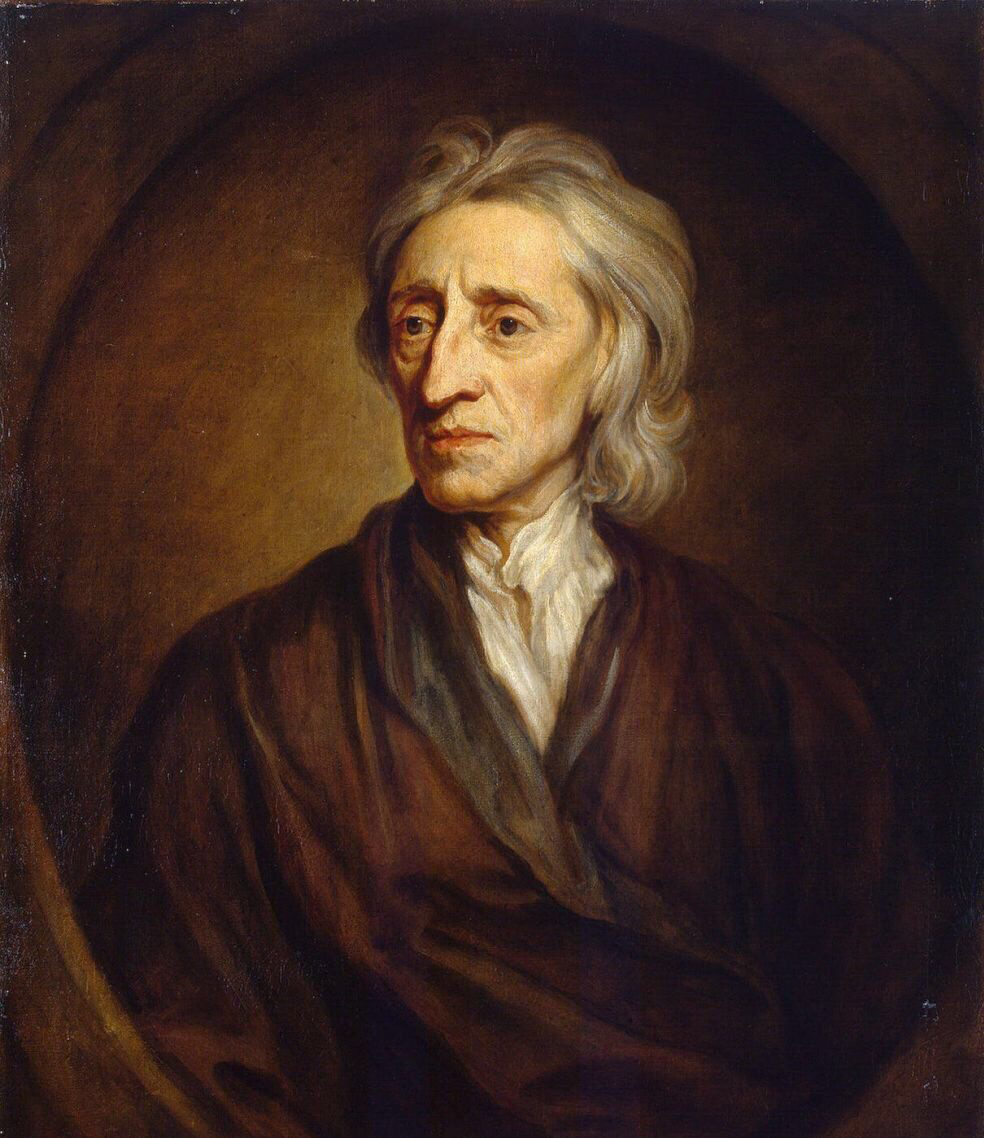
Roman law distinguished dominium, full ownership, from lesser interests, and supplied the vocabulary that European jurisprudence still uses. Magna Carta, sealed at Runnymede in June 1215, bound King John not to take corn or other chattels without immediate payment and not to disseise a free man except by lawful judgement of his peers or the law of the land. The document was a settlement about property before it was anything else, and the barons who forced it were protecting estates.
John Locke’s Second Treatise of Government, published in 1689, gave the right its modern philosophical form. Every man has a property in his own person, Locke argued; the labour of his body is his own; and when he removes something from the common stock and works on it, he joins his labour to it and makes it his property, subject to leaving enough and as good for others.1 The argument grounds ownership in something prior to government, which is exactly why the state’s title to redistribute is bounded.
William Blackstone described the right of property in the second book of his Commentaries on the Laws of England, published between 1765 and 1769, in terms of a sole and despotic dominion over external things, while cataloguing at length the ways English law in fact qualified it.2 The French Declaration of the Rights of Man and of the Citizen of 26 August 1789 called property an inviolable and sacred right in its seventeenth article, permitting deprivation only where public necessity, legally established, plainly required it and on condition of prior compensation. The Fifth Amendment to the United States Constitution, ratified in 1791, adopted the same structure.
Two later moments matter. The Supreme Court’s decision in Kelo v. City of New London on 23 June 2005 upheld the transfer of private homes to a private developer as a public use because of the projected economic benefit, and produced a legislative backlash in more than forty states. And in Canada, property rights were omitted from the Canadian Charter of Rights and Freedoms in 1982, a deliberate choice that leaves expropriation governed by ordinary statute and the common-law presumption of compensation.
The Conservative Position
Conservatives make four arguments.
Property is the material basis of independence. A household that owns its home, its tools or its shop can dissent from prevailing opinion at a cost it can bear. Where the state is landlord, employer and banker, dissent becomes a question of who holds the lease. This is a Burkean point about the diffusion of power, not a defence of any particular distribution.
Ownership produces stewardship. Assets held in common and used by all are maintained by none, a pattern documented from open-field agriculture to fisheries collapse. Ownership attaches the consequences of neglect to the person who can prevent it.
Secure title creates capital. Hernando de Soto’s The Mystery of Capital, published in 2000, argued from field surveys in Peru, Egypt, the Philippines and Haiti that the poor of the developing world hold enormous assets which cannot be pledged, sold or inherited because title is informal, and that formalising title, rather than transferring wealth, is what turns those holdings into capital.3
Property is the practical test of the rule of law. What a government does when it wants land it has not bought reveals whether it regards law as a limit or an instrument. Conservatives accordingly defend compensation requirements, narrow readings of public use, and procedural protection against regulatory taking, while accepting zoning, taxation and nuisance law as legitimate.
Differing Positions
The counter-tradition is old and serious. Jean-Jacques Rousseau opened the second part of his 1755 Discourse on the Origin of Inequality by tracing civil society to the first man who enclosed a plot and was believed when he called it his own, treating property as the origin of inequality rather than of liberty. Pierre-Joseph Proudhon’s Qu’est-ce que la propriété? of 1840 answered its own title with the charge that property is theft, distinguishing the possession a man works from the rent-yielding title he does not.4
The modern egalitarian version is less sweeping. It accepts private ownership and argues that the distribution of holdings is a proper subject of justice, since existing titles descend from conquest, enclosure and slavery as much as from labour. On this view redistributive taxation is not a taking from rightful owners but a correction of an inheritance that was never justly acquired. A parallel European doctrine, expressed in Article 14 of the German Basic Law of 1949, holds that property entails obligation and that its use shall serve the public good.
The conservative answer is not that existing distributions are just. It is that a general power to revise them, vested in whoever holds office this decade, destroys the security that makes property worth having, and that the remedy for historic wrongs lies in specific claims tried at law rather than in a standing licence to redistribute.
References
- John Locke, Two Treatises of Government (Awnsham Churchill, 1689), second treatise, chapter V.
- William Blackstone, Commentaries on the Laws of England, book II (Clarendon Press, 1766).
- Hernando de Soto, The Mystery of Capital: Why Capitalism Triumphs in the West and Fails Everywhere Else (Basic Books, 2000).
- Pierre-Joseph Proudhon, Qu’est-ce que la propriété? (J.-F. Brocard, 1840).
You've read articles over the past year
Will you support conservative education?
A gift of any amount helps keep unique explanatory journalism free for all, and
supports our mission to help everyone understand the world, regardless of their
ability to pay.One-time contributors join our community of givers and will be kept
up to date on the journalism that you help keep free.
Westernization
Westernization is the adoption by non-Western societies of institutions, technologies, laws, manners and habits of mind that originated in Western Europe and its colonial offshoots....
War Crime
A war crime is a serious violation of the law of armed conflict for which an individual bears personal criminal responsibility. The category covers the...

Voter ID Laws
Voter identification laws require a person presenting to vote to prove who they are, usually by producing a government-issued document. The requirement is unremarkable across...

Voter Fraud
Voter fraud is the deliberate corruption of an election by unlawful means: impersonating another voter, casting ballots in the name of the dead or the...