
Print
Cite
Feedback
Share
The right to protest is a composite: the freedom to speak, the freedom to assemble peaceably, and the ancient right to petition for redress of grievances. It is not a separate liberty with its own logic but the public exercise of liberties the common law already protected in private. Conservatives defend it on that basis and draw the boundary in the same place the tradition always drew it: at the point where persuasion becomes coercion, and assembly becomes obstruction of other people’s rights.
The distinction matters because the two halves of the argument are routinely collapsed. A government that treats disruption as speech will not protect either; a government that treats speech as disruption will protect neither.
Key Takeaways
- The right descends from the petitioning tradition, secured in the English Bill of Rights of 1689 and the First Amendment of 1791.
- Conservatives protect the assembly and the message, not the blockade, the occupation or the destruction of property.
- Public order law has always regulated time, place and manner; this is a limit on method, not on content.
- Content-based policing, where the same conduct is tolerated for one cause and prosecuted for another, is the real threat to the right.
- Civil disobedience in the Thoreau–King tradition accepts the penalty; that acceptance is what distinguishes it from lawlessness.
History And Context
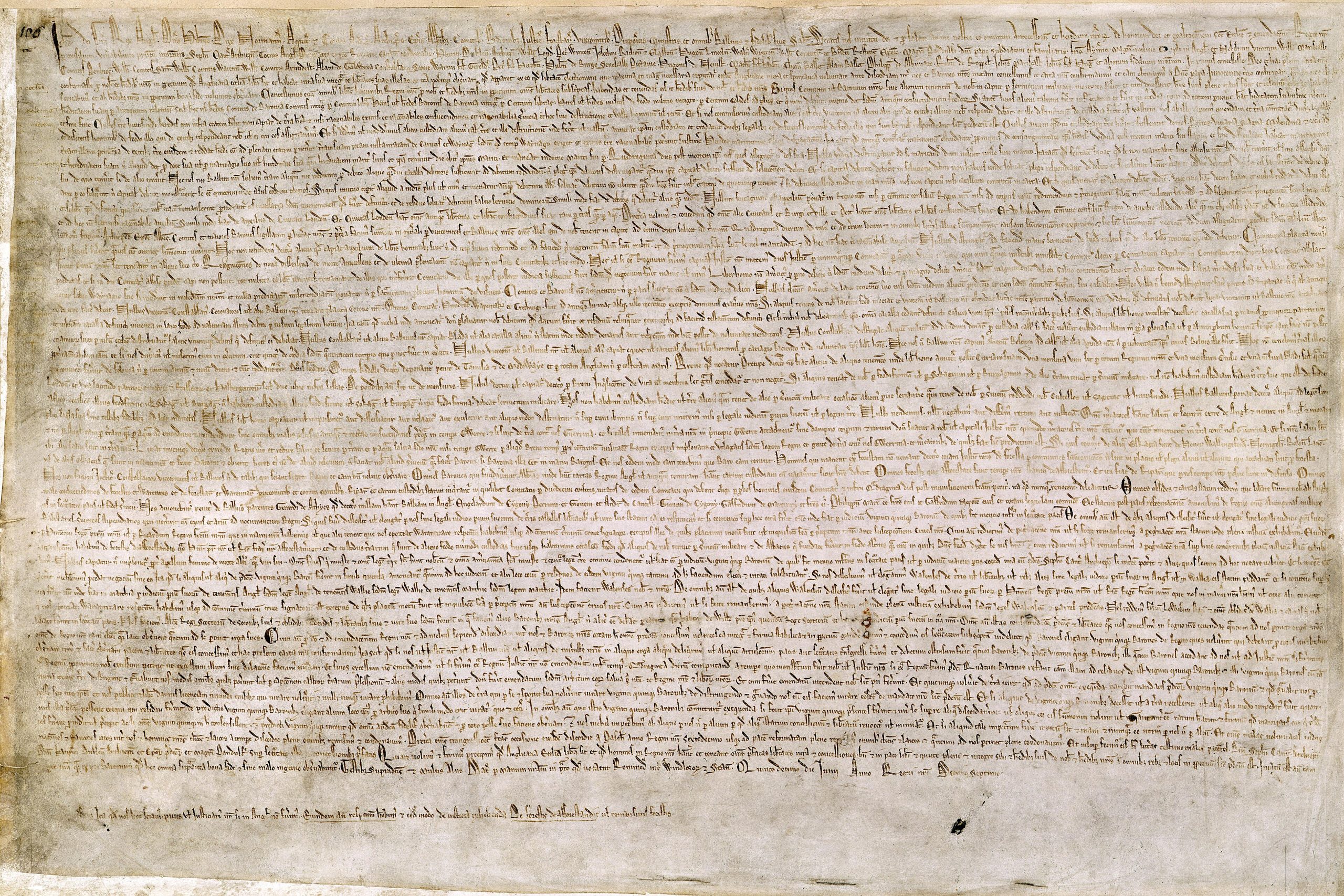
Petition came before protest. Clause 61 of Magna Carta in 1215 created a committee of twenty-five barons empowered to seek redress from the king, and the medieval Commons developed the practice of presenting grievances before granting supply. The Petition of Right of 1628 pressed Charles I on billeting, martial law and taxation without parliamentary consent. After the revolution of 1688, the Bill of Rights of 1689 declared that subjects have a right to petition the king and that prosecutions for petitioning are illegal.1
The First Amendment to the United States Constitution, ratified on 15 December 1791, joined speech, press, assembly and petition in a single sentence, which is the clearest statement anywhere that these are aspects of one liberty.
The nineteenth century supplied the hard cases. On 16 August 1819 a crowd of some sixty thousand gathered at St Peter’s Field in Manchester to hear Henry Hunt speak for parliamentary reform; the Manchester and Salford Yeomanry rode into it, killing at least eighteen people and injuring hundreds. Peterloo, as it was named in mockery of Waterloo, discredited repression as a method and became a founding episode in the British constitutional memory. Parliament’s response, the Six Acts of December 1819, restricted meetings and the radical press; the most repressive of those provisions lapsed within a decade, the Seditious Meetings Act expiring in 1825.
Modern statute law codified the balance. Sections 12 and 14 of the Public Order Act 1986 gave British police power to impose conditions on processions and assemblies where serious public disorder, serious damage to property, serious disruption to the life of the community or the intimidation of others is anticipated. Section 2 of the Canadian Charter of Rights and Freedoms, in force since 1982, protects freedom of peaceful assembly and freedom of association, subject to the reasonable limits clause in section 1. The invocation of the Emergencies Act on 14 February 2022 against the convoy occupation of central Ottawa, found unreasonable by the Federal Court on 23 January 2024 and upheld on appeal in January 2026, is the sharpest recent test of where the line sits.
The Conservative Position
Conservatives begin with the word peaceable. The First Amendment protects the right of the people peaceably to assemble; the Charter protects peaceful assembly; the 1689 Bill protects petitioning. The qualifier is in the text, and it does the work.
From that follow three positions.
The message is protected absolutely, or nearly so. Governments have no business licensing which grievances may be aired. Conservatives who have watched permits refused, routes redirected and counter-protests policed more heavily than protests understand the danger of leaving content to official discretion, because the discretion moves with whoever holds office.
The method is regulated. Marching down a high street is assembly; blocking an ambulance route is not. Occupying a public square for a weekend is protest; occupying a residential district for three weeks is a nuisance with a placard. The conservative tradition Roger Scruton represents treats a free society as one in which people accept the constraints that make shared space usable, so that a claim to inconvenience others without limit amounts to a private veto over public life.2 The test conservatives apply is whether the conduct persuades or compels.
Enforcement must be even-handed. A government that clears one encampment and tolerates another has not balanced rights; it has taken a side, and it has taught every future protester that the law is a function of sympathy. This is the point on which conservative criticism has been sharpest in Britain, Canada and the United States since 2020, and it applies whichever cause is favoured.
Differing Positions
The civil disobedience tradition denies that legality marks the boundary. Henry David Thoreau, writing in 1849 in the aftermath of the war on Mexico and against a federal government that upheld slavery, held that a man’s obligation is to his conscience and that unjust law deserves breach rather than petition.3 Martin Luther King’s letter from the Birmingham jail in April 1963 defended breaking segregation ordinances precisely because the ordinary channels were closed to those the law excluded, and because the disruption itself created the crisis that forced negotiation.
John Rawls gave the doctrine its academic form in A Theory of Justice in 1971, defining civil disobedience as a public, non-violent and conscientious act contrary to law aimed at changing law or policy, and arguing it is justified against substantial injustice after normal appeals have failed.4 Rawls insisted on acceptance of the legal penalty, which is the feature that keeps the practice inside the constitutional order rather than outside it.
A stronger contemporary position, associated with climate and anti-colonial movements, holds that the harm being protested is so grave and the political system so unresponsive that disruption of ordinary life is warranted and the penalty should be resisted rather than accepted.
Conservatives grant Thoreau and King the substance of their case: where a class of people is shut out of the political process, the process itself has forfeited its claim to their obedience. They dispute the extension. Where the ballot is open, the courts are functioning and the press is free, the argument that one’s cause is urgent enough to override other people’s rights is available to every faction, and it is the claim on which civil order eventually breaks.
References
- Bill of Rights 1689, 1 Will. and Mar. sess. 2 c. 2 (England).
- Roger Scruton, How to Be a Conservative (Bloomsbury Continuum, 2014).
- Henry David Thoreau, “Resistance to Civil Government,” in Aesthetic Papers, ed. Elizabeth Peabody (1849).
- John Rawls, A Theory of Justice (Harvard University Press, 1971), sections 55–59.
You've read articles over the past year
Will you support conservative education?
A gift of any amount helps keep unique explanatory journalism free for all, and
supports our mission to help everyone understand the world, regardless of their
ability to pay.One-time contributors join our community of givers and will be kept
up to date on the journalism that you help keep free.

Right to Protest
The right to protest is a composite: the freedom to speak, the freedom to assemble peaceably, and the ancient right to petition for redress of...

Brexit
Brexit is the withdrawal of the United Kingdom from the European Union, the most consequential constitutional change in modern British politics. In the referendum of...

The Second Amendment
The Second Amendment to the United States Constitution, ratified in 1791, reads: "A well regulated Militia, being necessary to the security of a free State,...

Constitution
The conservative is a constitutionalist by disposition. The tradition that produced the English settlement of 1688, the American framers' work in 1787, and the gradual...