
Print
Cite
Feedback
Share
A right, in its strict sense, is a claim that one person may make against another or against the political community, the satisfaction of which is owed as a matter of justice rather than of grace. The conservative tradition has been a long defender of rights so understood — the rights of person, property, conscience, association, and lawful assembly — but it has been hostile to a parallel tradition, dating from the eighteenth century, that detaches rights from the moral and political order in which they have historically been recognised.
The result is a position often misread by both critics and partisans. Conservatives are neither the enemies of rights nor their unconditional champions. They are the defenders of a particular conception of rights against rival conceptions.
Key takeaways
- Rights, in the conservative tradition, are protections owed to persons by virtue of a natural and moral order that the political community recognises but does not invent.
- The tradition distinguishes sharply between concrete rights inherited through particular legal and constitutional traditions — the rights of an Englishman, the rights of a free citizen — and the abstract Rights of Man proclaimed by the French Revolution, which Edmund Burke attacked as metaphysical fictions hostile to actual liberty.1
- The mature conservative position, developed by Burke and refined through the Anglo-American constitutional tradition, treats rights as bound up with duties, embedded in inherited institutions, and grounded in a natural law that places limits on what any state may legitimately do to its citizens.
History and context
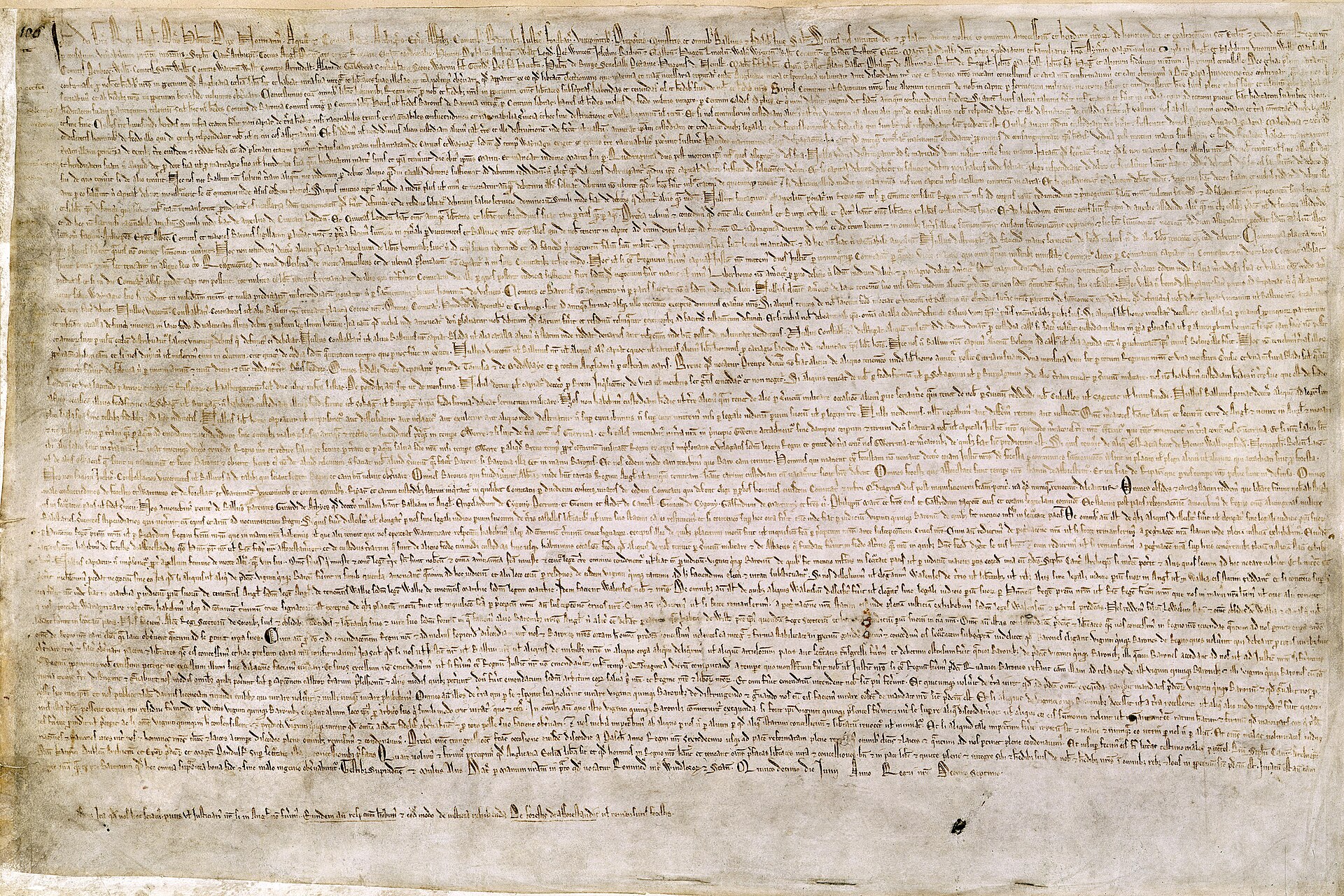
The English tradition of liberties was built up over centuries through documents and precedents — Magna Carta (1215), the Petition of Right (1628), the Habeas Corpus Act (1679), the Bill of Rights (1689) — that secured concrete protections against arbitrary royal power. These protections were defended not as abstract entitlements of generic humanity but as the specific inheritance of free Englishmen, won through political struggle and codified in law. Sir William Blackstone, in his Commentaries on the Laws of England (1765–1770), described the “absolute rights of individuals” as personal security, personal liberty, and private property, and grounded them in both natural law and the particular constitutional history of England.2
Edmund Burke’s Reflections on the Revolution in France (1790) is the canonical conservative engagement with the rival conception. Burke did not deny that there are real rights; he defended them vigorously throughout his career, most notably in his speeches on America and India. What Burke denied was that rights could be derived from abstract reason alone, separated from the institutional and historical context that gives them practical content. The “pretended rights of these theorists are all extremes,” he wrote of the French revolutionaries, and “in proportion as they are metaphysically true, they are morally and politically false.”3
The American constitutional tradition produced a hybrid. The Declaration of Independence (1776) employed the universalist language of natural rights — life, liberty, the pursuit of happiness — while the Constitution and its Bill of Rights (1791) embedded those rights in a specific institutional structure of separated powers, federalism, and judicially enforceable limits on government. American conservatism has generally treated this hybrid as the right settlement: the rhetoric of natural rights is preserved as the moral foundation, but the actual operation of rights depends on the inherited constitutional order.4
The twentieth century saw the rise of two further conceptions that conservatives have contested. The United Nations Universal Declaration of Human Rights (1948) expanded the catalogue of rights to include positive entitlements — to work, to social security, to education — that earlier traditions had treated as objects of political prudence rather than as enforceable claims.5 Conservatives such as Pierre Manent and Roger Scruton have argued that this inflation of rights talk, however well intentioned, makes the language unable to do the work for which it was originally developed. The simultaneous rise of judicial rights-creation, in which courts discover new rights not enumerated in any constitutional text, has been criticised on similar grounds by writers from the American originalist tradition.
The conservative position
Three claims structure the mature conservative view.
First, rights are real, but they are not the foundation of political life. The conservative tradition denies that political community originates in a contract among rights-bearing individuals, as Hobbes and Locke in different ways suggested. Persons are born into families, languages, and political communities they did not choose, and the rights they enjoy within those communities are recognitions of what is already owed to them as members, not stipulations of a hypothetical contract. This is the deep meaning of Burke’s contrast between abstract rights and inherited liberties.
Second, rights are correlative with duties and presuppose a moral order. A right to property presupposes a duty not to steal; a right to free speech presupposes duties of honesty and civility; a right to religious liberty presupposes a community in which religion is taken seriously enough to be protected. A culture that asserts rights while denying or ignoring the corresponding duties will find that its rights become unenforceable, because the moral capital that sustains them has been exhausted.
Third, the inflation of rights weakens rights. When everything desirable is recast as a right, the language of rights loses its capacity to do what it was meant to do: to mark out a small set of especially weighty claims against the political community. A right to a free press is degraded when it is grouped with a right to internet access; a right to religious liberty is degraded when it is grouped with a right to be free of offence. The conservative is suspicious of any politics that traffics in expansive rights talk, not because the goods being protected are unimportant but because the rights-form is being misapplied.
Differing positions
The classical-liberal and libertarian traditions accept the first claim but resist the second and third. On this view, rights are grounded in self-ownership and the equal moral status of persons, and the role of the state is exhausted by the protection of these rights. Conservatives reply that this account, taken alone, is too thin to sustain the institutions on which actual rights depend.
The progressive tradition treats rights as evolving entitlements whose content develops as moral understanding develops. The catalogue of rights expands as new groups press claims and as the political community comes to recognise injustices it had previously overlooked. Conservatives respond that this conception detaches rights from the constitutional and moral order that gives them content, and that the resulting rights talk becomes a tool for entrenching the policy preferences of judicial and academic elites against democratic deliberation.
The radical critique, from Jeremy Bentham’s “nonsense upon stilts” through twentieth-century legal realism to contemporary critical legal studies, holds that rights talk is fundamentally ideological and that the language of natural rights conceals the political choices that determine which interests will be protected.6 Conservatives, while rejecting the radical conclusion, often share the realist worry that rights talk can become a way of placing contested political questions beyond democratic debate.
References
- Edmund Burke, Reflections on the Revolution in France (1790), ed. L. G. Mitchell (Oxford: Oxford University Press, 1993).
- William Blackstone, Commentaries on the Laws of England, Book I, Chapter 1 (“Of the Absolute Rights of Individuals”) (Oxford: Clarendon Press, 1765), 117–141.
- Burke, Reflections (1790), 152–153.
- For the American settlement, see Forrest McDonald, Novus Ordo Seclorum: The Intellectual Origins of the Constitution (Lawrence: University Press of Kansas, 1985).
- United Nations, Universal Declaration of Human Rights (1948), available at https://www.un.org/en/about-us/universal-declaration-of-human-rights.
- Jeremy Bentham, “Anarchical Fallacies; Being an Examination of the Declaration of Rights Issued during the French Revolution” (1796), in The Works of Jeremy Bentham, ed. John Bowring (Edinburgh: William Tait, 1843), vol. 2, 489–534.
You've read articles over the past year
Will you support conservative education?
A gift of any amount helps keep unique explanatory journalism free for all, and
supports our mission to help everyone understand the world, regardless of their
ability to pay.One-time contributors join our community of givers and will be kept
up to date on the journalism that you help keep free.

Westernization
Westernization is the adoption by non-Western societies of institutions, technologies, laws, manners and habits of mind that originated in Western Europe and its colonial offshoots....
War Crime
A war crime is a serious violation of the law of armed conflict for which an individual bears personal criminal responsibility. The category covers the...

Voter ID Laws
Voter identification laws require a person presenting to vote to prove who they are, usually by producing a government-issued document. The requirement is unremarkable across...

Voter Fraud
Voter fraud is the deliberate corruption of an election by unlawful means: impersonating another voter, casting ballots in the name of the dead or the...