
Print
Cite
Feedback
Share
A safe space is a room, group, or institutional policy that undertakes to shield participants from speech and ideas judged harmful to them. The term migrated from feminist consciousness-raising groups and gay bars of the 1960s and 1970s into universities, where by the 2010s it described rooms stocked with colouring books and therapy dogs, provided while a controversial speaker addressed the campus.
Conservatives object not to the impulse behind such rooms but to their location. A private club may set its own terms of entry. A university funded to test arguments cannot promise that arguments will not be tested, and it does students no service by teaching them that discomfort is a form of injury.
Key Takeaways
- The phrase originates in mid-century group therapy and in gay and feminist organising, where it named a room in which people who faced real legal risk could speak without exposure.
- Its academic form dates to the 2010s: a 2015 Brown University debate on campus sexual assault produced the widely reported room with play dough, colouring books and a video of frolicking puppies.
- The University of Chicago’s 1967 Kalven Report, and the Stone Report commissioned in July 2014 and published in January 2015, set out the opposing institutional principle: a university does not shelter its members from ideas.
- Conservatives argue that a curriculum of protection produces fragility, and that the doctrine transfers the definition of harm from the speaker’s conduct to the listener’s reaction.
- Defenders reply that safe spaces are voluntary, additional to open debate rather than a replacement for it, and address students who have survived assault or persecution.
History And Context
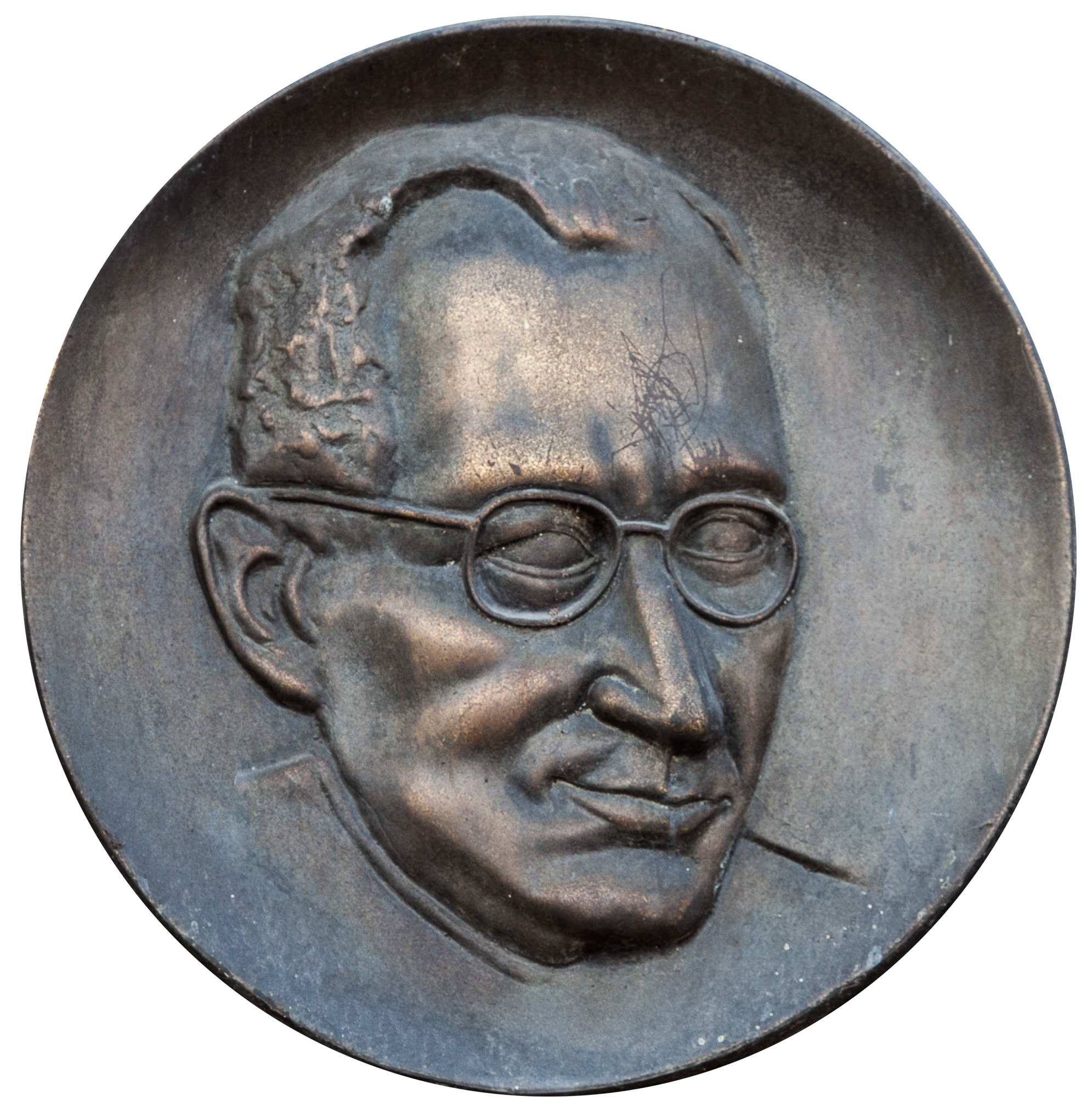
The idea has two lineages. The first is therapeutic: Kurt Lewin’s group workshops at New Britain, Connecticut in 1946, and the National Training Laboratories his colleagues opened at Bethel, Maine in 1947 after his death, ran sensitivity-training sessions in which participants were promised freedom from reprisal for what they said in the room. The second is political. Gay bars before decriminalisation and women’s consciousness-raising groups in the late 1960s were safe in a literal sense: their members faced arrest, dismissal, or violence, and privacy was the condition of speech.
Moira Kenney’s study of Los Angeles gay and lesbian organising traced how “safe space” came to mean a place where a movement could form before it could go public.1 The word “safe” carried its ordinary meaning. The room protected people from police and employers, not from disagreement.
The transfer to universities inverted the term. On campus the protected party is not a persecuted minority meeting in private but a student inside a publicly accountable institution, and the danger named is exposure to an argument. In November 2015 students at Yale confronted Nicholas Christakis, master of Silliman College, after his wife Erika questioned an administrative email advising against offensive Halloween costumes; the demand was that the college be a home rather than a place of intellectual challenge. Both Christakises resigned their residential positions in 2016.
Greg Lukianoff and Jonathan Haidt argued in The Atlantic in September 2015, and at length in The Coddling of the American Mind (2018), that campus protective culture teaches three Great Untruths, each inverting a principle of cognitive behavioural therapy: that what does not kill you makes you weaker, that you should always trust your feelings, and that life is a battle between good people and evil people.2 Their claim is that the practice produces the fragility it claims to accommodate.
The Conservative Position
The conservative case rests on the purpose of institutions. A university exists to subject beliefs to examination. The University of Chicago’s Kalven Report of 1967 held that the university is “the home and sponsor of critics” and is not itself the critic — that its neutrality on political questions is what makes free inquiry by its members possible.3 A room designated to protect students from the very argument taking place down the corridor contradicts the reason the corridor exists.
The second conservative argument concerns character. Conservatives hold that resilience is formed by practice and that institutions which remove all friction produce adults unequipped for a world that supplies plenty of it. This is an old claim, not a new one: the classical and Christian traditions both treat fortitude as a habit acquired by exercise. A pedagogy that treats exposure to disagreement as a harm to be prevented cannot form that habit.
The third argument concerns who holds the power to define harm. Under a safe-space norm, offence is established by the listener’s report of it. That standard has no natural limit and no procedure for adjudication, so in practice the loudest complaint governs. It makes sincerity of feeling the test of an argument’s admissibility, which removes argument from the field entirely.
Conservatives concede the narrow case. A support group for assault survivors, a chaplaincy, a private association with its own membership rules — none of these is objectionable, and all predate the term. The objection is to the general application: to the claim that a lecture theatre, a student newspaper, or a hiring committee should operate on the same terms as a therapy group.
Differing Positions
Defenders make three arguments. The first is that safe spaces are voluntary and additive. Nobody is compelled to enter the room, the controversial speaker still speaks, and the option to withdraw is not a veto. On this account conservatives have inflated a minor accommodation into a civilisational crisis.
The second is clinical. Students with post-traumatic stress from assault or from war have a documented condition, and a room in which they are not required to relive it is a reasonable adjustment of the kind universities already make for physical disability. Judith Herman’s work on trauma set out recovery as a staged process whose first task is the re-establishment of safety.4
The third argument turns the conservative claim around: every institution has always had protected zones, and conservatives defend theirs. Churches, officers’ messes, private clubs and family homes all restrict what can be said within them. The complaint about safe spaces, on this reading, is a complaint about which groups are granted the privilege rather than about the privilege itself.
The exchange rests on an unsettled empirical question — whether protective norms reduce distress or entrench it — and on a prior disagreement about what a university is for.
References
- Moira Rachel Kenney, Mapping Gay L.A.: The Intersection of Place and Politics (Temple University Press, 2001).
- Greg Lukianoff and Jonathan Haidt, The Coddling of the American Mind: How Good Intentions and Bad Ideas Are Setting Up a Generation for Failure (Penguin Press, 2018).
- Kalven Committee, Report on the University’s Role in Political and Social Action (University of Chicago, 1967).
- Judith Lewis Herman, Trauma and Recovery (Basic Books, 1992).
You've read articles over the past year
Will you support conservative education?
A gift of any amount helps keep unique explanatory journalism free for all, and
supports our mission to help everyone understand the world, regardless of their
ability to pay.One-time contributors join our community of givers and will be kept
up to date on the journalism that you help keep free.

Westernization
Westernization is the adoption by non-Western societies of institutions, technologies, laws, manners and habits of mind that originated in Western Europe and its colonial offshoots....
War Crime
A war crime is a serious violation of the law of armed conflict for which an individual bears personal criminal responsibility. The category covers the...
Voter ID Laws
Voter identification laws require a person presenting to vote to prove who they are, usually by producing a government-issued document. The requirement is unremarkable across...

Voter Fraud
Voter fraud is the deliberate corruption of an election by unlawful means: impersonating another voter, casting ballots in the name of the dead or the...